
Gyanvapi Mosque Built on Remnants of Pre-Existing Temple: Hindu Side Attorney Citing ASI Survey Report

GG News Bureau
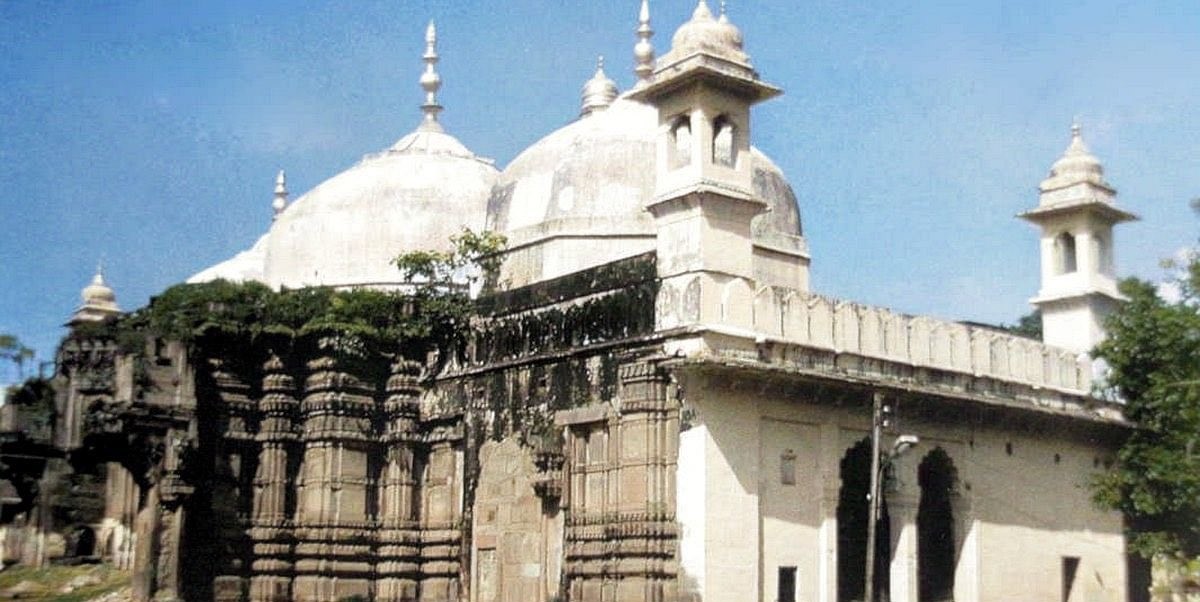
Varanasi, 26th Jan. The lawyer representing the Hindu petitioners in the Kashi Vishwanath-Gyanvapi case on Thursday claimed that a scientific survey conducted by the Archaeological Survey of India (ASI) suggests that the mosque was built on the remains of a pre-existing temple.
Vishnu Shankar Jain, the lawyer, stated that copies of the 839-page report were provided to the concerned parties by the court.
According to Jain, the report clearly states that the mosque, located next to the Kashi Vishwanath Mandir, was constructed on the site of a Hindu temple that was demolished during the reign of Aurangzeb in the 17th century.
He also asserted that the survey report provides sufficient evidence of the existence of a temple at the current location of the mosque.
Jain further claimed that a stone with the Persian inscription of the order and date of the temple’s demolition was found, along with a stone inscribed with “mahamukti.”
He also stated that the western wall of the mosque is actually the wall of the pre-existing temple, with a large bell and a swastik symbol inscribed on it. The survey report allegedly mentions that the basement’s roof is supported by Nagar-style temple pillars, further indicating the presence of a grand temple before its demolition.
Jain announced that they would request a survey of the wazu khana, where ablutions are performed before namaz, and that they would present their evidence to the court during the next hearing on February 6.
Earlier in the day, 11 individuals from both the Hindu and Muslim sides applied to the court to obtain the ASI survey report on the Gyanvapi complex adjacent to the Kashi Vishwanath temple.
