

By Anjali Sharma
UNITED NATIONS – UN chief Antonio Guterres on Sunday expressed solidarity with the people of Jamaica who are struggling to cope with the devastated hurricane Melissa, in a statement issued by UN spokesman’s office in New York.
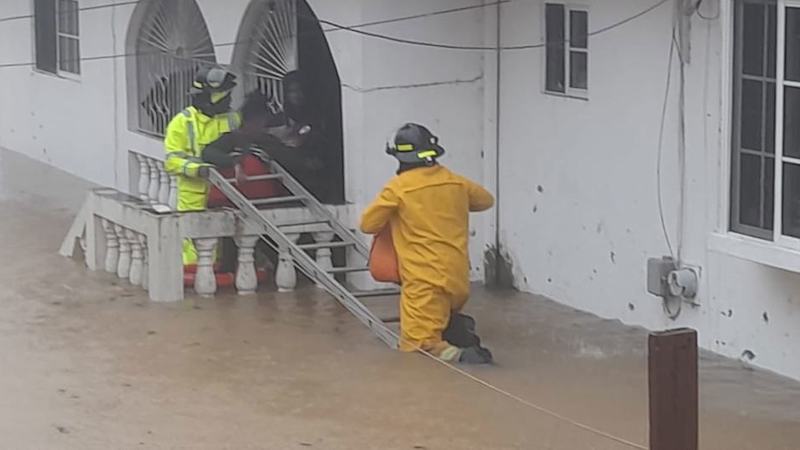
Mr. Guterres spoke by phone with the Prime Minister of Jamaica Andrew Holness earlier on Sunday and emphasized afterwards in a statement that “international support is crucial” as the country deals with the effects of the category 5 storm which brought rain, storm surges and catastrophic flooding.
UN Deputy Spokesperson said in a statement issued “He calls for the mobilization of massive resources to deal with the loss and damage from the hurricane”.
UN Emergency Relief Coordinator, Tom Fletcher, has allocated $4 million from the Central Emergency Response Fund so agencies and their partners can rapidly scale up humanitarian operations in Jamaica, the statement noted.
OCHA said that 5 days after the most powerful storm in the island’s history made landfall in the west, many residents are still waiting for aid to arrive, according to local media reports, with many roads still inaccessible and communities without power and running water.
The Government of Jamaica reported that the death toll has risen to at least 28.
Top UN official in Jamaica Dennis Zulu said that 13 UN agencies were working as quickly as possible alongside authorities to clear roads and make essential repairs.
“My team here remains committed…to ensure that Jamaica gets back on its feet,” he said.
UNICEF said over 700,000 children across the Caribbean had been impacted by the hurricane, which also made landfall in Cuba and caused chaos across western Haiti.
UN agency is supporting the Jamaican Government to reach over 284,000 children to address urgent nutrition needs, access to safe water, sanitation and hygiene including mental health support.
In Haiti, UNICEF is deploying hygiene and emergency health kits, cash to households at risk and engaging communities.
UN aid coordination office, accompanied UNICEF at José Martí airport in Cuba to unload supplies for over 90,000 people affected by Melissa alongside national authorities working as a single team, driving emergency response, OCHA reported.
Top relief head Tom Fletcher, said “In times like this, international solidarity isn’t just a principle it’s a lifeline.”
OCHA team has been deployed to Jamaica to strengthen coordination and information management.
UN agencies and NGOs are helping restore access, deliver emergency health and water services, and assist communities whose homes, schools and hospitals have been hit hard.
A $4 million allocation from the OCHA-managed CERF for Cuba, allowed UN agencies to position life-saving support before the storm hit.
The World Food Programme has provided food for 180,000 people;
UNICEF deployed mobile water-treatment units and hygiene kits for thousands;
Pan-American Health Organization (PAHO) airlifted medical supplies and generators;
Food and Agriculture Organization and UNDP moved seeds and tarpaulins to protect livelihoods and homes;
UNFPA, distributed health and dignity kits.
The Cuban Red Cross assisted with preventive evacuations, early-warning messages and psychosocial support, in coordination with the International Federation of Red Cross.
In Haiti, a country suffering from a massive humanitarian crisis and deadly armed violence, humanitarian teams are working alongside national authorities to respond to the urgent needs.
Several days before the hurricane hit a $4 million CERF allocation allowed aid to be pre-positioned.
Over 3.5 million alerts were sent out to vulnerable populations, saving lives in Haiti.
UN agencies and partners are supporting temporary shelters and providing food, shelter, non-food items and cash assistance.
“Local leadership, global solidarity, and early action are saving lives across the region,” Mr. Fletcher said.
He concluded “This is the humanitarian reset at work – acting together with greater impact.”
