
Guterres calls Taliban to end restrictions on women, girls in Afghanistan

Anjali Sharma
GG News Bureau
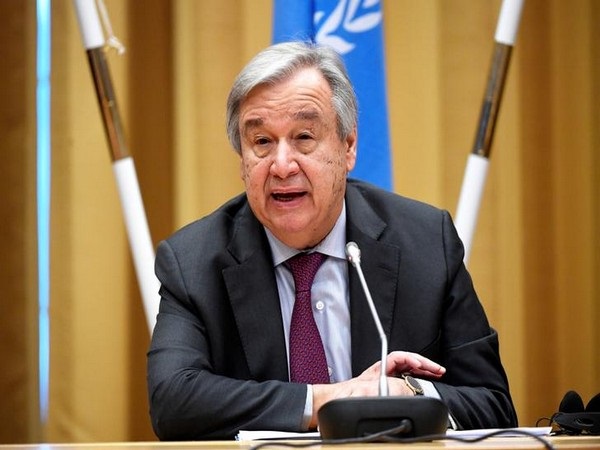
UNITED NATIONS, 20th Feb. UN head Antonio Guterres on Monday called the de facto Taliban authorities to end the restrictions imposed on women and girls in Afghanistan, as he was addressing a conference in Doha.
Guterres was speaking to journalists during a two-day meeting with regional and national special envoys for Afghanistan said that there was consensus among delegates over what needs to happen, although the Taliban are not taking part.
He said “We want an Afghanistan in peace, peace with itself and peace with its neighbours and able to assume the commitments and the international obligations of a sovereign State in relation to the international community, its neighbours and in relation to the rights of its own populations.”
Guterres added that there was consensus on the process to reach this objective, noted proposals outlined in an independent review on an integrated and coherent approach conducted by Feridun Sinirlioğlu, in line with Security Council resolution 2679.
He stressed that the proposals covered all the main areas of concern including ensuring Afghanistan does not become a “hotbed” of terrorist activity and that it has inclusive institutions in which all its diverse groups feel represented in a “truly inclusive” State.
The review noted the importance of upholding human rights, in particular for women and girls, and a recognition of the progress made in combating drug production and drug trafficking.
He underscored the need for effective humanitarian assistance to the country as well as long-term questions on Afghanistan’s future development.
Mr. Guterres noted ongoing cooperation between Afghanistan and neighboring countries, such as trade and infrastructure development or bilateral arrangements on combating illicit drug trade.
He added there are a set of key questions “in which we are stuck”.
“On one hand, Afghanistan remains with a government that is not recognized internationally and in many aspects not integrated in the global institutions and global economy,” he said.
He added that on the other hand, there is a common international perception of deteriorating human rights, particularly for women and girls.
“To a certain extent we are in the kind of situation of the chicken or the egg,” he said.
Guterres stated the need to overcome the deadlock and produce a common road map which addresses international concerns and those of the de facto authorities simultaneously.”
On the lack of participation of Taliban de facto authorities, Mr. Guterres said that the group presented a set of conditions for its participation “that were not acceptable.”
“These conditions first of all denied us the right to talk to other representatives of the Afghan society and demanded a treatment that would, I would say, to a large extent be similar to recognition.”
Mr. Guterres said the meeting was very useful and the discussions were “absolutely needed”.
“Obviously it would be better if we would also have the opportunity after the meeting to discuss our conclusions with the de facto authorities. It did not happen today; it will happen in the near future,” he concluded.
