
Ground Zero UP: How Detention Centers Triggered a Mass Exit Overnight
“UP’s Document-Verification Push Sparks Rapid Departures, Community Debates, and Fresh Questions on Security and Voter Integrity.”

Paromita Das
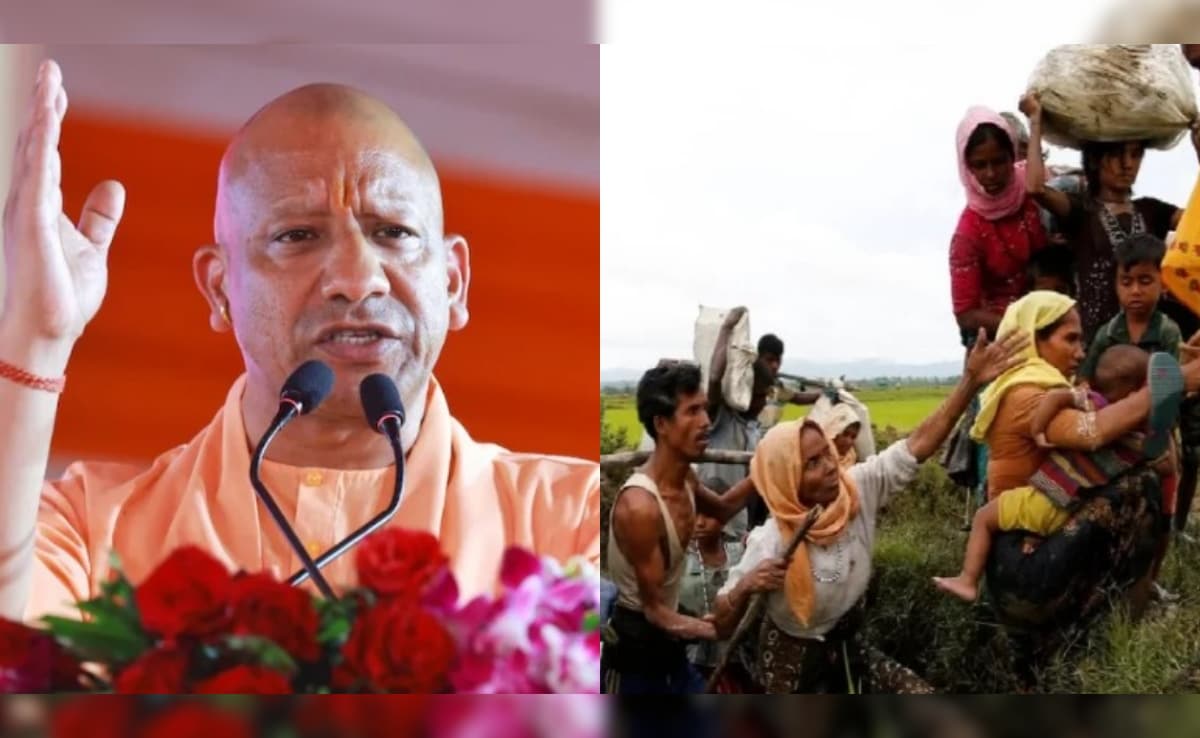
New Delhi, 4th December: Uttar Pradesh has witnessed political storms before, but rarely has the ground shifted as dramatically and as silently as it has in the past few weeks. When Chief Minister Yogi Adityanath announced the establishment of detention centers across all 75 districts, the state didn’t erupt in chaos—instead, it emptied out in pockets where illegal migrants had quietly lived for decades. Entire clusters of shanties vanished overnight, leaving eerie silence where once thousands bustled. No police chase, no major crackdown—just a single administrative decision that sent tremors through communities built on forged documents and borrowed identities.
This moment has now become the epicentre of a seismic political and demographic debate. The exodus is real, the panic is visible, and the politics is unmistakable.
A Policy That Hit Harder and Faster Than Expected
No one anticipated that the mere announcement of detention centers would create such sweeping impact. For years, the conversation around illegal Bangladeshi and Rohingya infiltration stayed confined to border states. But Uttar Pradesh—India’s most populous and politically crucial state—had quietly housed an estimated 10 lakh illegal migrants, according to surveys conducted in 2019. Lucknow alone was believed to shelter nearly one lakh Bangladeshi nationals, often hidden within dense slums, unregistered settlements, and informal labour networks.
When the government declared that anyone unable to produce valid documents would be moved to district-level detention facilities and later deported, the message reached the ground faster than any formal notice. What followed was a departure so swift that even local police stations admitted they hadn’t expected such compliance out of fear.
In Lucknow’s Bhaukhandi area, once dotted with crowded shanties, silence now dominates the lanes. Temporary homes have been abandoned mid-use—utensils, bedding, and children’s belongings left behind in haste. For weeks, the city’s civic workers noticed the exodus unfold in slow waves. By the time reporters reached the area, barely a handful of residents remained—mostly those who could prove their identity or were confident of their paperwork.
Politics and Panic: Why the Opposition Smells a Conspiracy
While the state machinery claims the process is administrative, transparent, and fully documented, the opposition—particularly Samajwadi Party chief Akhilesh Yadav—has alleged political intent. According to him, the verification exercise under SYAR (Special Summary Revision) is being misused to target specific communities and alter voter demographics ahead of the 2027 UP elections.
But when reporters travelled to districts like Saharanpur, Gonda, Shravasti, and Sultanpur, the ground reality told a more complex story. Muslim communities—often projected as “targets” of such drives—were seen actively participating in verification, filling forms, submitting documents, and assisting officials. There were disagreements, yes, particularly regarding delays or ambiguity in certain cases, but the widespread fear-mongering narrative found little resonance on the ground.
Many residents argued that the verification was long overdue. Duplicate voter IDs, outdated addresses, and discrepancies dating back to the early 2000s had cluttered electoral rolls. In some cases, individuals claimed their names had disappeared from the new listings despite being present in the 2003 rolls. However, election officials clarified that such cases would be resolved through Form-6, open for submission after initial verification.
What political parties described as conspiracy, local communities often viewed as clarity.
Why Yogi Adityanath’s Government Considered Detention Centers Non-Negotiable
The question isn’t simply about documentation. It’s about scale.
States like Bihar revealed nearly 50 lakh fraudulent voters earlier this year—a shocking number that catalyzed UP’s urgency. The Yogi government, prepping for the 2027 election cycle, seems determined to go into the next phase with a clean, verified, transparent voter base. But beyond electoral rolls lies a deeper concern: national security.
Illegal immigration in UP isn’t merely an identity issue—it has implications for crime networks, land encroachment, religious radicalization, and cross-border trafficking. Informal settlements—especially in border-adjoining districts—often provided dense cover for undocumented migrants. According to police records and intelligence inputs, several Rohingya clusters had direct links to networks operating through Bengal, Assam, and even Nepal routes.
The government’s stance is clear: UP will not be a safe house for infiltrators.
Ground Realities: Cooperation, Confusion, and A New Awareness
Across districts, the verification process revealed three parallel realities:
- Genuine Citizens Want Clean Rolls
Many local communities expressed relief that verification is happening. Their argument is straightforward: Why should someone with two IDs get to vote twice while genuine voters struggle with inaccuracies?
- Genuine Concerns Over Delays and Communication
Some residents felt anxious when their names didn’t appear in initial lists. In most cases, election officials explained that these were procedural delays, not intentional exclusions.
- Illegal Migrants Are Leaving on Their Own
The most striking development is that authorities didn’t have to chase illegal migrants—most left voluntarily. The deterrence worked without confrontation.
A Tough Decision, But a Necessary One
Whether one agrees with Yogi Adityanath’s politics or not, it’s hard to deny the scale of the problem. For decades, illegal migration wasn’t treated as an urgent issue in UP. Successive governments ignored it—partly out of convenience, partly out of fear of backlash. But when demographic shifts begin influencing security, economy, and civic systems, inaction becomes a greater risk than criticism.
Detention centers may not be a perfect solution. They need oversight, transparency, and humane handling. But as a deterrent, they have already proven extraordinarily effective. A policy that causes illegal migrants to leave voluntarily, without unrest, without force, and without violence, is not just administration—it is strategy.
UP Has Drawn a Line—and It’s Not Moving
As Uttar Pradesh moves into a new phase of security and demographic scrutiny, one thing is clear: the state is no longer willing to tolerate undocumented infiltration. For the first time, a decisive administrative step has translated into immediate ground-level impact. Politics will continue, accusations will fly, and narratives will collide—but the migration corridors that once flowed unchecked have suddenly run dry.
UP is rewriting its internal security story.
And the exodus that unfolded overnight will be remembered as the moment the state finally said—which side of the line do you stand on?
