
OCHA says Gaza hits by heavy rains as humanitarian response continues
Heavy rains worsen war-damaged areas, displacing families and heightening health risks; UN agencies distribute aid across Gaza.

Anjali Sharma
UNITED NATIONS – UN aid coordination office reported on Monday that severe weather conditions have led to further casualties and heightened health risks in Gaza over the past 24 hours.
UN agency said that heavy seasonal downpours are compounding an dire humanitarian situation, as rainstorms cause war-damaged buildings to collapse, flood tents and soak people’s belongings.
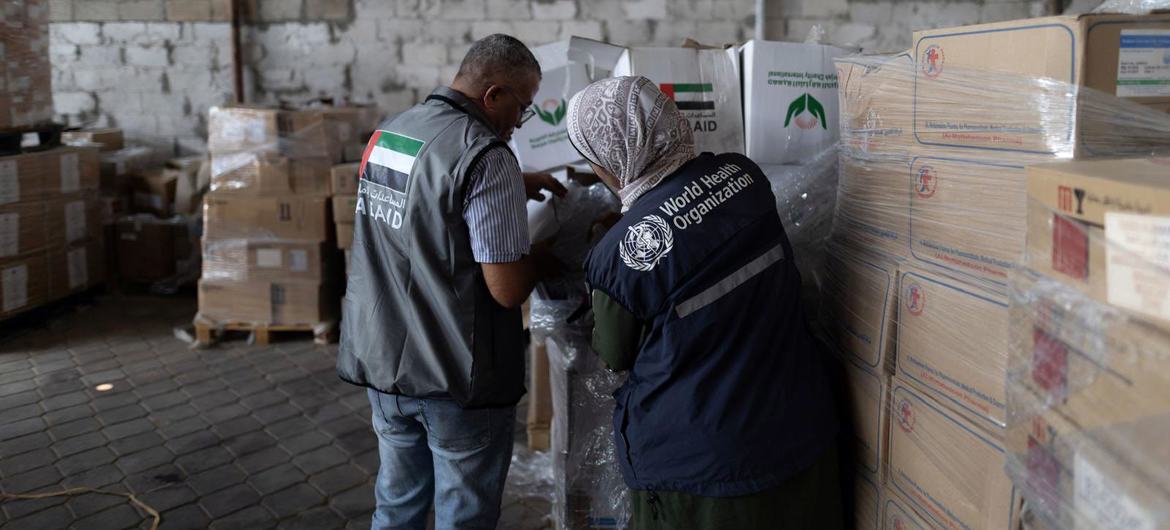
OCHA noted that a coordinated system bring together UN agencies and non-governmental organizations is distributing tents, tarpaulins, warm clothes, blankets and dignity kits across Gaza to respond swiftly to flood alerts,.
UN and its partners are also mobilizing heavy equipment to pump overflowing sewage which poses serious health risks away from residential areas.
OCHA warned that the conditions have increased the risk of hypothermia, among babies, as well as illnesses linked to sewage flooding.
The humanitarian teams are assisting hundreds of people newly displaced from the At Tufah neighborhood in Gaza City, where ongoing military operations have forced many residents to flee.
People who remain in, or have returned to, the As Sanafour area of At Tufah often due to a lack of space elsewhere report significant challenges in accessing water, food and basic services, OCHA stated.
It stressed that other relief operations under the UN-coordinated humanitarian plan for the ceasefire are continuing.
According to OCHA between 23 and 26 December, partners working on water, sanitation and hygiene dispatched tens of thousands of dignity kits, hygiene kits and bottles of shampoo across Gaza, reaching some 150,000 people in need.
The partners addressed food insecurity had reached over 1 million people population through 60 distribution points with December’s monthly general food assistance.
The humanitarian partners distributed veterinary kits and animal feed to more than 2,000 families with livestock between 9 and 26 December, helping support local production and reduce aid dependenc, OCHA update concluded
