

GG News Bureau
New Delhi, 9th Jan.
“Ganga Jal”, the Nectar:
The Ganges is a lifeline for millions of Indians and the foundation of spiritual life for the country’s Hindu majority. Ganga is our mother because Ganga water is nectar. It contains natural healing qualities. We Bharatiya believe that the river cleanses itself and has medicinal properties. Its water does, in fact, have bactericidal activity, a capacity to kill microorganisms. And, while the riddle is still being unravelled, it appears to be tied to bacteriophages. And then there are the viruses. Phage treatment, which uses bacteria to infect and kill them, could be a useful alternative to antibiotics.
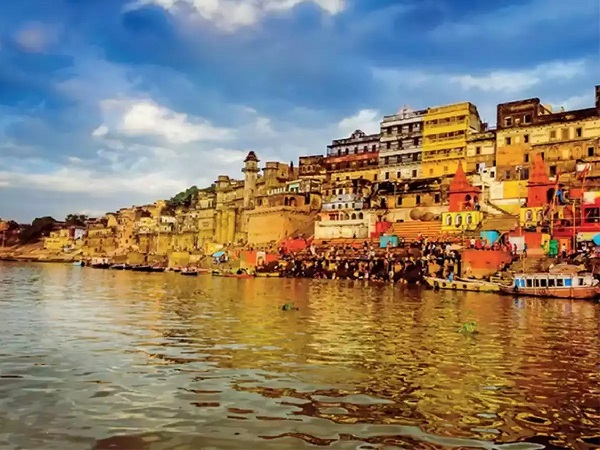
The Ganges, Bharat’s national river, rises in the western Himalayas and flows to Bangladesh. To Hindus, who worship it as the goddess Ganga, the river has enormous spiritual significance.
To Hindus, who worship it as the goddess Ganga, the river has enormous spiritual significance. Its water, generally known as “Ganga Jal”, is considered sacred and is used in a variety of religious activities. The unexplained idea that the Ganges has self-cleansing and healing properties is particularly intriguing from a scientific standpoint. In reality, the river has antibacterial capabilities and can maintain large amounts of dissolved oxygen even in highly polluted situations.
The Ganga’s healing qualities are not a question of naïve faith
There are several traditions in Hindu mythology about the miraculous healing abilities of Ganga water, which gave cripples and lepers hope, if not in this life, then in the next.
In the narrative of King Rai Mandlik of Girnar, Gujarat, a man named Vijnal had leprosy. He was a friend of the king, but this was too much for him. He became a refugee, fleeing the king and waiting to die. Meanwhile, the king began his pursuit.
On this expedition, the king encountered a man carrying Ganga water from the east while camped by a little brook. The monarch had no time to take a bath. When he saw the water-bearer, he seized the pitcher and dumped the water all over himself. He embraced his friend the leper when he eventually caught up with him. And, once again, the leprosy vanished from his body in the blink of an eye.
When Muhammad ibn-Tughluq chose to relocate his capital from Delhi to Deogir across the Vindhyas, Ganga water was supplied for him every day; the journey from the northern valley took forty days.
Akbar, the Mughal monarch, drank only Ganga water because he disliked the flavour of well water. Akbar praised the purity and flavour of Ganga water, referring to it as the source of life (ab-i-hayat). Akbar had Ganga water sent sealed in jars from Saran, the city on the Ganga closest to Agra, his capital, at home and on his many travels and campaigns. Only the most trustworthy retainers were assigned to collect Ganga water from the river’s banks.
In another narrative, early East India Company English traders discovered that Ganga water survived for more than a month during the transcontinental voyage, whereas water from near the ports in the home country rotted in a matter of days. Sir Edmund Hillary, the conqueror of Mount Everest and indefatigable traveller, marvelled at the fact that Ganga water “keeps fresh and unspoiled indefinitely in its container, whereas water from any other river becomes tainted and unpleasant.” Calcutta’s European residents constructed reservoirs to preserve river water all year.
Researches done on Ganga Jal
Devendra Swarup According to Bhargava, a retired professor of environmental science at IIT Roorkee who has long studied the Ganga, this substance that maintains the Ganga pure is present everywhere in the Ganga foothills. According to Dr. Bhargava, Ganga water has an incredible potential to absorb oxygen from the environment. According to Bhargava, the Ganga has 15 to 20 times the capacity of other rivers to decompose rotting trash.
Ernest Hankin, a British bacteriologist, researched the bactericidal characteristics of Ganges water in 1896. He discovered that cholera bacterium colonies that flourished in tap water died swiftly in Ganges water. He carried out his experiment with cooked Ganges water and filtered Ganges water. Surprisingly, while the filtered water retained its antimicrobial action, the cooked water did not. This clearly demonstrated that the component responsible for the water’s bactericidal capabilities was heat labile, but not filterable, at least not with the porcelain Pasteur filters Hankin used in his experiment.
A Canadian microbiologist uncovered the element that may explain the Ganges riddle two decades later. Felix d’Herelle discovered phages in 1916 while working at the Institut Pasteur in Paris. Phages are made up of proteins that bind to genetic material. They also have traits that Hankin noticed in Ganges water, such as being difficult to filter and being heat labile. This indicates that the Ganges is densely infested with phages.
Because they are highly strain specific, they are essentially harmless to humans. In other words, unlike antibiotics, phages can destroy the disease without affecting the body’s natural flora.
A substantial number of early Ganges studies were conducted, primarily by British and French microbiologists. Such Ganges research resulted in the introduction of bacteriophages into the world. Bacteriophages are prokaryotic viruses that only infect and/or kill bacteria. Bacteriophages have been linked to the Ganges’ unique feature.
Interestingly, the study discovered for the first time the existence of bacteriophages against putrefying and dangerous bacteria in Ganges waters, even at its source, known as Gomukh.
Gomukh is especially unique in that, as noticed while sampling, loads of sediment gushes out in force together with water at this origin point due to melting permafrost.
This is the first significant discovery of its sort
When the Ganga was clean, it was abundant in sulphur and natural germicides. This implied that having a plunge in the river would cure common and preventable skin ailments and help people live longer lives.
Today, phage therapy is being explored again at a time when antibiotic resistance is becoming a big concern. Many kinds of bacteria have developed resistance to antibiotics as a result of drug abuse or overuse. As therefore, the potential of phage therapy as an antibiotic alternative is quite promising. Phages and phage therapy bridge the gap between an old religion and modern medicine, from the Ganges’ long standing reputation for self-cleansing to a potential answer for antibiotic resistance.
