
Funding the Fragile: Bharat Questions ADB’s Unchecked Support to Pakistan

Paromita Das
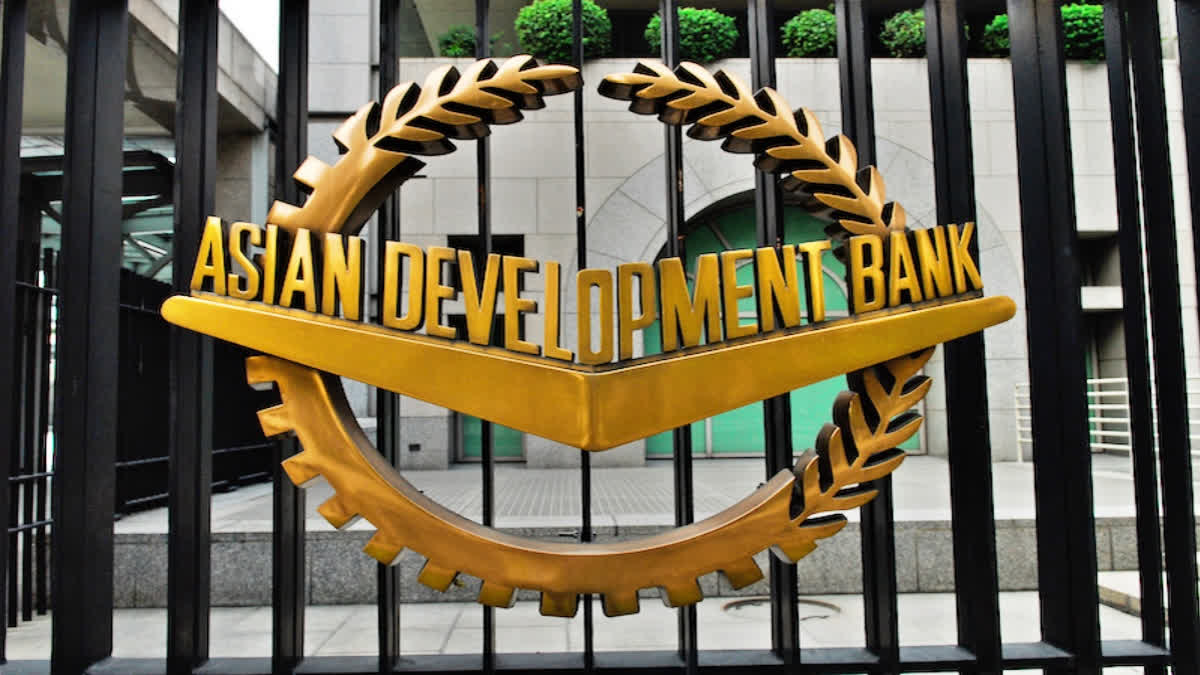
New Delhi, 6th June: In a rapidly evolving geopolitical climate, economic decisions taken by international financial institutions are no longer viewed as strictly financial in nature—they are scrutinized through political, strategic, and security lenses. Bharat’s strong opposition to the Asian Development Bank’s (ADB) recent decision to extend an $800 million financial package to Pakistan reflects not only a concern for fiscal prudence but also an apprehension about the wider regional implications of such aid. Bharat’s vocal stance underscores a complex web of economic distrust, security concerns, and geopolitical rivalry.
This development follows the International Monetary Fund’s (IMF) approval of a $1 billion package to Pakistan; a move aimed at stabilizing an economy that has been teetering on the edge of collapse for years. While such financial assistance is often granted under the assumption of structural reform and economic stabilization, Bharat has raised alarms over the track record of Pakistan in adhering to the intended use of international funds. These concerns, according to New Delhi, are not speculative—they are rooted in concrete data and a history of fiscal mismanagement.
Weak Domestic Revenue, Rising Military Spending
One of the central arguments made by Bharat during a recent ADB board meeting is the declining credibility of Pakistan’s financial stewardship. Bharat cited a significant drop in Pakistan’s tax-to-GDP ratio—from 13.0% in FY2018 to just 9.2% in FY2023. This figure not only places Pakistan far below the Asia-Pacific average of 19% but also signals a fundamental weakness in domestic revenue mobilization. For a country that seeks regular international financial support, such a trend is deeply troubling. A declining tax base indicates not just administrative inefficiencies but also an unwillingness or inability to broaden fiscal responsibility.
Compounding these fiscal shortcomings is the parallel rise in Pakistan’s defense expenditure. According to Bharat, while development spending has stagnated or declined, military expenditure has continued to grow. This has led to accusations that international aid—particularly fungible financial instruments like Policy-Based Loans (PBLs)—may be indirectly financing military priorities. Bharat’s representative warned that such unrestricted forms of assistance lack the checks and balances necessary to ensure that the funds are directed toward development and not militarization.
Militarized Governance and Policy Risks
The structure of governance in Pakistan also came under sharp criticism. Bharat argued that the pervasive role of the military in the country’s economic and administrative framework compromises the transparency and effectiveness of aid utilization. The Pakistan Army, through mechanisms like the Special Investment Facilitation Council, reportedly maintains a dominant hand in policy implementation, even under nominal civilian rule. Bharat warned that such militarized governance increases the risk of abrupt policy reversals, undermining long-term reform efforts typically associated with international financial assistance.
Security Concerns and Counter-Terrorism Failures
Bharat’s objections also extend into the domain of regional security. It highlighted Pakistan’s unsatisfactory progress in meeting obligations under the Financial Action Task Force (FATF) framework. Despite being removed from the FATF grey list in 2022, Islamabad has shown limited progress in investigating and prosecuting leaders of UN-designated terrorist organizations. New Delhi further criticized Pakistan’s lack of substantial action in freezing assets linked to terrorism financing. Bharat’s concern is clear: by supporting a state with a questionable counterterrorism record, institutions like the ADB could inadvertently finance elements that destabilize the broader South Asian region.
Risks to the ADB and the Cycle of Bailouts
From a financial perspective, Bharat warned of long-term risks to the ADB itself. With Pakistan’s rising debt burden and its sovereign credit rating hovering at low levels, there is a tangible threat of default or unsustainable dependency on foreign loans. Bharat emphasized that this reliance erodes national policy ownership, creating a feedback loop where reforms are either poorly implemented or entirely reversed once external pressures ease.
Pakistan’s frequent return to bailout programs—this being its 24th arrangement with the IMF—is, according to Bharat, symptomatic of structural deficiencies and inadequate conditionality in international aid programs.
A Call for Reform-Linked, Ring-Fenced Aid
Bharat has therefore called on the ADB to adopt stringent conditionalities and introduce robust oversight mechanisms. One of its key recommendations is ring-fencing of funds—ensuring that financial assistance is tied to specific, verifiable development goals with zero room for reallocation. Such safeguards would protect the bank’s reputation, reduce exposure to credit risks, and potentially create stronger incentives for reform within recipient countries.
In essence, Bharat’s position is not simply a bilateral grievance. It presents a broader critique of how international institutions engage with economically fragile and politically volatile states. The argument is that without strict accountability measures, international aid risks being siphoned off into unproductive or destabilizing channels. This is especially problematic in regions like South Asia, where strategic rivalries are deeply entrenched and where economic missteps can have cascading effects on peace and development.
A Need for Caution, Oversight, and Reform
Bharat’s warnings, therefore, should not be viewed through a narrow political lens alone. They reflect a larger concern shared by many donor countries and financial institutions: that in the absence of transparency, good governance, and policy ownership, even well-intentioned financial assistance can do more harm than good.
In conclusion, the ADB’s decision to proceed with aid to Pakistan, despite Bharat’s objections, opens up a larger conversation on the future of multilateral financial support in fragile states. While development banks must continue to fulfill their mandates of poverty alleviation and economic stabilization, they must also recalibrate their approach to ensure that support translates into meaningful, sustainable outcomes. As Bharat has articulated, without systemic reform, strict safeguards, and an honest assessment of on-the-ground realities, development financing risks becoming a revolving door of ineffective aid.
