
From Siachen to INS Vikrant: PM Modi’s Diwali Tradition with Bharat’s Armed Forces
“From Siachen to INS Vikrant: How PM Modi’s Annual Diwali Visits to Frontline Soldiers, Airmen, and Sailors Reinforce National Unity, Security, and the Spirit of Celebration Across Every Corner of Bharat”

By Dr. Kumar Rakesh
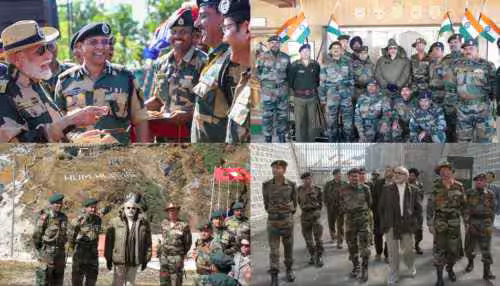
Diwali—the festival of lights—evokes images of families gathering, lamps flickering, sweets exchanged, and laughter echoing through homes. Yet, for millions of Bharatiya, especially the men and women stationed at remote posts, high-altitude glaciers, or out at sea, Diwali often means duty, vigilance, and sacrifice. Since taking office in 2014, Prime Minister Narendra Modi has made this reality an even stronger symbol of national cohesion. By bringing it into his personal practice to spend Diwali with Bharat’s defense forces—army, air force, and navy—he sends a very clear message: the country celebrates securely because the forces guard every nook and cranny of Bharat.
A new tradition is born: Diwali with the troops

Before 2014, no prime minister had been visiting frontline military bases for Diwali every year. Modi breached this tradition in his first Diwali as Prime Minister by paying a visit to the snow-capped Siachen Glacier outpost of Jammu & Kashmir, positioned above 12,000 feet above sea level. There, speaking directly to the troops, he said: “The nation sleeps in peace because you stand guard.” Ever since, the annual tradition of celebrating with troops became a part of his leadership folklore.
The sequence of Modi’s Diwali tours indicates both geographical reach and strategic depth:
2014 – Siachen Glacier, J&K (Army)
2015 – Punjab border (Army)
2016 – Sumdo, Himachal Pradesh (ITBP/Army)
2017 – Gurez Valley, J&K (Army/BSF
2018 – Harsil, Uttarakhand (Army/ITBP
2019 – Rajouri, J&K (Army) and Pathankot Air Base (Air Force)
2020 – Longewala, Jaisalmer, Rajasthan (Army)
2021 – Nowshera, J&K (Army)
2022 – Kargil, Ladakh (Army)
2023 – Lepcha, Himachal Pradesh (Army/ITBP)
2024 – Sir Creek, Gujarat (Army)
2025 – INS Vikrant, off Goa/Karwar coast (Navy)
This conscious rotation across landscapes—from icy glaciers to deserts, valleys, and now the sea domain—annoys that each Bharatiya is secure under land, sky, and sea. That the navy was included aboard INS Vikrant in 2025 was especially pertinent, stressing a multi-domain method of defense.
Symbolism, vision, and the message of security

These trips are not ceremonial. When Modi goes out of Delhi and steps into a high-altitude outpost or the deck of an aircraft carrier, he is sending several messages at the same time. To soldiers, it says, “We are watching you, we are with you, you are family of the country.” To citizens, it gives assurance: “Enjoy your festival in peace of mind, for watchful protectors guard every border, sky, and sea route.”
In his address at Siachen in 2014, Modi said: “You make it possible for 125 crore Bharatiya to celebrate Diwali happily.” This is the essence of what could be called Modi’s “security-festivity psychology”—the fusion of national ethos with the joy of celebration. Lamps, sweets, and laughter are not mere symbols of personal or family joy; they are underpinned by service, sacrifice, and a secure horizon. Diwali is reframed as a “national family celebration,” in which the armed forces play an invisible but critical role.
In an era of rising uncertainties—border skirmishes, cyber threats, maritime challenges—these visits gain additional weight. Modi’s physical presence at frontline posts and the launch of initiatives such as #Sandesh2Soldiers, which invites citizens to send Diwali messages to the forces, transforms a traditional festival into a civic ritual of gratitude and awareness. The common thread is evident: “Your joy is our pride. Your peace is our purpose. You sleep with lamps on, they stand with lamps off so you may rest easy.”
From icy peaks to the endless sea

The tradition began with army installations in unforgiving landscapes first, a first-of-its-kind novelty in itself. It gradually came to involve air force personnel also, with stops at Pathankot and other installations. The 2025 celebration on INS Vikrant was a turning point in taking the tradition to the naval sector as well. The function involved air shows, cultural events, and common dinners, reiterating the fact that Bharat’s security is holistic—land, air, and sea.
The inclusion of the navy is not merely symbolic. It reflects the strategic reality that modern security challenges are multi-domain. Maritime security, critical trade routes, and offshore threats require the same vigilance as high-altitude posts or desert outposts. Modi’s visits integrate these dimensions into a single narrative: the nation is defended holistically, and citizens can celebrate safely knowing that every sphere of threat is monitored.
Boosting morale and public awareness

These visits have tangible impacts on troop morale. Frontline soldiers, often stationed in remote or difficult locations, rarely receive such high-level acknowledgment, especially during festivals. Modi’s presence, personal addresses, and shared celebrations provide affirmation that their service is valued at the highest level. This recurring ritual also strengthens the link between national celebration and national defence, fostering a sense of collective responsibility among citizens. It reminds us that festivals such as Diwali are not just about sparkers, sweets, or family reunions—they are also about recognizing those who keep the country safe.
While some critics may dismiss these visits as photo opportunities, the consistency, geographic variation, and multi-service inclusion point to a deeper sincerity. Modi’s approach is not a one-off gesture but a sustained commitment, repeated annually for over a decade. His actions set a precedent that future leaders will find difficult to emulate in both scope and personal involvement.
The balance between symbolism and substance

Of course, symbolism must be matched by material support. Visits alone cannot substitute for sustained investment in troop welfare, modern equipment, and operational readiness. Modi’s Diwali tradition highlights the importance of vigilance, awareness, and citizen engagement—but the lived conditions of forces throughout the year remain a critical measure of policy effectiveness. In this sense, the visits serve dual purposes: boosting morale and maintaining systemic awareness, encouraging sustained modernization and development of Bharat’s armed forces.
A festival illuminated by vigilance
Every Diwali, while lamps glow across homes and families embrace, somewhere at the border, on a warship, or atop a high-altitude post, Bharat’s defenders stand alert. Modi’s Diwali visits weave the festival with frontline reality, making the celebration truly meaningful. The narrative is clear: light, freedom, and peace are secured by those who serve.
Starting from Siachen in 2014 and now spanning land, sky, and sea, Modi has created an unbroken chain of Diwali celebrations with the armed forces. This tradition honors sacrifice, reinforces national unity, and strengthens the citizen-soldier connection in a unique and enduring way. Each year, as Bharatiya light lamps and exchange greetings, they are reminded that their light is protected.
In essence, Modi’s Diwali tradition goes beyond personal visits. It constructs a national narrative where festivals and frontline service merge, connecting the happiness of citizens with soldiers’ sacrifices. It shows a vision where celebration cannot be separated from security and happiness is only valid when freedom and peace are protected. Through this, PM Modi has established a new benchmark for leadership—a place where national integration, operational wholeness, and human bonding meet each year as part of the festival of lights.
Tamaso Maa Jyotirgamaya—from darkness to light, may all Bharatiyas go on cherishing prosperity under the watchful eye of the nation’s guardians.
About Author -:
Dr. Kumar Rakesh, Sr Journalist, Author, Political Analyst, Poet, Broadcaster has been active in Journalism, Media & Communications more than 37 years at national & global level. He has worked in Times of India group, Hindustan Times Group, Indian Express group, Dainik Bhaskar Group like many esteemed media organizations in Bharat and has been instrumental in creating more than 9 TV news channels in the country. Through his career, he has had the opportunity to travel to over 50 countries with many Presidents, Vice Presidents, Prime Ministers & others with reporting and writing. He has engaged in many research projects related with history, politics & global media advocacy for Bharat. Dr. Rakesh has received numerous accolades and honors both in Bharat and internationally for his contributions to the field of Media, Communications, Global Media Advocacy & culture. Currently, he has been serving as the Editorial Chairman of Global Governance News Group & Samagra Bharat Media Group, New Delhi with associates in more than 20 countries. *krakesh8@gmail.com*
