
Fractured Families, Flourishing Markets: Needonomics on India’s Joint Family Crisis


Prof. Madan Mohan Goel, Proponent of Needonomics and Former Vice-Chancellor
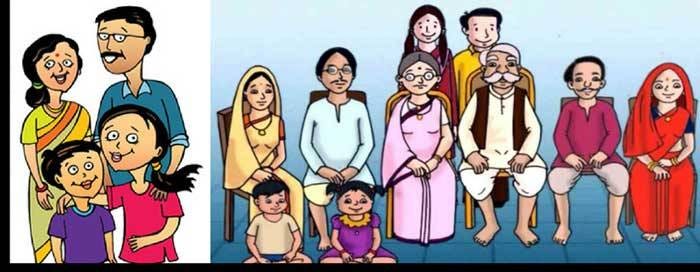
India, the cradle of deep-rooted values and intergenerational relationships, once found strength and sustainability in the joint family system — a socio-cultural institution that perfectly balanced emotional well-being, economic prudence, and moral guidance. According to the Needonomics School of Thought (NST), this institution was not merely a living arrangement but a self-reliant model of social security rooted in need-based living, where elders were respected as wisdom-bearers, children were nurtured through collective care, and responsibilities were shared in a spirit of selfless cooperation.
For centuries, even as foreign powers came and went — from the Mughals to the British — and political structures collapsed and re-emerged, the joint family stood resilient, reinforcing the Indian ethos of interdependence and emotional economics. We did not need pensions or retirement homes, for the elderly lived with dignity and purpose. We did not face a mental health crisis, because wisdom flowed through daily conversations, not costly consultations. Loneliness was rare because life was experienced in togetherness, not in transactional solitude.
Today, however, this noble institution is disintegrating under the weight of unbridled consumerism, cleverly disguised as progress. The NST reminds us that modernity without morality leads to misery. In chasing wants over needs, we have unknowingly abandoned a time-tested model of collective living that once upheld the soul of Indian society. The critical question we must now ask — guided by the mandate of NST — is this: What have we sacrificed in our blind pursuit of material advancement, and how do we restore the value of relationships over the volume of consumption
A Calculated Erosion Disguised as Progress
What really changed?
The decline of the Indian joint family system was neither organic nor inevitable. It did not merely result from urbanization, globalization, or migration in search of employment. According to NST, it was a silent, systematic dismantling — an invisible yet deliberate disruption of India’s most resilient social institution.
To understand the intent behind this shift, we must look beyond the surface and examine the economic forces shaping modern life. Western models of growth — deeply rooted in individualism, colonial plunder, and consumerist expansion — viewed India’s collective family culture as a challenge. Here was a society that lived simply, spent wisely, shared resources, and passed down enduring values through generations. Such a society was resistant to consumerism. It didn’t align with the market logic of “buy more, spend more, upgrade often.”
Thus emerged a clever — even ruthless — market strategy:
Break the family. Isolate the individual. Turn loneliness into a lifestyle — and every lonely person into a lifetime customer.
This isn’t conspiracy; it’s consumption economics. A joint family meant shared meals, shared appliances, shared transportation — and most importantly, shared values. It meant fewer units of consumption. But when the family fragments, demand multiplies: more homes, more kitchens, more televisions, more gadgets, more fuel, more everything. Each isolated household becomes a separate profit center.
The joint families, deeply embedded in need-based living, stood as a natural resistance to market overreach. So it had to be rebranded as outdated, restrictive, and regressive. The cultural narrative shifted accordingly. Media and entertainment began portraying the joint family as a source of conflict — especially through the recurring trope of the mother-in-law vs. daughter-in-law, resolved only through separation.
By the late 1990s and early 2000s, television serials and films began glamorizing the nuclear family as modern, free, and forward-thinking — subtly embedding the idea that breaking away from tradition was the only path to progress.
NST warns us that this was not merely cultural evolution but a commercially motivated devaluation of Indian family ethics — an assault on the values of simplicity, sharing, and sustainability.
Market Loves Nuclear Families
As nuclear families replaced joint families, the market rejoiced. Where once one kitchen fed a dozen, now four families meant four kitchens. One car turned into two. One TV became five — one for each room. Each split in the family tree meant new consumption. The economics is simple: More isolation equals more spending.
Even holidays and festivals have become commodities. Once, families came together to celebrate Diwali with diyas, sweets, and shared joy. Today, it’s about Amazon sales and Netflix specials. The market has converted sacred traditions into commercial opportunities. A lonely consumer celebrates with packages, not people. The emotional ecosystem of Indian families has been replaced with transactional substitutes. Love is replaced by likes, guidance by Google, and connection by convenience.
Cost of Consumerism: Emotional Bankruptcy
NST warns that the cost of this societal shift is deeper than most realize. This is not just about changing family structures. It is about a loss of meaning, identity, and emotional health.
Let us consider the consequences:
- Elders are isolated — often viewed as liabilities instead of repositories of wisdom.
- Children grow up confused, learning values from screens instead of stories.
- Mental health issues are rampant, with therapy replacing once-healing conversations.
- Festivals are depersonalized, becoming shopping sprees rather than sacred togetherness.
- Relationships are fragile, and the emotional intelligence that once passed from generation to generation has been replaced by consumer impulses.
As NST rightly observes “Every emotion has an app, every relationship has been replaced by a transaction.” In this scenario, Zomato thrives because families no longer cook together. Netflix wins because there’s no grandmother telling stories at bedtime. Amazon profits because our love is now measured in packages, not in presence.
Reclaiming the Joint Family: A Needonomics Mandate
But all is not lost. Needonomics School of Thought does not merely diagnose; it prescribes. It does not lament the past; it urges a more meaningful future — one that is both traditional and transformative. The revival of the joint family system is not about resisting change, but about rebalancing. We need not reject technology or urbanization. Instead, we must recenter our lives on relationships, not retail. We must build futures on values, not vacuums. Here is what Needonomics mandates for every conscious Indian:
What Can We Do?
1 Respect Joint Families as Assets: They are not obstacles to growth but pillars of emotional and cultural wealth. Where elders live, wisdom lives. Where cousins play together, empathy grows. Where decisions are shared, harmony thrives.
2 Raise Children with Sanskars, Not Just Degrees: A child trained only for exams but not exposed to empathy, cooperation, and responsibility will succeed materially but fail morally. Let sanskars — the invisible foundation of character — be the goal of parenting.
3 Honor Our Elders: No algorithm can replace the experience of a grandfather or the affection of a grandmother. Their guidance is timeless and grounded. In a world full of information, they offer wisdom — a rare and precious gift.
4 Celebrate Traditions in Togetherness: Let Diwali be about family, not discounts. Let Holi be about laughter, not luxury. The richness of our culture lies in connection, not consumption.
5 Cure Loneliness with Affection, Not Algorithms: No app can substitute for a shared meal or a heartfelt conversation. Build community through time and presence — not clicks, not texts.
From Modernity to Meaning
Modernity without meaning is a mirage. We have gained speed but lost direction. We are more connected digitally but more isolated emotionally. The Needonomics philosophy does not reject modern life but insists that it must be rooted in need, not greed; in relationships, not replacements.
In this so-called race toward development, we have un-followed relationships and followed influencers. But influence without intimacy cannot heal our hearts. It is time to press pause — to recalibrate what we call progress. If we fail to act now, the next generation may grow up needing AI to explain what a “joint family” used to be.
A Final Prayer from NST
With folded hands and hearts grounded in Indian wisdom, Needonomics School of Thought offers a solemn and sincere prayer for the soul of our nation: “May we find strength, meaning, and salvation in the embrace of joint families — not as relics of a bygone era, but as the foundation of a more humane, need-based, and emotionally secure society.” This is not a call to regress into the past, but a heartfelt appeal to reclaim our purpose. In a marketplace that thrives on fractured families and isolated individuals, we must consciously choose a different path — from consumers to caregivers, from disconnection to community, from loneliness to love. If we fail to reflect and recalibrate now, we risk becoming a society where future generations may only learn about joint families through textbooks or artificial intelligence. The time to awaken is not someday — but today. Let us rebuild what the market quietly broke. Let us revive relationships over retail, values over vanity and tradition over transaction. In doing so, we restore not only our families — but our very humanity.
