
When Tourist Visas Turn Political: A Line That Shouldn’t Be Crossed

Poonam Sharma
When Tourism Turns Into Provocation: Why Political Activism on Tourist Visas ?
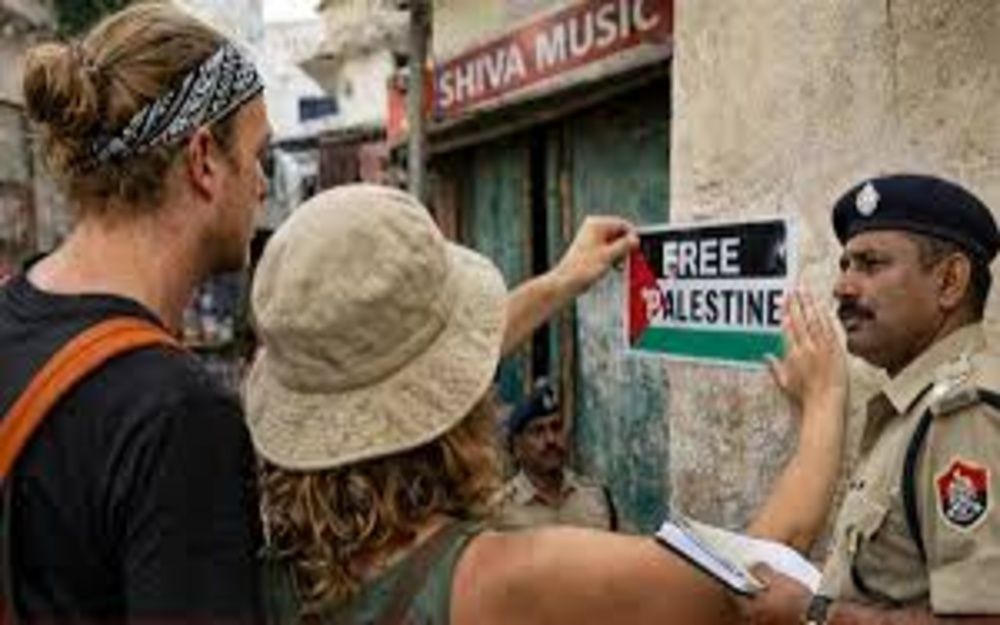
The recent incident involving two British tourists being asked to leave India for pasting “Free Palestine” stickers in public spaces in Ajmer, Rajasthan, has ignited a larger debate—one that goes beyond geopolitics and into the basic ethics of travel. At its core, the issue is not about the Israel–Palestine conflict alone. It is about respect for the host country, adherence to visa laws, and the responsibility that comes with crossing borders as a guest.
India is known across the world for its hospitality. For decades, it has welcomed travelers from every continent—backpackers, spiritual seekers, students, artists, and families. The couple in question were welcomed too. They entered the country on a tourist visa, which is meant for travel, cultural exploration, and personal experience—not political activism, protests, or ideological campaigns. When visitors violate these conditions, they don’t just break a legal rule; they violate an unwritten social contract of trust.
A Guest’s Responsibility in a Foreign Land
Travel is a privilege, not a license to project one’s political agenda onto another country’s public spaces. Every nation has its own laws, sensitivities, and geopolitical equations. India maintains diplomatic relations with both Israel and Palestine and navigates the West Asian conflict through a carefully balanced foreign policy. When foreign nationals use Indian streets and walls to stage political messaging, they are effectively dragging India into a conflict that is not its own battlefield.
This is not free expression in the abstract. Free expression exists within legal frameworks. A tourist visa comes with clear boundaries. If someone wishes to engage in activism or political campaigning in another country, there are formal processes—permissions, visas, and legal routes. Bypassing these rules is not courage; it is entitlement.
When Activism Becomes Disrespect
What makes this incident particularly troubling is the sense of disregard for the host country’s space and laws. Public walls, streets, and marketplaces are not canvases for visiting foreigners to express ideological positions. These are shared civic spaces that belong to local communities. When tourists impose political messaging in such spaces, it can feel intrusive, even provocative, to residents who did not consent to being part of someone else’s protest.
Moreover, such actions place local authorities in a difficult position. Security agencies are bound to treat any political activity by foreign nationals seriously, especially in a region as geopolitically sensitive as South Asia. Even seemingly harmless stickers can raise concerns about foreign influence, propaganda, or coordinated activism. In today’s world of disinformation and proxy conflicts, governments cannot afford to be casual about such acts.
The Larger Cost: Straining International Relations
There is also a broader diplomatic cost. Incidents like these, however small they may seem, risk straining relations between countries. When foreign nationals misuse their stay in India to pursue political messaging, it reflects poorly on their home country as well—fairly or unfairly. It creates unnecessary friction, invites media outrage, and fuels narratives about foreign interference.
Tourists may see their actions as symbolic. Governments see consequences. In a time when global relations are already fragile, such provocations—intentional or careless—add noise to an already complex diplomatic landscape. It is not unreasonable for authorities to worry that such behavior carries an agenda, whether ideological signaling, performative activism, or social-media-driven grandstanding.
Travel Is About Learning, Not Lecturing
The purpose of travel is to learn, experience, and connect—to walk into another culture with curiosity and humility. When visitors turn their trip into a stage for political statements, they shift from learners to lecturers. That posture rarely builds bridges. It more often breeds resentment and defensiveness.
If travelers genuinely care about global justice, there are constructive ways to engage: learning local perspectives, supporting humanitarian causes through legal channels, or participating in advocacy within their own countries where their voices carry democratic legitimacy. Using another nation’s public spaces as a backdrop for activism can feel less like solidarity and more like spectacle.
A Reasonable Line by the Authorities
India’s response—revoking the tourist visas and issuing a “Leave India” notice—was firm but proportionate. The authorities did not criminalize opinion; they enforced visa conditions. This distinction matters. The message is simple: you are welcome to visit, explore, and enjoy the country—but not to use your tourist status to conduct political activity.
Respecting this boundary is not censorship. It is basic international etiquette.
A Lesson for Global Travelers
This episode should serve as a reminder to travelers everywhere: when you enter another country, you step into someone else’s home. You may carry your beliefs with you, but you do not have the right to impose them on public spaces that are not yours. Travel should be about openness, not agenda-setting. Enjoy the landscapes, the food, the history, the people. Let your journey be about discovery—not disruption.
In a world already fractured by conflict, the least travelers can do is avoid turning foreign streets into battlegrounds of ideology.
