
Explosions in Doha: Israel Threatens a New Geopolitical Storm

Poonam Sharma
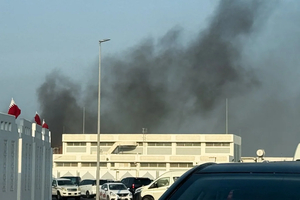
The targeted Israeli attack on Hamas commanders in Doha, Qatar, has opened a perilous new front in the protracted Middle Eastern conflict, with potential implications that go far beyond the Gaza strip or Israel’s boundaries. Multiple explosions tore through the Katara District on September 9, billowing clouds of smoke into the Doha sky and bringing with them immediate questions regarding the boundaries of sovereignty, international law, and the fine balancing act of regional diplomacy.
The Strike and Its Target
The Israeli military confirmed that its troops, together with its security service, conducted what it described as a “precise strike” against top Hamas leaders residing in Doha. Among those who were reportedly struck was Khalil al-Hayya, Hamas’s exiled Gaza leader and one of its lead negotiators. The official reason given by Israel was matter-of-fact: these men, it claimed, were “directly responsible for the October 7th massacre” and have since been directing operations against the State of Israel.
With its attack on Doha, Israel actually moved the battlefield from Gaza and south Lebanon into one of the Gulf’s largest capitals. This was not an act of war; it was a deliberate political statement.
Qatar’s Role and Reaction
Qatar has been the host of Hamas’s political bureau for years and has acted as a broker between Israel and the Palestinian movement, especially in negotiating ceasefires in Gaza. Doha has helped to finance Gaza, sometimes with the theoretical blessing of Israel and the United States, which viewed Qatar’s activities as a stabilizing influence.
That calculus has been undermined. Qatar denounced the attack as a “cowardly Israeli assault” and portrayed it as a breach of international law and a threat to the security of its residents. That warning is more than indignant—it suggests a potential realignment of Qatar’s balancing act between backing Palestinian causes and upholding its status as a Western ally.
International Fallout
The global reaction has been rapid and piecemeal. Israeli Prime Minister Benjamin Netanyahu welcomed the operation, taking full credit for it, while his ministers explained that it was the “right decision.” The attack is for Israel a show of force supporting its long-held policy: it will chase its foes wherever they may be.
On the contrary, the UAE and Iran decried the attack. The US Embassy in Doha ordered American citizens to take shelter, signaling the actual likelihood of retaliatory violence. Washington is caught between a rock and a hard place: it is pro-Israel’s security interests while it also has Qatar as a host for its biggest Middle Eastern military base, Al Udeid Air Base.
Geopolitical Implications
The consequences of the Doha strike are enormous:
Violation of Sovereignty – By attacking in Qatar’s capital, Israel has challenged one of the most powerful states of the Gulf, and has opened the door to a destabilizing precedent. Sovereignty is still one of the pillars of international law, and Israel’s move may stimulate other powers to engage in similar “extraterritorial strikes”.
Strained Mediation Channels – Qatar’s mediation role is now under jeopardy. Doha might retreat from its role if it feels embarrassed, leaving the already tenuous Gaza ceasefire negotiations in jeopardy.
Regional Escalation – The escalation also has the potential to spread the war beyond Gaza and Israel. If Hamas or its partners react within the Gulf or attack Israeli interests overseas, the cycle of violence may escalate into new geographies.
Testing U.S. Diplomacy – Washington is torn by the paradox of patronizing its ally, Israel, and keeping Qatar on board, both as a mediator and a strategic ally. Anything that has the whiff of bias could drive Qatar into Iran’s or Turkey’s arms.
Israel’s Strategic Calculus
Israel’s move is a mix of frustration and deterrence. After numerous military campaigns in Gaza, the leadership of Hamas outside its territory has not been harmed and continued to fundraise, coordinate, and negotiate. By attacking in Doha, Israel wants to decapitate the political bureau of Hamas and cut off its strategic depth.
But this step is risky. The very accuracy of the strike implies trying not to harm civilians, but the imagery of smoke billowing in a foreign capital is potent. Israel runs the risk of solidifying perceptions that it is a rogue state that ignores international norms.
A New Precedent?
The most concerning aspect is the precedent it creates. If Israel can strike Hamas commanders in Qatar, why not Iran against exiled opposition activists in Europe, or Turkey against Kurdish activists in foreign countries? The devaluation of respect for national borders might gain momentum in an already fast-paced world of hybrid warfare and drone attacks.
Possible Next Steps
Qatar’s Leverage: Doha may retaliate diplomatically by limiting its engagement in ceasefire talks, or economically by leveraging its gas exports.
Hamas’s Response: The group could escalate attacks on Israel or its allies, seeking revenge for the assassination attempt.
International Mediation: Pressure will mount on the U.S. and European powers to rein in Israel while preventing Hamas from exploiting the crisis.
Conclusion
The explosions in Doha are not merely a tactical strike—they are a geopolitical earthquake. Israel has opened up the battlefield to a Gulf capital, defying conventions of sovereignty and redrawing the Middle East’s tenuous diplomatic landscape. As Netanyahu hails the strike as a victory of Israeli fortitude, the longer-term implications may be destabilizing.
What was previously a proxy conflict generally limited to Gaza and southern Lebanon can now extend to new theatres, challenging the durability of alliances, the forbearance of regional actors, and the boundaries of international law. By attacking Doha, Israel has not merely attacked Hamas—it has raised questions about the future of diplomacy, sovereignty, and stability in one of the most turbulent parts of the world.
