

By Anjali Sharma
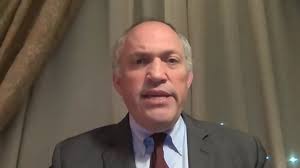
WASHINGTON – The forrmer Pentagon analyst, Michael Rubin on Tuesday has delivered a scathing assessment of Pakistan’s recent nuclear rhetoric, described the country as behaving like “a rogue state” after threatening comments made by its army chief on American soil.
The controversy centers on remarks attributed to Pakistan’s army chief General Asim Munir, who allegedly threatened that if Pakistan “goes down, it would take half the world down” with it. The comments were reportedly made during a meeting in Tampa, Florida, with US military officials.
Michael Rubin, a former Pentagon official and Middle East analyst quoted in media saying that Pakistan’s behavior was “completely unacceptable” and compared the army chief’s rhetoric to statements previously made by ISIS and Osama bin Laden.“Pakistan is raising questions in many people’s minds about whether it can fulfill the responsibilities of being a state,” Rubin said.
“The Field Marshal’s rhetoric is reminiscent of what we’ve heard from the Islamic State.”
Rubin called for immediate diplomatic consequences, including stripping Pakistan of its status as a major non-NATO ally and potentially designating it as a state sponsor of terrorism.
He also suggested that General Munir should be declared persona non grata and banned from receiving US visas.
Rubin expressed particular concern about the lack of immediate response from US officials present during the alleged remarks.
He argued that the Pakistani army chief should have been immediately escorted from the meeting and expelled from the country.
“Within 30 minutes of when Asim Munir made those comments, he should have been ushered out, taken to Tampa International Airport, and flown out of the United States,” Rubin stated.
He suggested that President Trump’s continued engagement with Pakistan might be influenced by external factors.
Pentagon Analyst noted that Trump’s approach represents a departure from the traditionally strong bipartisan support for the US-India partnership that has developed since the George W. Bush administration.Rubin painted a broader picture of regional instability, suggesting that Pakistan’s nuclear threats could provide cover for terrorist elements to “go rogue” with nuclear weapons.
He argued that Pakistan represents a fundamentally different challenge from traditional diplomatic disputes.
“Americans look at terrorism through the lens of grievance,” he explained. “They don’t understand the ideological underpinnings of many terrorists. Asim Munir is Osama bin Laden in a suit.”
Rubin suggested that the international community should consider allowing Pakistan to undergo what he termed a “managed decline,” potentially including recognition of breakaway regions such as Balochistan.
He raised the possibility of future military intervention to secure Pakistan’s nuclear arsenal.
“It’s coming near time when, in a future administration, other SEAL teams should enter Pakistan to secure its nuclear weapons because the alternative is simply too great to bear,” he said.
His comments highlighted the complex web of relationships affecting US policy in South Asia.
Rubin suggested that Trump’s recent tensions with India over trade and sanctions related to Russian energy purchases were not counterproductive, noted that the US itself purchases strategic materials from Russia.
He predicted that US-India relations would likely improve once the current administration’s approach changes, described the current tensions as a “stress test” that would ultimately strengthen the partnership.
His comments reflect growing concerns about Pakistan’s stability and its nuclear capabilities.
Rubin’s proposals dealing with Pakistan appear to go well beyond current US policy, they highlight the challenges facing policymakers as they navigate relationships with nuclear-armed states in an increasingly volatile region.
