

Poonam Sharma
The traditionally strong transatlantic partnership — rooted in shared values after World War II — is facing one of its most serious tests in decades. Recent statements by European leaders in response to U.S. President Donald Trump’s renewed focus on Greenland underscore a deeper shift: European capitals are increasingly wary of American unpredictability, and are reassessing how to protect their own strategic interests without entirely abandoning the Atlantic alliance.
This crisis is more than a dispute over Arctic geography. It reflects a fundamental rebalancing of European trust in the United States, and a growing desire in Europe to assert autonomy in foreign and security policy.
The Greenland Flashpoint: A Symbol of Transatlantic Strain
The immediate catalyst for heightened tension is Trump’s controversial remarks about acquiring or asserting control over Greenland, a vast, mineral-rich Arctic territory that is part of the Kingdom of Denmark and safeguarded under NATO. Trump has framed Greenland as vital to U.S. national security and hinted that all policy options, including military measures, could be considered — a stance that European leaders have roundly criticised.
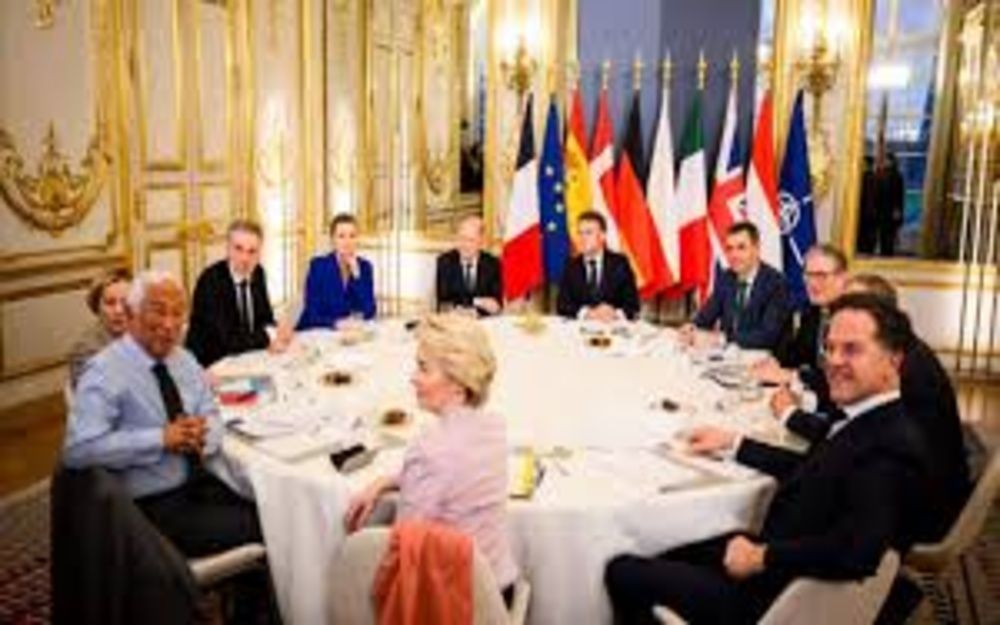
European heads of government from France, Germany, the United Kingdom, Poland, Spain, Italy, and Denmark issued a joint statement affirming that Greenland “belongs to its people” and underscoring the inviolability of sovereignty and territorial integrity — key tenets of international law.
Italian Prime Minister Giorgia Meloni, often seen as one of the most pro-U.S. leaders in Europe, voiced her disbelief that the United States would use force and made clear she would not support any such action, emphasising the damaging effect it would have on NATO. Her remarks are telling — even a close European ally of Washington draws a line at unilateral military action by the United States outside international norms.
Similarly, Poland’s Prime Minister highlighted the strain this rhetoric places on NATO unity, warning that undermining alliance trust could weaken the collective response to shared challenges such as Russia’s aggression.
And Danish Prime Minister Mette Frederiksen did not mince words, warning that any U.S. attack on a NATO ally would fundamentally jeopardise the alliance itself — a stark reminder of how far relations have drifted from unconditional post-war cooperation.
From Partner to Problem: European Perceptions of U.S. Policy
Even before the Greenland issue, many European capitals had grown uneasy with Washington’s foreign policy under Trump. Analysts and strategic thinkers have described a “low trust” environment in transatlantic relations, where European leaders feel the need to hedge against unilateral U.S. decision-making and transactional politics.
There are multiple layers to this unease:
1. Eroding Multilateralism
European leaders such as French President Emmanuel Macron and Germany’s Frank-Walter Steinmeier have publicly criticised what they see as the United States’ retreat from multilateral norms and institutions. They argue that Washington’s increased focus on unilateral action destabilises established frameworks for cooperation — from NATO to global trade and climate diplomacy.
2. Strategic Autonomy
The idea of strategic autonomy — Europe’s ability to act independently on security and defence issues — has moved from academic debate to political priority. Macron, for instance, has been echoing calls for Europe to be less dependent on the United States, particularly in light of unpredictable shifts in U.S. policy on Ukraine and wider security challenges.
3. Rethinking NATO’s Role
While NATO remains central to European defence, leaders are reassessing what the alliance means in an era of shifting U.S. priorities. Some commentators suggest that Europe must be prepared to shoulder more of its own defence burden, reducing strategic reliance on Washington without abandoning the alliance.
A Human Dimension: Caught Between Alliance and Sovereignty
European leaders face a delicate balancing act: they recognise the practical importance of close cooperation with the United States — economically, militarily, and culturally — while also safeguarding European sovereignty and legitimacy.
.For citizens across Europe, these debates are not abstract. Memories of past wars and colonial struggles infuse public attitudes toward sovereignty and foreign intervention. When leaders like Meloni emphasise that military action by the U.S. “would be in no one’s interest,” they are speaking not just as diplomats but as voices trying to reassure populations wary of great-power politics.
Similarly, Denmark’s powerful warning about collective defence invokes Article 5 of the NATO treaty — the promise that an attack on one ally is an attack on all — a principle that resonates deeply with European publics as a bedrock of security.
Looking Ahead: Europe’s Strategy to Counter Unilateral Threats
In response to perceived American unpredictability, European leaders are pursuing multiple avenues:
1. Strengthening NATO Collectively
Rather than abandoning NATO, Europeans are calling for greater European engagement within the alliance, especially in areas like the Arctic where rising global competition — particularly from Russia and China — demands cohesive strategy and presence.
2. Building Independent Capabilities
There is increased momentum behind European defence initiatives, including higher defence spending commitments and deeper integration of European theatre commands and rapid response forces. This reflects a recognition that Europe cannot rely solely on external guarantees.
3. Reinforcing International Law
By consistently framing the Greenland dispute as a matter of sovereignty and legal order, European leaders are asserting a principled stance. This serves both as a moral argument and as a strategic pushback against actions seen as threatening the rules-based international system.
Conclusion: A New Chapter in Transatlantic Relations
The current moment is historic: European leaders are recalibrating their relationship with the United States not out of hostility, but out of necessity and self-determination. They seek a balance where collaboration endures, but not at the expense of Europe’s own strategic interests and normative commitments.
As one European diplomat put it privately to colleagues: “We are not rejecting America — we are insisting that friendship respect sovereignty.”
This evolution — nuanced, spirited, and deeply human — marks a transition from passive alliance-building to assertive partnership reshaped by trust, caution, and shared but sometimes divergent visions of security and order.
ChatGPT can make mistakes. Check important info. See Cookie Preferences.
