
End of an Era: Calcutta Stock Exchange to Close After 117 Years
“As Bharat’s oldest regional bourse winds down, the CSE’s fall reflects the consolidation and modernization reshaping Bharat’s capital markets.”

Paromita Das
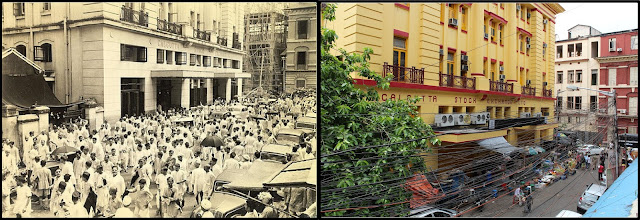
New Delhi, 23rd October: Once vying as a formidable contender against the Bombay Stock Exchange, the 117-year-old Calcutta Stock Exchange (CSE) is poised to close its doors permanently on October 20, 2025. This marks a bittersweet conclusion to an institution synonymous with Kolkata’s financial heritage and the vibrant Lyons Range trade hub. After facing suspension by the Securities and Exchange Board of India (SEBI) in 2013 due to regulatory non-compliance, and years of legal battles and declining relevance amid the rise of NSE and BSE, the CSE will celebrate its final Kali Puja and Diwali as a functioning stock exchange, closing a significant chapter in Bharat’s capital markets history.
A Storied Legacy Facing Modern Realities

The CSE, established in 1908, once competed fiercely with the Bombay Stock Exchange and symbolized the economic pulse of eastern Bharat. However, the rapid technological advancements brought on by the Dot Com era in the early 2000s shifted finance towards electronic platforms controlled primarily by the NSE and BSE. The exchange struggled to keep up, further battered by scandals such as the 2001 Ketan Parekh scam, where stock manipulations exploited systemic loopholes, eroding investor confidence.
The regulatory suspension of trading in 2013 exacerbated the decline, with repeated failed efforts to reinstate trading only deepening financial burdens. In April 2025, shareholders approved the CSE’s voluntary exit plan, which includes selling its valuable three-acre EM Bypass property and implementing a Voluntary Retirement Scheme (VRS) for employees.
Regulatory Challenges and the Exit Process

SEBI’s suspension was rooted in non-compliance with key regulations. Over the past decade, the CSE mounted legal challenges but ultimately opted for a voluntary exit, withdrawing its cases from the Supreme Court and Calcutta High Court in late 2024. The formal exit application submitted to SEBI is now undergoing valuation and approval processes, marking the final steps toward closure.
Though the stock exchange entity will cease trading operations, the holding company will remain, with its subsidiary, CSE Capital Markets Pvt Ltd, continuing to function on the NSE and BSE platforms.
The Human Side of Closure

For decades, the trading floors of the CSE echoed with prayers to Goddess Lakshmi, embodying tradition and aspiration. Veteran stockbroker Siddharth Thirani poignantly reflected, “This Diwali feels like a farewell to that legacy.” The Voluntary Retirement Scheme offered to employees reflects a thoughtful exit strategy, balancing heritage with humane transition amid inevitable change.
Lessons from CSE’s Decline

The closure of the Calcutta Stock Exchange is a telling reflection of how technology, regulatory frameworks, and market consolidation continually reshape financial landscapes. CSE’s downfall underscores the critical need for adaptability and compliance in modern capital markets. It also serves as a reminder of the importance of robust governance to maintain investor trust and relevance in an ever-evolving industry.
The Final Bell at Calcutta Stock Exchange
The Calcutta Stock Exchange’s permanent closure is more than the shuttering of a financial institution—it signals the end of a historic era for Bharat’s regional stock exchanges. While its legacy remains integral to the narrative of Bharat’s economic history, the concentration of trading on technologically advanced national platforms represents the future of equity markets. As CSE closes its final trade, it leaves behind lessons in resilience, change, and the enduring spirit of Bharatiya capital markets modernization.
