
Emergency Was an Earthquake That Shook Indian Democracy: VP Dhankhar

GG News Bureau
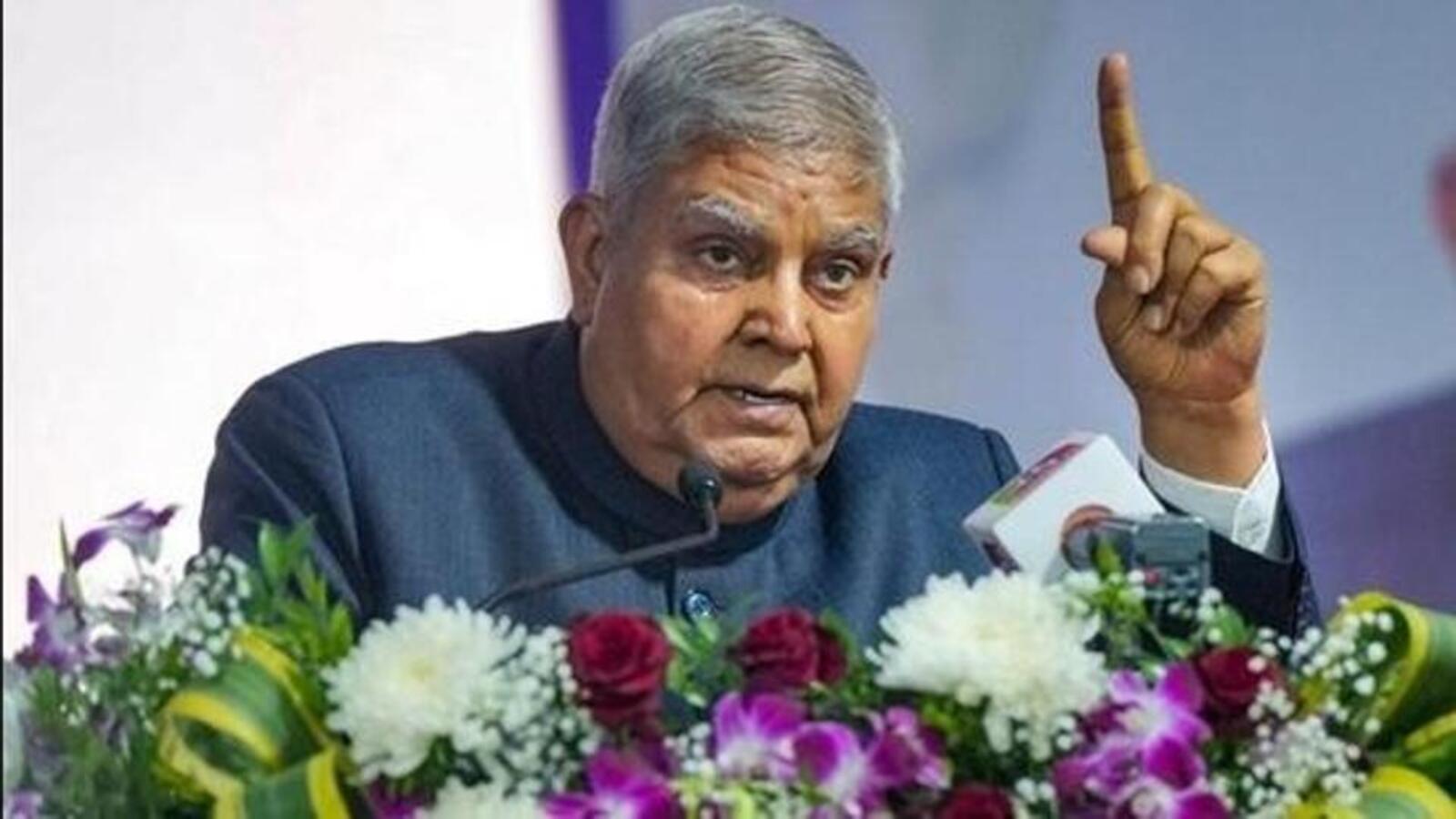
Nainital, 25th June: Vice-President Jagdeep Dhankhar on Wednesday described the imposition of the Emergency on June 25, 1975, as nothing short of an “earthquake to destroy democracy,” asserting that it was the darkest chapter in India’s constitutional history. Speaking at the Golden Jubilee celebrations of Kumaon University in Nainital, the Vice President reflected on the severe breakdown of democratic institutions during the Emergency and urged the youth to remain vigilant and informed.
“Fifty years ago, the oldest and most vibrant democracy hit an unexpected hazard. The Emergency imposed by the then Prime Minister, sidelining the Cabinet and yielding to personal gain, was a direct attack on constitutionalism,” Dhankhar said. “The night was dark, and what followed for nearly two years was a turbulent and unimaginable period for our democracy.”
He highlighted how 1.4 lakh people were jailed, stripped of their fundamental rights and access to justice. “Nine High Courts stood their ground, affirming that fundamental rights could not be suspended. But the Supreme Court failed. It overturned those verdicts, declaring Emergency immune to judicial review and denying people their basic rights. It was a major setback to the nation.”
He also hailed the lone dissenting voice of Justice H.R. Khanna, calling him a symbol of democratic resistance. “A leading US newspaper had said that if democracy ever returns to Bharat, a monument must be built for H.R. Khanna. That’s the depth of his contribution.”
Calling the Emergency a period of “Samvidhan Hatya” (Constitutional Murder), Dhankhar said its remembrance must serve as a reminder to protect democracy from such authoritarian overreach. “Our youth, the most vital stakeholders in governance, must learn about this dark period. That’s why this day is observed as ‘Samvidhan Hatya Divas’—to ensure it never happens again.”
In his address to students, the Vice President stressed that universities must function as “natural crucibles of ideation and innovation.” Urging students to not be afraid of failure, he added, “Ideas matter, but ideation matters more. Just do it—and do it now.”
He also underlined the importance of alumni engagement, citing international examples of institutions with endowments worth billions. “If the 1 lakh alumni of this institution contribute even ₹10,000 annually, you generate ₹100 crore every year. This could make you self-sustaining and foster deeper alumni-student connections.”
Vice President Dhankhar’s address stood as both a remembrance and a call to action—against historical amnesia, for institutional integrity, and for youth-driven innovation in a vibrant democracy.
