

By Anjali Sharma
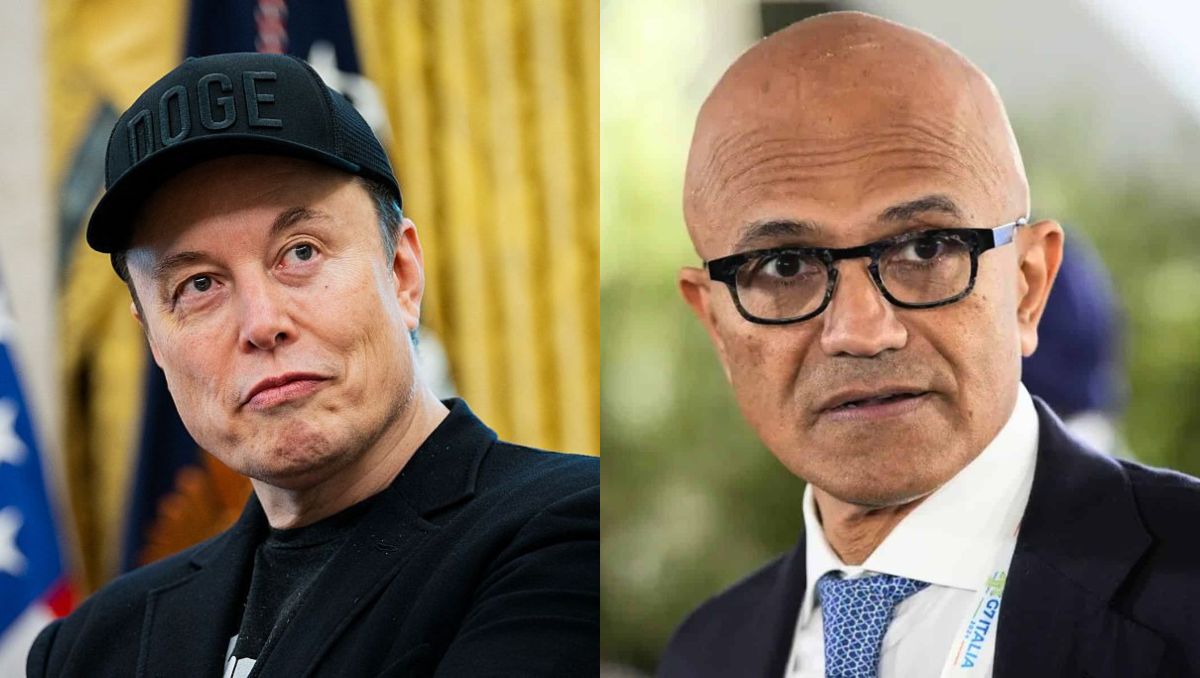
WASHINGTON – Elon Musk on Sunday warned that OpenAI could “eat Microsoft alive,” after Microsoft CEO Satya Nadella’s announcement of GPT-5 integration across its platforms.
OpenAI on Sunday has launched GPT-5, its most advanced AI model yet, boasting PhD-level expertise and improved reasoning capabilities.
Musk asserted that OpenAI is set to “eat Microsoft alive,” coincided with Microsoft CEO Satya Nadella’s announcement of the comprehensive integration of GPT-5 across Microsoft’s product suite.
The bold statement came shortly after OpenAI unveiled GPT-5, its most advanced AI model to date, which Nadella praised for its leaps in reasoning, coding, and conversational skills.
OpenAI’s launch of GPT-5 has generated significant excitement, touting the new model’s capability to deliver PhD-level expertise.
Sam Altman, OpenAI’s CEO and co-founder, described GPT-5 as ushering in an unprecedented era for AI, declaring that such a sophisticated system would have been unimaginable in previous times.
The company highlights the model’s superior speed, intelligence, and practical utility.
GPT-5’s debut arrives after fierce competition among tech giants to dominate the AI chatbot space.
Musk also promotes his AI chatbot Grok integrated into X (formerly Twitter), claims Grok surpasses PhD-level performance and brands it as the “world’s smartest AI.”
OpenAI promises that GPT-5 reduces hallucinations—errors where AI fabricates information—and is more transparent in responses.
The new model excels in software development, demonstrating enhanced reasoning through logical explanations and inferred conclusions.
Altman emphasized that GPT-5 offers a notably more human-like experience compared to previous iterations, likening GPT-3 to a high school student, GPT-4 to a college graduate, and GPT-5 to a subject-matter expert with doctoral-level knowledge.
Professor Carissa Véliz from the Institute for Ethics in AI suggests that while GPT-5’s capabilities are impressive, the hype surrounding it may be largely marketing-driven. She points out that AI systems have yet to prove consistently profitable and that they imitate rather than genuinely replicate human reasoning.
Concerns over governance and ethical considerations also persist. Gaia Marcus, Director of the Ada Lovelace Institute, stresses that as AI models grow more powerful, robust regulation becomes increasingly critical to align AI development with public expectations.
The arrival of GPT-5 also raises questions for content creators and commercial enterprises.
Grant Farhall, Chief Product Officer at Getty Images, highlights the importance of protecting the authenticity and rights of creators whose work might be used to train AI models. He urges transparency around training data and fair compensation for original content creators.
OpenAI plans to make GPT-5 widely available. The days ahead will reveal if it truly fulfills the lofty expectations set by Sam Altman and how it shapes the competitive AI landscape.
