
Education Minister to Inaugurate Akhil Bharatiya Shiksha Samagam
National Summit at Bharat Mandapam Marks 5 Years of NEP 2020, Unveiling New Initiatives and Campus Foundations.

GG News Bureau
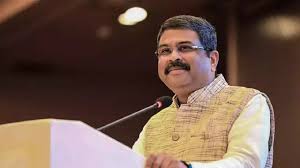
New Delhi, 28th July: Union Education Minister Shri Dharmendra Pradhan is set to inaugurate the Akhil Bharatiya Shiksha Samagam (ABSS) 2025 tomorrow, July 29, at Bharat Mandapam. The day-long event, organized by the Ministry of Education, will commemorate the fifth anniversary of the National Education Policy (NEP) 2020.
The ABSS 2025 will serve as a crucial platform for academicians, policymakers, educators, industry leaders, and government representatives to review the significant progress made under NEP 2020 and strategize for the future of India’s education landscape. The deliberations will emphasize making education more accessible, practical, and skill-oriented, with a seamless integration with employment opportunities to prepare students for a dynamic global economy. Key discussion areas include re-envisioning secondary education for 100% Gross Enrolment Ratio (GER) by 2030, promoting Bharatiya Bhasha, leveraging technology in classrooms, mainstreaming Indian Knowledge Systems (IKS), and fostering inclusivity.
Several new initiatives will be launched, and foundation stones for new campuses will be unveiled during the Samagam. A multimedia exhibition showcasing best practices in education will also be a highlight of the event.
In the five years since its inception, NEP 2020 has brought about transformative changes in India’s education sector. In Higher Education, the National Credit Framework (NCrF) has been adopted by 170 universities, facilitating seamless credit accumulation, while the Academic Bank of Credit (ABC) has onboarded 2,469 institutions with over 32 crore IDs issued. The introduction of multiple entry and exit options across 153 universities and biannual admissions are steadily moving India towards its 50% GER target by 2035.
Technology has significantly boosted learning, with 116 higher education institutions offering 1,149 Open and Distance Learning (ODL) programs to over 19 lakh students. The SWAYAM platform now allows credit transfers up to 40%, integrated by 388 universities. Digital initiatives like SAMARTH support governance across more than 13,000 Higher Education Institutions (HEIs), and the One Nation One Subscription (ONOS) initiative provides access to nearly 13,000 e-journals across 6,300 institutions. The Malaviya Mission Teacher Training Programme (MMTTP) has empowered over 2.5 lakh faculty members through more than 3,950 training programs.
In school education, the Department of School Education & Literacy (DoSEL) has made remarkable strides, impacting 14.72 lakh schools, over 98 lakh teachers, and approximately 24.8 crore students. Government schools have shown significant improvement, with the NIPUN Bharat Mission contributing to better foundational literacy and numeracy skills. The ULLAS adult education scheme has registered 2.60 crore learners, with Ladakh, Mizoram, Goa, and Tripura achieving full literacy under this initiative. Assessment and monitoring have been strengthened through surveys like PARAKH Rashtriya Sarvekshan 2024. The PM SHRI initiative has selected 13,076 schools as exemplars for NEP 2020, and PM POSHAN now includes Bal Vatika students. SWAYAM PRABHA’s school education channels have expanded to 200, offering 92,147 video contents in 30 languages.
The ABSS 2025 will specifically delve into key thematic areas such as the use of Bharatiya Bhasha in teaching-learning, ‘Anusandhan’ and Prime Minister’s Research Fellows (PMRF) for academic and industry leadership, re-envisioning secondary education to achieve 100% GER by 2030, and the establishment of Centres of Excellence (COE) in AI for education. The Samagam’s agenda will highlight these achievements while setting the course for the next phase of educational transformation, focusing on deepening industry-academic collaboration, refining vocational pathways, expanding digital infrastructure, and embedding sustainability in curricula.
