
“Not Sympathy, But Political Power”: Dr. Uttam Ojha’s Unfiltered Push for “Divyang Empowerment”
Dr. Uttam Ojha, Former Central Advisory Board Member, Ministry of Social Justice and Empowerment, Govt of India, and State Coordinator, Divyang Prakoshtha, Bharatiya Janata Party — Calls for 5% Reservation in Politics for Divyangjans, Emphasises Shift from Welfare to Power as per vision of PM Narendra Modi. Dr Ojha also thanked PM Modi ji for renaming this special class family of Bharat -“Vikalang to Divyang“. He says-it reflects his thinking towards this society of great concern.


In a sharply candid and politically charged interaction, Dr. Uttam Ojha lays out a compelling case for why India’s “Divyang community”must move from the margins of welfare to the center of power. A doctor who chose activism over a stable career, Dr Ojha speaks with unusual clarity—backed by data, experience, and an unapologetic political vision.
Having travelled across 28 states, 8 Union Territories, and over 700 districts, Dr. Ojha has worked extensively at the grassroots, directly reaching and benefitting millions of Divyangjans through welfare initiatives, awareness drives, and accessibility interventions. His journey reflects not just commitment, but scale—transforming individual service into a nationwide mission.
Dr. Uttam Ojha presents a sharp, ground-level and policy-driven perspective on disability rights, political empowerment, and inclusive governance for Divyangajan in India.
Harshita Rai, Content Head, Global Governance News Group, in an exclusive interview with Dr. Uttam Ojha, State Coordinator, Divyang Prakoshtha, Bharatiya Janata Party, Uttar Pradesh.
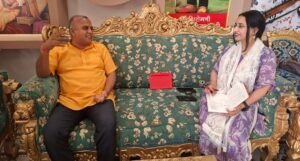
Q1. You worked in the medical field for years. What led you to shift towards full-time work for Divyangjans?
Ans-: “I worked for a long time for Divyangjans. During this journey, one realization became very clear to me. In 2018, I became a member of the Central Advisory Board under the provisions of the 2016 disability law. After becoming a member, I worked extensively and closely observed the system.
I experienced that without political empowerment, it is not possible to bring real transformation in the lives of Divyangjans. I conveyed this concern to senior leaders including Prime Minister Narendra Modi Ji, JP Nadda ji, and also to Amit Shah ji. I consistently emphasized that we must take initiative in this direction.”
Q2. You often highlight the political strength of Divyangjans. Could you elaborate with facts and figures?
Ans-: “Today, if we look at the numbers, Divyangjans themselves account for around 90 lakh voters. Across the country, their population is close to 10 crore. If we consider family members, even conservatively adding three votes per household, this becomes nearly 30 crore votes.
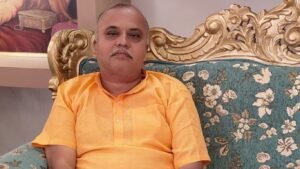
Governments in India are often formed with 18 to 21 crore votes. This means Divyangjans have the potential to make or unmake governments. This is not just a social group—it is a decisive democratic force. This strength must be utilized in a structured and political manner.”
Q3. How did the idea of forming a Divyang Prakoshtha within the BJP emerge?
Ans-: “When I shared this perspective, it resonated with Sunil Bansal ji, who was then the BJP General Secretary in Uttar Pradesh. He supported the idea, and for the first time in India, a dedicated Divyang cell was established within a political party.
In 2021, I was given the responsibility as the founding coordinator. This was not just an organizational step—it was the beginning of a new political thought process, positioning Uttar Pradesh as a model for the country.”
Q4. How effective are current government schemes for Divyangjans at the grassroots level?
Ans-: “If we divide India’s history into two phases—before 2014 and after 2014—the difference is evident. Earlier, welfare was largely limited to NGOs, and benefits rarely reached individuals directly.
Today, camps are being organized across the country. Assistive devices such as wheelchairs, tricycles, and hearing aids are being distributed widely. Mobility has improved, and with it, access to education, employment, and social participation.
This is a fundamental shift. Without mobility support, a Divyang person cannot move from one place to another. Now, that barrier is being systematically addressed.”
Q5. What are the major gaps that still remain?
Ans-: “The Rights of Persons with Disabilities Act, 2016 has brought a major transformation. However, its full implementation is still pending in many states. Separate departments have been created in some states, but others are yet to follow.
If this Act is implemented in its true spirit across the country, we can resolve a large proportion of the challenges faced by Divyangjans.”
Q6. Employment is still a critical issue. What concrete steps are being taken?
Ans-: “The focus is on skill development and counseling. The government’s recent budget provisions also reflect an emphasis on training Divyangjans and creating employment opportunities.
Within the party as well, we are working to ensure that employable Divyang individuals are given opportunities rather than being limited to pension-based dependency.”
Q7. Accessibility remains a major concern. What progress has been made and what still needs attention?
Ans-: “The Accessible India Campaign (Sugamya Bharat Abhiyan) launched in 2015 has improved accessibility in airports, railway stations, bus stands, and public offices.
For example, earlier it was extremely difficult for a Divyang person to visit Kashi Vishwanath Temple due to narrow lanes. Today, with the corridor, accessibility has improved significantly. However, ghats are still not fully accessible.
In 2018, I had proposed a project for ramps at ghats through the Social Justice Ministry, but it has not yet been implemented. This is an area where immediate action is needed.”
Q8. What role can technology play in empowering Divyangjans?
Ans-: “Technology is a game changer. Today, many Divyang individuals are working in multinational companies, using laptops and mobile technology, even from home.
Institutions like IITs are developing innovations that are making life more accessible. Science and technology can effectively reduce disability barriers and enable independence.”
Q9. What is your stand on political representation of Divyangjans?
Ans-: “Reservation in jobs has increased from 3% to 4%, and in higher education to around 4–5%. However, political representation is still missing, and that remains a serious gap.
We strongly demand at least 5% reservation in the political sphere as well. Representation is essential for real and lasting change. Without voices inside legislatures, policymaking remains incomplete.
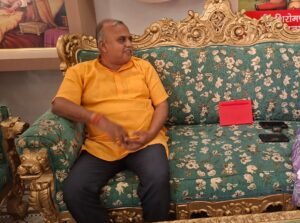
At the same time, there have been encouraging examples. Leaders like C. Sadanandan Master, who faced severe physical challenges after a brutal attack, have been given responsibilities within the system, reflecting a positive approach.
Similarly, Paralympian Devendra Jhajharia was given a ticket by the BJP from Churu in Rajasthan. Although he did not win, he fought a strong and respectable election. These examples show that the process has begun.
However, this change will take time. Without political empowerment, broader societal transformation is not possible. That is why structured representation for Divyangjans must be ensured.”
Q10. How do challenges differ between rural and urban areas?
Ans-: “Urban areas have better connectivity and facilities. However, rural and tribal regions require much more attention, especially in education, rehabilitation, and healthcare.
Divyang women in rural areas face even greater challenges. Policies must address these disparities with focused interventions.”
Q11. You have said disability should not be limited to one ministry. Why?
Ans-: “Disability is not the responsibility of a single ministry—it is a subject for every ministry. Whether it is rural development, transport, housing, or education, every department must integrate inclusivity.
At the same time, considering that nearly 10% of India’s population is Divyang, there is a strong case for establishing a dedicated Ministry for Divyang Affairs.”
Q12. What is your roadmap for the future?
Ans-: “Currently, the Divyang Prakoshtha has been established in several states. The next step is to expand it to the national level.
Other political parties must also take this issue seriously. Democracy thrives on participation, and Divyangjans must become active stakeholders.”
Q13. What inspired you personally to take this path?
Ans-: “I drew inspiration from the leadership at the highest level. When I saw the Prime Minister Narendra Modi Ji prioritizing issues of dignity and inclusion, it reinforced my belief that this is the right direction.
That is when I decided to dedicate myself fully to this mission.”
Q14. Your message to society and Divyangjans?
Ans-: “In the last decade, the scale of work done for Divyangjans in India is unprecedented globally. Today, Divyangjans are no longer on the margins—they are at the center.
I urge Divyangjans to believe in themselves and build confidence. At the same time, society must move beyond sympathy. Do not offer pity—offer opportunity.
Divyangjans do not need compassion; they need equal opportunity and respect. Only then can we build an inclusive India and achieve the vision of Viksit Bharat by 2047, where Divyangjans will play a crucial role.”
This conversation with Dr. Uttam Ojha shows a shift from welfare to empowerment, from sympathy to strategy, and from representation to participation—marking a new phase in India’s inclusive governance narrative.
