
Don’t ‘Toss Out’ Judgments Because Judges Change: Justice Nagarathna
Supreme Court judge flags growing trend of verdicts being overturned by succeeding benches

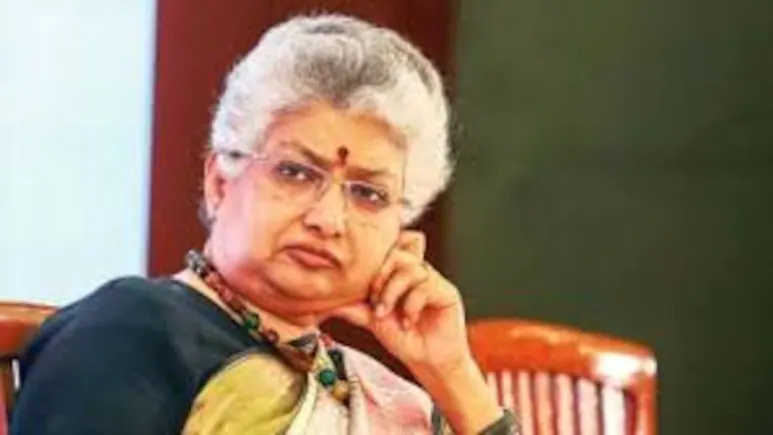
- Justice BV Nagarathna says judgments must hold their authority regardless of changes in bench composition.
- Remarks made at an international convention on judicial independence in Sonipat.
- Recent recalls of Supreme Court orders reignite debate on finality of judgments.
- Justice Nagarathna underscores political neutrality and personal conduct as pillars of judicial independence.
GG News Bureau
New Delhi, 1st Dec: Supreme Court judge Justice BV Nagarathna on Saturday cautioned against a growing trend of judgments being overturned simply because the judges who authored them have retired or moved on, stressing that verdicts “must not be tossed out” due to a change in faces on the bench.
Speaking at the International Convention on the Independence of the Judiciary at OP Jindal Global University in Sonipat, Justice Nagarathna said an evolved understanding of judicial independence requires assurance that a judgment, once delivered, “will hold its anchor in time, for it is written in ink and not in sand”.
She emphasised that the legal system must respect judicial decisions and raise objections only through processes rooted in law. “It is a duty of the many participants of the legal fraternity and governance framework to respect a judgement for what it is, and not attempt to toss it out solely because the faces have changed,” she said.
Her remarks came amid recent instances of the Supreme Court reversing its own orders. Earlier this month, the court recalled its May directive barring retrospective environmental clearances, after a review petition by a builders’ association. On November 28, a bench led by then Chief Justice BR Gavai lifted the ban and allowed ex post facto clearances for pending projects.
Similarly, in September, the top court upheld JSW Steel’s ₹19,000-crore bid for Bhushan Power and Steel Ltd, reversing its earlier order directing liquidation under the insolvency process.
Justice Nagarathna, currently the only woman judge in the Supreme Court, said the judiciary plays an integral role in governance, with courts often called upon to decide issues with long-term consequences for citizens. She stressed that judicial independence is safeguarded not only through verdicts but also through a judge’s conduct, noting that political neutrality and behaviour “beyond suspicion” are essential.
Her concerns echo the Supreme Court’s observations on November 26, when a bench of Justices Dipankar Datta and Augustine George Masih warned of a “growing trend” of judgments being overturned by succeeding benches at the behest of aggrieved parties. The bench said maintaining the finality of verdicts prevents endless litigation and upholds public trust.
“The strength of judicial power lies less in the hope of perfection and more in the confidence that decisions, once made, are settled,” the judges said, underscoring that the sanctity and conclusiveness of judicial orders are fundamental to the rule of law.
