
Digvijaya Singh Backtracks as Malegaon Verdict Haunts Congress
A Sudden U-Turn: Digvijaya Singh’s Denial and Congress’s Forgotten Narrative

Paromita Das
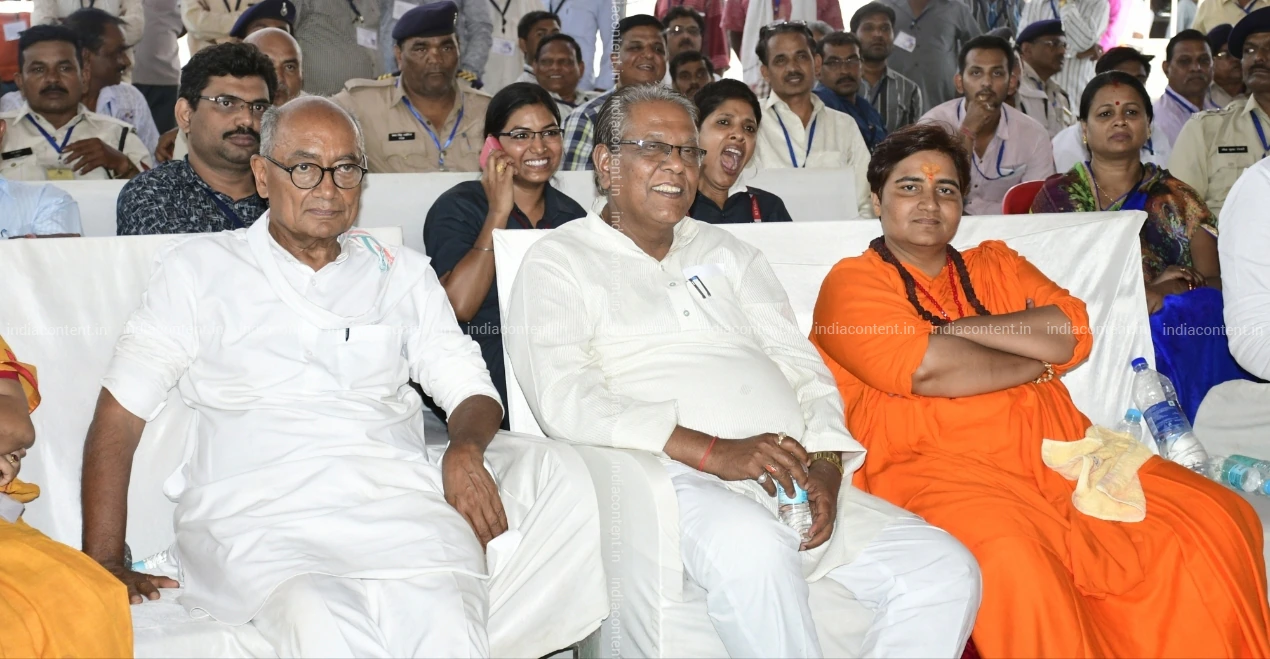
New Delhi, 2nd August: In a moment that speaks volumes about political convenience and historical revisionism, Senior Congress leader Digvijaya Singh stunned observers this week by denying that he ever linked terrorism with any religion. His comments came just after a special NIA court acquitted all seven accused in the 2008 Malegaon blast case—including BJP MP Sadhvi Pragya Singh Thakur and Lt. Col. Prasad Purohit—citing a complete lack of prosecutable evidence. Yet, Singh’s pivot isn’t just about a single case; it’s emblematic of a broader pattern within the Congress party—a pattern of crafting narratives without accountability.
Standing in the Parliament complex, Singh declared, “No religion, whether Hindu, Muslim, Sikh, or Christian, supports terrorism… Hatred gives birth to terrorism. It’s not right to link religion with terrorism.” For someone once known as the loudest voice accusing the RSS and Hindutva outfits of fostering “saffron terror,” the statement is not just surprising—it’s historically disingenuous.
Saffron Terror and the Convenient Amnesia
For years, Digvijaya Singh and others in Congress peddled the controversial idea of “Hindu terror” or “saffron terror”—terms which found wide circulation in the political discourse of the late 2000s and early 2010s. Though the party now denies coining them, their repeated use from party platforms and public speeches etched them into public consciousness. Singh himself had been a central figure in that campaign.
 The contradiction between Singh’s current denial and his past record is stark. He now claims, “It’s incorrect to say that Congress coined the term ‘Hindu terror.’” Yet, in 2010, he didn’t just speak about it—he amplified it by inaugurating a book titled “26/11 RSS Ki Saazish?” (26/11: An RSS Conspiracy?) authored by Aziz Burney. This was no minor academic publication. It was a sensational political pamphlet that tried to absolve Pakistan of its role in the Mumbai terror attacks and instead blamed the RSS—with alleged help from Mossad and the CIA.
The book’s claims were so outrageous that it even suggested ATS Chief Hemant Karkare was murdered by Indian Army operatives rather than Pakistani terrorists. Singh was not only present at the book’s launch in Delhi but doubled down by attending a second release in Mumbai. During one of the events, he alleged Karkare had called him two hours before the attack, complaining of threats due to the ATS’s investigation into Hindu extremist groups.

This version of events was later challenged publicly by Karkare’s widow, Kavita, who accused Singh of politicizing her husband’s death. Singh would later reverse course, saying he had, in fact, called Karkare and not the other way around—a retreat as swift as it was suspicious. He offered to provide call records to back his story, but conveniently claimed that BSNL could not retrieve the data.
Congress’s Dilemma: A Narrative Undone by the Courts
The recent Malegaon verdict has done more than just acquit individuals. It has exposed the fragility and political motivations behind the Congress party’s terror narrative. The NIA court stated plainly that the prosecution failed to prove its case beyond reasonable doubt—a damning indictment of a case that Congress once touted as evidence of a new form of domestic terrorism rooted in Hindutva ideology.

In light of these legal outcomes, Digvijaya Singh’s retreat appears less a moral epiphany and more a desperate attempt at damage control. His statements now attempt to walk back years of allegations, even as his past speeches, interviews, and public appearances continue to echo in the public memory.
And Singh is not alone in this backtracking. The Congress party itself has chosen silence over accountability, offering no apology to the RSS, BJP, or the individuals wrongly accused. Nor has it addressed how political narratives constructed on weak or non-existent evidence have hurt not only individuals but also undermined the fight against genuine threats like Islamic radicalism, which was behind the actual 26/11 Mumbai attacks.
History Cannot Be Rewritten with Denials
Digvijaya Singh’s current statements might be framed as calls for communal harmony, but their timing and contradiction with his own past make them reek of opportunism. They come not from a place of reflection but from the legal reality that the very cases he once cited as proof of “Hindu terror” are falling apart under judicial scrutiny.

For a senior political leader to now suggest that “no religion should be linked with terrorism,” while previously participating in high-profile events suggesting quite the opposite, is not just inconsistent—it is intellectually dishonest.
Moreover, the Congress’s refusal to stand by—or officially reject—Singh’s remarks, both past and present, is a symptom of a party stuck between political expediency and ideological confusion. Its attempt to weaponize terror cases for electoral benefit has now come back to haunt it, exposing a lack of moral clarity and strategic foresight.
The Malegaon Verdict Is a Mirror—Will Congress Look In?
The acquittal of all seven accused in the Malegaon case isn’t just a legal verdict; it is a moment of reckoning. It challenges not only the veracity of the prosecution but also the ethical compass of those who used the case to push communal narratives.
Digvijaya Singh’s retreat may be an attempt to rewrite his legacy, but it also raises larger questions about the Congress party’s role in shaping public discourse. Is the party willing to take responsibility for past mistakes? Or will it continue to deny, deflect, and distort?
Bharat deserves a political opposition that stands on truth—not one that fabricates it for short-term gain. If Congress truly seeks to revive its credibility, it must start by confronting the past honestly and acknowledging that justice and truth are not slogans—they are principles.
