

By Anjali Sharma
WASHINGTON – Bangladesh on Monday has dismissed Pakistani Deputy Prime Minister and Foreign Minister Ishaq Dar’s claims that Dhaka’s long-standing demand for an apology over the 1971 genocide had already been resolved twice in the past.
Dar was quoted in media that “The issue (1971 genocide in Bangladesh) was settled for the first time in 1974. And the document of that time is historic for both countries. Then General Pervez Musharraf came here (to Bangladesh) and resolved the issue openly. As a result, the issue was resolved twice. Once in 1974 and again in the early 2000s.”
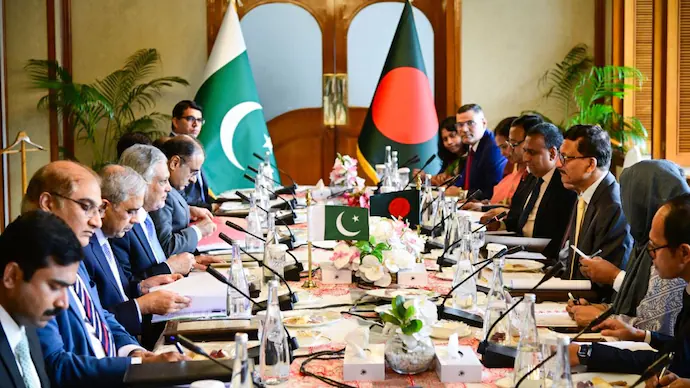
Dar was in Dhaka on a two-day official visit, marked the first state-level visit to Bangladesh in 13 years, made these claims after a meeting with the interim government’s Foreign Affairs Advisor Hossain at Hotel Sonargaon on Sunday local media reported.
He rejected the claims made by the Pakistani Foreign Minister, Hossain told reporters, “I definitely do not agree. If we had agreed, the problem would have been resolved.”
Hossain stated that Bangladesh had reiterated its stand on three unresolved issues, which include a formal apology for the 1971 genocide, financial compensation for pre-independence assets, and the repatriation of stranded Pakistanis.
“We want an accounting, which is a financial solution. We want them to express regret and apologise for the genocide. We want them to take back the stranded people,” Bangladesh’s leading newspaper, The Dhaka Tribune, quoted the Foreign Advisor as saying.
“You certainly don’t expect that a 54-year-old problem will be resolved in a one-day meeting. We have presented each other’s positions. For bilateral relations to move forward smoothly, these issues must be addressed,” he added.
Pakistan’s Foreign Ministry issued a statement on social media regarding the Dhaka visit, but it did not mention any of the 1971 issues that were discussed.
The experts reckon that Dar’s two-day visit to Bangladesh exposes the sheer desperation of the Muhammad Yunus-led interim government to strengthen ties with a country that carried out a genocide killing millions of Bangladeshi Bengalis under ‘Operation Search Light’ in 1971.
The relations between Dhaka and Islamabad were at their lowest during former Bangladesh Prime Minister Sheikh Hasina’s rule, specifically when the Awami League government initiated in 2010 the trial of collaborators of Pakistani forces during the 1971 Liberation War.
The Awami League has condemned Dar’s visit, stated that “without recognition of genocide, normalization is betrayal.”
The party slammed the “anti-Liberation, anti-national illegitimate” Yunus regime for failing to register even a minimal protest against the claim, reduced the matter into a farce, criticized Dar’s remarks.
