
Delhi Red Fort Blast Unveils Al-Falah University Terror Nexus: Dark Secrets Exposed
“Inside Al-Falah University: How a Once-Accredited Institution Became the Epicentre of a White-Collar Terror Module.”

Paromita Das
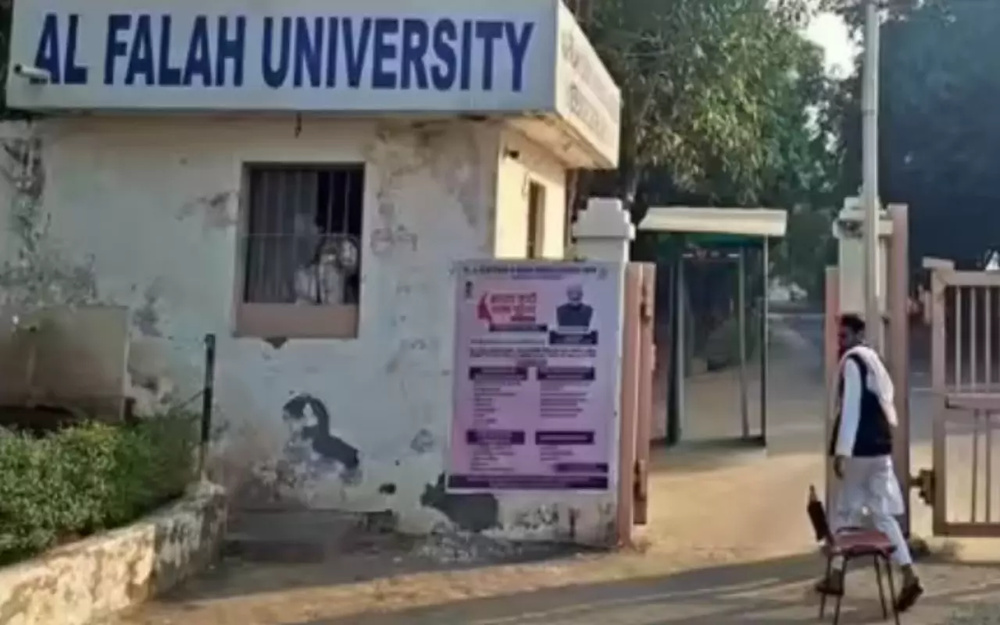
New Delhi, 15th November: The chilling evening of November 10, 2025, when an explosive blast shook Delhi’s historic Red Fort precinct, marked a tragedy that claimed the lives of 13 innocent people and left many injured. What has since emerged from the investigations is a deeply disturbing narrative implicating medical professionals from Al-Falah University, Faridabad, in orchestrating terror attacks. This article examines the evolving terror nexus, the university’s role, the regulatory repercussions—including accreditation cancellation—and the broader implications for national security and institutional oversight.
Terror in the Heart of Delhi: The Blast and Its Immediate Impact
At 6:52 pm IST, a Hyundai i20 vehicle loaded with ammonium nitrate exploded near the storied Sunehri Masjid adjacent to the Red Fort, creating widespread destruction and panic in one of Delhi’s busiest districts. The bomb was reportedly parked for hours before detonation, targeting a heavily trafficked area brimming with historical and cultural significance. With death tolls mounting and emergency responses activated, the country was plunged into shock.
The National Investigation Agency (NIA) quickly took charge, invoking the Unlawful Activities (Prevention) Act. Investigations unveiled that Dr. Umar Mohammad, one of the attackers, had professional ties to Al-Falah University. This was just the tip of the iceberg, as the probe uncovered a planned multi-pronged terror operation targeting key locations in Delhi on December 6, a date infused with political symbolism.
The Dark Underbelly: Al-Falah University’s Troubling Links
During joint operations, Haryana and Jammu & Kashmir police arrested Dr. Umar Mohammad along with three other doctors affiliated with the university. The seizure of over 2,900 kilograms of explosives and vehicles equipped for attacks illustrated the terror network’s alarming scale and sophistication.
Adding to the shock was the university’s leadership—Jawad Ahmad Siddiqui, the Chancellor and founder, whose shadowy past includes convictions for fraud and links to multiple questionable companies. While the Vice Chancellor, Prof. (Dr.) Bhupinder Kaur, distanced the institution from the terror module, Siddiqui remained notably silent. The university’s governance, tied closely to Siddiqui’s family and enterprise holdings, demands scrutiny beyond the immediate terror probe.
Accreditation Cancelled: A Stunning Regulatory Fallout
In the wake of the terror revelations, regulatory bodies swiftly moved to act. The National Assessment and Accreditation Council (NAAC) issued a show-cause notice to Al-Falah University for falsely displaying accreditation on its official website despite its accreditation status being long expired. The university failed to submit mandatory reports for accreditation renewal since 2018, which led NAAC to warn that its accreditation could be declared null and void.
Following this, the Association of Indian Universities (AIU) suspended Al-Falah’s membership, effectively disallowing the institution from using the AIU logo and branding. The NAAC demanded the removal of all accreditation claims from the university’s public documents within seven days and indicated potential recommendations to the University Grants Commission (UGC) and National Medical Commission (NMC) to withdraw recognition of the university’s degree programs.
The regulatory responses not only cast doubt on the university’s academic legitimacy but also exposed systemic failures in oversight that allowed such a compromised institution to operate in sensitive sectors like medical education.
Institutional Trust Shattered and Security Implications
The involvement of highly trained medical personnel in terror activities is a profound breach of public trust. The university’s role as a base for terror planning exposes vulnerabilities when extremist networks masquerade within respectable institutions, exploiting their credibility as a cover.
The Red Fort blast linked to this “white collar” terror network reveals a new dimension of threats—where intellectual and professional fronts can harbor dangerous radical elements. The magnitude of explosives seized underscores ongoing risks well beyond a singular incident.
The Imperative for Rigorous Oversight and Accountability
This incident is a stark wake-up call for regulatory agencies to overhaul monitoring mechanisms, especially for private universities in critical fields. Background checks, transparent governance, and continual surveillance must become norms to prevent the erosion of education’s sanctity.
Jawad Ahmad Siddiqui’s troubled history, coupled with his continued influence within the university, points to alarming gaps in accountability. Academic institutions should not serve as conduits for terrorism or financial malpractice.
Government authorities, law enforcement, and accreditation bodies need to collaborate closely to plug loopholes that allow such entities to flourish unchecked, while promptly sanitizing tarnished ones to restore faith in public institutions.
A Blistering Challenge and Path Forward
The Red Fort explosion tragedy highlighted the fragility of national security in urban Bharat when terror strikes from within trusted quarters. Al-Falah University’s connection to the terror module, and its subsequent loss of accreditation, lays bare the intersection of education, crime, and terrorism that threatens societal stability.
The decisive actions of investigative and regulatory bodies provide some hope. But the broader lesson is clear—education cannot be divorced from ethics and oversight. For Bharat’s democracy and security to flourish, institutions must be held to the highest standards, ensuring that knowledge serves as a shield against terror rather than a veil concealing it.
