

Poonam Sharma
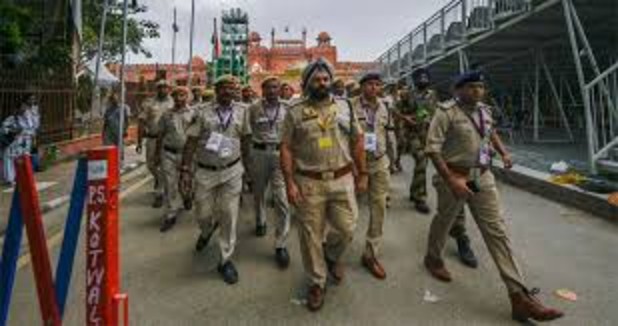
Delhi is not merely India’s capital; it is the country’s most sensitive security nerve center. Any disruption here has consequences far beyond local law and order. Against this backdrop, the recent launch of “Operation Aghaat ”, under which Delhi Police has detained over 600 individuals, deserves deeper scrutiny. This scale of action is not routine policing. It suggests a preventive, intelligence-driven response to perceived internal vulnerabilities at a time when external pressures on India are also mounting.
Preventive Security in an Age of Hybrid Threats
Modern security threats rarely announce themselves openly. Large-scale operations involving explosives, sleeper cells, or coordinated unrest are not planned over casual phone calls. They evolve quietly—through logistics networks, financial trails, human couriers, and digital signals. Such threats are uncovered only through sustained intelligence gathering, not last-minute reactions.
The arrests under Operation Aghaat appear to be pre-emptive, aimed at disrupting potential networks before they can activate. This approach aligns with global counterterrorism doctrine, where neutralizing facilitators and local enablers is as critical as catching the final attackers.
Delhi has previously witnessed the exposure of extremist modules linked to transnational networks. It would be naïve to assume that intelligence gathered from earlier arrests does not lead to follow-up actions. In counterterrorism, one arrest often opens doors to ten more leads.
External Pressure and Internal Stability Go Hand in Hand
India currently faces a complex strategic environment. On the western front, Pakistan remains a persistent source of asymmetric threats. On the eastern side, instability and provocative rhetoric emerging from Bangladesh-linked elements have raised concerns among security planners. Add to this the broader geopolitical reality—global powers prefer India distracted internally when regional tensions rise.
History shows that external confrontations often coincide with attempts to ignite internal unrest. No nation can afford street-level instability when its borders are tense. Internal security, therefore, becomes the first line of defense. Operation Aakar must be seen through this lens—not as overreach, but as strategic sanitation.
Why Delhi Requires Exceptional Vigilance
Delhi is a symbolic and functional target. It houses Parliament, embassies, military command structures, and national media. Any incident here delivers maximum psychological impact. This explains why security measures today extend beyond ground patrols to include air defense systems, drone interception capabilities, and real-time surveillance grids.
The deployment of systems like Akash-based interception mechanisms around the capital indicates that planners are considering non-traditional threats, including drones, low-cost aerial attacks, or hybrid sabotage. Such preparation does not happen without reason.
Crime, Politics, and the Erosion of Deterrence
For years, a perception persisted that arrests in Delhi lacked follow-through. Criminal elements believed they would be detained briefly and released, protected by political patronage or weak prosecution. That perception erodes deterrence—and deterrence is the backbone of internal security.
Operation Aghaat sends a different signal. Mass detentions—especially of repeat offenders and individuals with criminal histories—rebuild the psychological authority of the state. Even if many detainees are released later, the temporary disruption of networks itself is a security gain.
Unregulated Settlements and Security Blind Spots
One uncomfortable reality is the link between unregulated urban settlements and security blind spots. Rapid, unchecked migration; illegal encroachments on public land; and lack of identity verification create zones where surveillance becomes difficult.
Such areas are not inherently criminal, but they are exploitable. Extremist recruiters, smugglers, and organized crime groups thrive where the state’s visibility is low. Cleaning up these zones is not about targeting communities—it is about restoring administrative control.
Psychological Warfare: The Invisible Front
Modern conflict is not limited to bombs and bullets. Narrative warfare—through social media, cultural platforms, and mass psychology—plays an equally dangerous role. The objective is fear, confusion, and distrust in institutions.
Attacks on soft targets like cinema halls or public gatherings, even if small in scale, are designed to paralyze public confidence. This is why extensive combing operations and visible policing are essential—not just to stop attacks, but to reassure citizens.
Caution Is Not Paranoia
Operation Aghaat should not be reduced to political debate or sensational headlines. Whether all 600 arrests lead to prosecutions is secondary. What matters is the intent—to deny hostile forces the space to operate.
India’s past teaches a hard lesson: warnings ignored often become tragedies remembered. In contrast, warnings acted upon may appear excessive—but they save lives.
The threats are real, multifaceted, and evolving. In such an environment, vigilance is not authoritarianism—it is responsibility. Delhi’s alert status is not a sign of weakness, but of preparedness.
