

Poonam Sharma
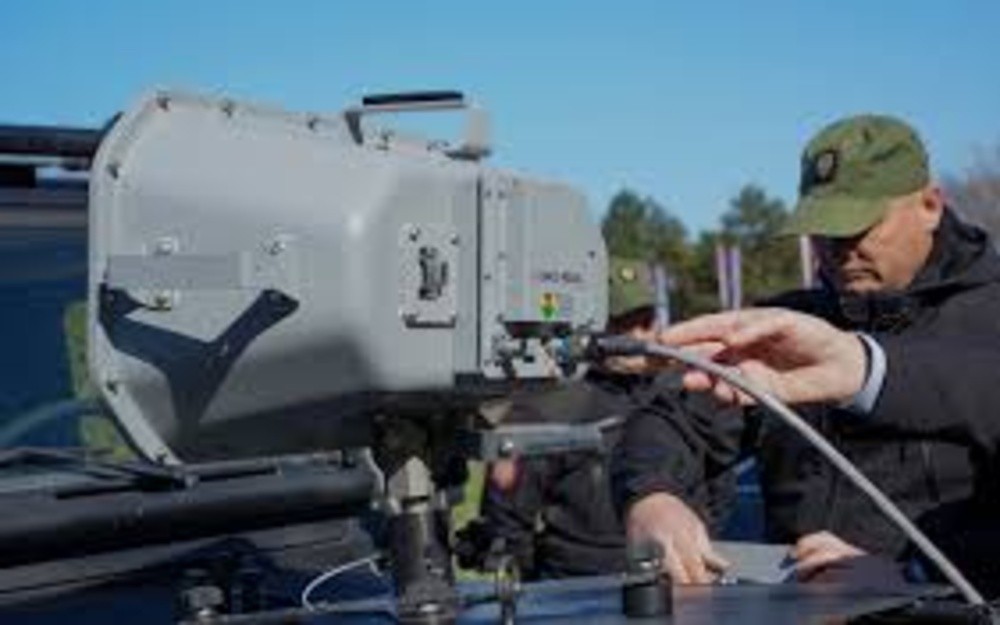
Claims that a sonic or sound-based weapon may have been used during a US operation in Venezuela have triggered fascination, fear, and speculation. Even though these claims remain unverified, their very plausibility raises a deeply troubling question: what if such weapons are being used—or could be used—in modern warfare?
Whether or not the Venezuela incident involved a sonic system, the broader idea of deploying sound or directed-energy weapons against human beings deserves strong criticism. These technologies, if normalized, threaten to blur ethical boundaries, undermine international law, and push warfare into a darker, less accountable space.
Invisible Weapons, Invisible Accountability
One of the most disturbing aspects of alleged sonic weapons is their invisibility. Unlike bullets, bombs, or missiles, sound- or energy-based weapons leave little physical trace. No shrapnel. No crater. Often no obvious forensic evidence.
This creates a serious accountability problem.
If a population experiences physical harm—disorientation, nausea, internal injury—without visible damage, how do investigators prove what happened? How do courts assign responsibility? How do international bodies respond?
Weapons that cannot be easily detected or documented are attractive to powerful states precisely because they are hard to prove. That alone should make the global community deeply uneasy.
The Ethical Line: From Deterrence to Human Experimentation
Supporters of non-lethal or “less-lethal” weapons often argue that such systems are humane alternatives to conventional arms. This argument collapses under closer scrutiny.
Sound-based or directed-energy weapons target the human nervous system. They aim to overwhelm sensory perception, induce pain, confusion, or physiological breakdown. This is not restraint—it is intrusion into the body itself.
Using such weapons in real-world operations risks turning human beings into test subjects. The long-term effects of intense acoustic or electromagnetic exposure are still not fully understood. Deploying them outside controlled environments crosses a dangerous ethical line, one that resembles experimentation more than defense.
Legal Gray Zones and International Law
International humanitarian law rests on principles like distinction, proportionality, and necessity. Any weapon that causes unpredictable or poorly understood harm struggles to meet these standards.
If a sonic or energy weapon causes internal injuries without external signs, can it be considered proportional? If its effects vary wildly based on distance, environment, or individual biology, can it truly be controlled?
Moreover, international law has historically struggled to keep pace with technological change. Chemical weapons were banned only after devastating use. Nuclear norms emerged after catastrophe. Directed-energy weapons risk entering use before clear legal frameworks exist.
That delay is dangerous.
Psychological Warfare Disguised as Technology
Another troubling dimension is psychological impact.
Weapons that incapacitate without visible force amplify fear. They feed rumors of omnipotent enemies wielding mysterious tools. This fear can spread faster than physical damage, destabilizing societies and eroding trust.
From a strategic perspective, such fear may be seen as an advantage. From a human perspective, it is corrosive. Warfare that relies on terror—especially terror rooted in the unknown—inevitably harms civilians, not just combatants.
If sonic weapons are real or perceived to be real, their psychological footprint may be more destructive than their physical effects.
The Slippery Slope of “Non-Lethal” Warfare
History shows that once a weapon exists, its use expands.
Tear gas began as a crowd-control tool. It is now deployed in ways that cause serious injury and death. Drones began as surveillance platforms; they became instruments of targeted killing.
If sonic or energy weapons are normalized, what comes next? Stronger frequencies? Longer exposure? Broader deployment against protesters, dissidents, or urban populations?
The idea that such weapons will remain limited or carefully used ignores historical precedent.
Power Asymmetry and Global Inequality
Advanced weapons are not developed equally across the world. They are created by wealthy, technologically dominant states and used—more often than not—in poorer, politically weaker regions.
If directed-energy or sonic systems become accepted tools, they will deepen global power imbalances. Powerful nations will gain new ways to coerce without accountability, while weaker nations will have little recourse.
This risks creating a two-tiered global order: one that experiments, and one that is experimented upon.
The Venezuela Case: Why Caution Matters
In the Venezuela case, the lack of confirmed evidence does not reduce the seriousness of the discussion—it heightens it. The speed with which such claims spread shows how ready the world is to believe that invisible weapons are already in use.
That belief alone can destabilize diplomacy, fuel arms races, and justify future escalation.
Even if no sonic weapon was used, the narrative surrounding it has already done damage—normalizing the idea that such weapons could be acceptable.
Conclusion: Just Because We Can, Doesn’t Mean We Should
Modern warfare is increasingly shaped by technology, but technology does not absolve moral responsibility. Weapons that attack the human body invisibly, ambiguously, and with uncertain consequences represent a dangerous frontier.
The alleged use of sonic or directed-energy weapons—whether real or rumored—should not excite curiosity. It should prompt resistance.
The world has already learned, repeatedly, that once a weapon is normalized, restraint erodes. If sound, energy, or neurological disruption becomes just another tool of power, the line between combat and coercion will vanish.
The real question is not whether such weapons exist.
It is whether humanity is willing to draw a line before they define the future of war.
