

GG News Bureau
New Delhi, 20th Jan. Cows have always been important in Bharat’s sage and knowledge traditions, from Rig Vedic civilization to modern Sanatan Hindu society, when cows are regarded as “mothers.” Many mantras and verses about cows exist, instructing people to revere every aspect of the cow, such as milk, ghee, curd, butter, urine, dung, and so on, and to employ them in a variety of ways in their daily lives. Contrary to this belief, some people have always believed the cow to be the same as other animals and see no distinguishing features, but others who respect it, regard such people as ignorant, lethargic, and terribly dark. Previously, we witnessed Members of Parliament openly mock individuals who highly regard cows.
Those who denigrate Hindu culture should be silenced
People may choose to despise the cow but the truth must be acknowledged by them that the cow is not an ordinary animal.
It should be realized that the cow is a unique animal, which is why Bharatiya knowledge has revered it for millennia. This is now supported by a large amount of scientific evidence. In fact, in today’s modern age, even science has been obliged to understand why the cow is so unique! Why has it remained so revered in the Bharatiya knowledge heritage to this day? Many people must have been startled to learn that “a rocket will fly into space using cow dung”. However, the successful usage of LBM, or liquid biomethane, in rocket engines has effectively silenced those who have attempted to undermine and caricature Hindu culture in relation to cows.
📌TECH INNOVATION: Cow Dung as Fuel
Cow dung powered space rocket engine has v=been successfully tested in Japan#TechNews #Innovation #technology #SpaceExploration #Japan pic.twitter.com/Vb9r5yT1G4
— TheCodeWork (@thecodework) December 14, 2023
A new milestone in the advancement of science
Engineers in Japan have developed a new form of rocket engine driven by liquid methane gas obtained from cow dung, which could lead to the development of a more environmentally friendly propellant. A 10-second “static fire test” was conducted at Japan’s Hokkaido Spaceport. Which was entirely propelled by the Small Satellite Launch Vehicle, Zero, Liquid Biomethane (LBM). The company that accomplished this work is the startup Interstellar Technologies Inc. (IST), which also said that it has successfully created a rocket engine named Zero from biomethane derived from cow dung. In which this biomethane is used to ignite the engine, resulting in a tremendous horizontal blue flame.
Japan has achieved a major breakthrough by powering a rocket engine entirely by fuel derived from cow dung
Will this underline the importance of cow dung and cow urine for those ridiculing it ?#Senthilkumar #DMK #SanatanaDharma #AntiHinduPolitics #Goumutra
Support Hindutva… pic.twitter.com/bm2LMwaR7f— Sanatan Prabhat (@SanatanPrabhat) December 11, 2023
It is now regarded as a significant advance in rocket engine physics. Certainly, LBM fuel is an innovative and successful experiment in and of itself, as it is made by extracting and refining methane, the primary component of biogas, and then liquefying it at -160 degrees Celsius.
Cows are significant in numerous ways
Indeed, the significance of cows can be seen in the fact that when the globe needed internal power to preserve immunity and combat the virus, scientists originally chose cows to create the vaccine, and the world used it.
The vaccination was derived from cows. A hospital in Valsad, Gujarat, treats cancer patients with Panchagavya derived from cows. This hospital has successfully treated over 3500 cancer patients. Panchgavya is prepared with cow milk, curd, ghee, urine, and cow dung. Bharat has received US patents on Panchagavya’s anti-carcinogenic capabilities. So far, six patents have been granted for various effects of cow urine.
Cow dung contains vitamin B-12
Modern scientists recognize that Bharatiya cow’s milk has a unique protein known as beta casein, which aids in the treatment of a variety of ailments. This protein is also extremely beneficial to children’s cognitive development.
This A-2 beta casein protein not only boosts our immune system but also lowers the risk of heart disease and enhances the digestive tract. Similarly, cow ghee promotes overall health; frequent use of high-quality A2 ghee helps to lower cholesterol and alleviate joint pain. One gram of cow manure contains at least 300 million microorganisms. In Russia, scientific experiments on conducting havan with cow ghee were conducted. In which they discovered that practicing Yagya with one tola (10 grams) of cow ghee produces one ton of oxygen. Scientists have discovered that cow dung contains an abundance of vitamin B-12. It also absorbs radioactive particles.
Japan develops a rocket engine which can run on a fuel made by Cow dung
Will those who mock Cow dung and Cow urine accept their significance now ?
Watch video :https://t.co/sbEwmZBQT0#Gomutra #DMKMP #SenthilKumar
— Sanatan Prabhat (Kannada) (@Sanatan_Prabhat) December 11, 2023
Cow dung and gaumutra are extremely important
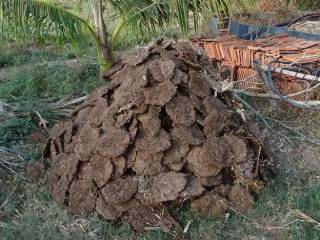
Biogas is a limitless resource. One plant can save approximately seven crore tonnes of wood, resulting in the survival of approximately three and a half crore trees. Furthermore, approximately 30 million tons of emitted CO2 can be avoided. The residue from gas extraction in the cow dung gas plant is used to generate organic fertilizer for farming. Cow dung and gaumutra are being studied as insecticides because they have shown enormous promise in enhancing agricultural production without the unwanted effects of artificial fertilizers. Its microorganisms can also help with many other difficult disorders. Cow dung has shown to be a highly effective agricultural herbicide.
Helpful in dealing with climate change
Finally, Japan’s rocket fuel study comes at a time when many different studies and scientists throughout the world have concluded that conventional rocket fuel is harmful to the environment. The combustion of conventional fuel in rocket engines produces greenhouse gasses, soot, and other pollutants. In such a case, using gas from cow dung as rocket fuel demonstrates the value of cows in modern times. This new research will not only provide a new alternative to rocket engine fuel, but it will also serve as a watershed moment in the fight against climate change.
