
COP30 calls for action says ‘when finance flows, ambition grows’ turns eyes on Amazon

By Anjali Sharma
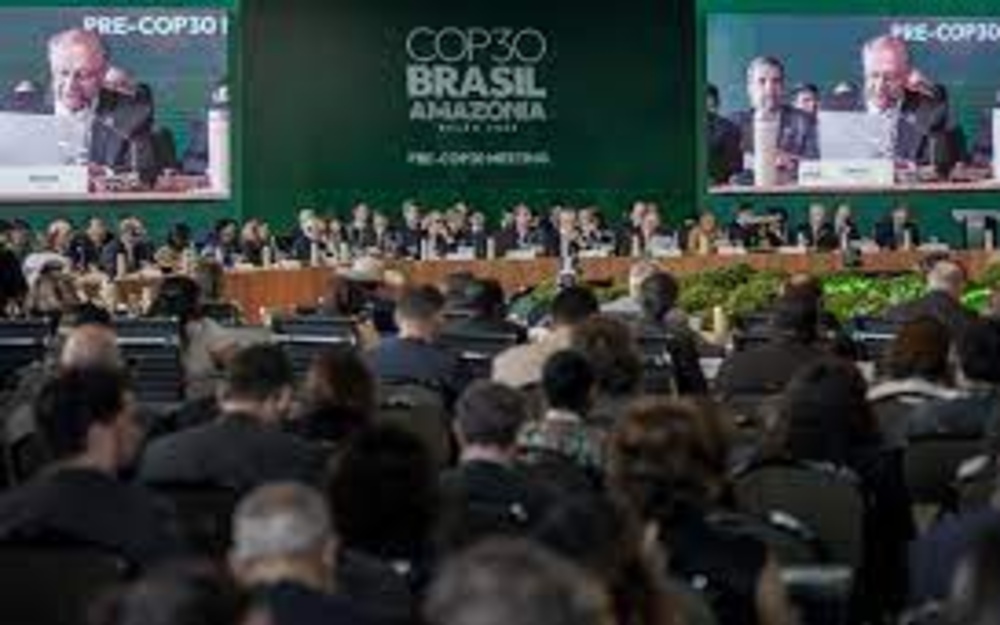
UNITED NATIONS – World leaders on Saturday turned their eyes to the Amazon where COP30 has been underway in Belém, Brazil for the past week, questioned can climate finance move from pledge to lifeline.
COP30 summit at every negotiation table and in every diplomatic statement said without funding, there is no path to safety, justice, or survival.
Many urgent actions are required to secure a livable planet and protect millions of lives. But all of them every breakthrough, every shield of resilience depend on one essential driver: financing, they stated.
The discussions at the UN climate change conference, as the annual COPs are formally known, revolved around financial mobilization, or what leaders called the engine of climate transition.
Third High-Level Ministerial Dialogue on Climate Finance, COP30 heard from representatives of nations deeply affected by climate impacts, many of whom described access to financial resources as “a matter of survival.”
President of the General Assembly Annalena Baerbock said in her opening remarks that COP30 should mark the beginning of implementing up to $1.3 trillion in annual climate finance disbursements that “reach those most in need, quickly, transparently and fairly.”
She stressed that climate action and social justice are “inseparable,” noting:
“Climate insecurity fuels hunger and poverty, poverty drives migration and conflict; and conflict, in turn, deepens poverty and deters investment.”
She said that breaking this vicious cycle is essential to deliver on global climate goals.
Ms. Baerbock reflected on the 10th anniversary of the Paris Agreement recalled that in 2015, many delegates had been moved to tears by the historic outcome that produced the first legally binding global climate treaty, involving more than 190 countries.
She noted that at the time, renewable energy was widely considered “unrealistic.” Today, it is the fastest-growing energy source on Earth.
In 2024, global investment in clean energy reached $2 trillion about $800 billion more than in fossil fuels. Solar power has become the cheapest form of electricity in history, she noted.
Ms. Baerbock warned that “vast potential remains untapped because capital is still not flowing to where it is most needed,” particularly in Africa.
Over 600 million Africans still lack access to electricity, even though the continent’s renewable energy potential is 50 times greater than the world’s projected electricity demand for 2040.
She urged developed nations to fulfill their technological and financial commitments and to advance reform of global financial institutions.
UN Climate Change Executive Secretary Simon Stiell addressed the meeting, underscored the transformative power of climate finance.
He described finance as the “lifeblood of climate action,” capable of turning “plans into progress” and “ambition into implementation.”
Mr. Stiell stressed that the most vulnerable countries continue to face major challenges, accessing funds that have long been pledged.
He said the total volume remains “neither sufficient nor predictable enough,” and not equitably shared despite billions invested worldwide in clean energy, resilience and just transitions.
The world is looking for proof that climate cooperation delivers at COP30.
“Real finance, flowing fast and fair, is central to that proof,” he said.
He urged delegates to not only demonstrate that climate cooperation is working, but that investments made now can shape the “growth story of the 21st century.”
Mr. Stiell emphasized that “When finance flows, ambition grows,” enabling implementation that creates jobs, lowers the cost of living, improves health outcomes, protects communities and secures a more resilient, prosperous planet for all.
UNFPA says millions childbirth face obstetric fistula in Somalia, Yemen, Sudan
By Anjali Sharma
UNITED NATIONS – UN sexual and reproductive health agency UNFPA on Saturday reported that in Somalia, 6 out of 10 births take place without a doctor and childbirth is often a matter of survival.
UNFPA said that the consequences can be devastating a painful obstetric fistula, a hole in the birth canal that left incontinent, isolated, and cut off from community.
Somali mother said “I was stressed, constantly worried, and isolated from my community. I was living in my house as if I had some sort of contagious disease,”.
In Somalia, 6 out of 10 births occur without a doctor present, which often leads to childbirth complications like obstetric fistula.
The condition impacts millions of women worldwide, with those in the Arab region especially in Yemen, Sudan, and Somalia among the most affected, UNFPA stated.
It warned that this is largely due to limited access to basic and essential maternal health services.
UNFPA reported that “An estimated 171,000 pregnant women are struggling to access life-saving maternal health care”.
The ongoing humanitarian crisis in Somalia is worsening the situation.
According to UNFPA, malnutrition among pregnant and breastfeeding women has reached critical levels, increasing the risk of pregnancy and birth-related complications such as premature delivery and low birth weight in babies.
The recovery is a long and arduous journey it has also been marked by support and compassion from friends and communities.
The neighbor raised money for a mother in the community to travel to Mogadishu for treatment. The sum of $800 surgery cost meant help was still out of reach.
A fistula campaign a major community outreach effort paired with free fistula repair surgeries at Dayniile Hospital.
UNFPA said that with support from the Federal Ministry of Health, Physicians Across Continents, and UNFPA, and funding from KSrelief, the King Salman Humanitarian Aid and Relief Centre, Somali mother found strength in her community and got the treatment she needed.
The collective support enabled her to travel to Mogadishu, where she finally received life-changing repair surgery.
Dr. Aisha Abdulkadir Abdullahi, a member of the medical team at Dayniile Hospital said “Most of the patients who come to us are from rural areas, and each one of them has her own story, each more painful than the other”
She added “With the ongoing awareness and surgical campaigns, I am hopeful that the numbers will gradually decrease and one day fistula will be fully eradicated”.
Nince, a 35-year-old mother of three, fistula surgery has been truly life-changing, UNFPA said.
“For five years, I haven’t visited any relatives or been invited to any weddings. I was too ashamed to use public transport”, she shared.
“Now that I have had the surgery and am no longer leaking urine, I have decided to visit my relatives”.
