
Congress’s Meltdown Over Modi’s Travels: A Masterclass in Misplaced Outrage

Paromita Das
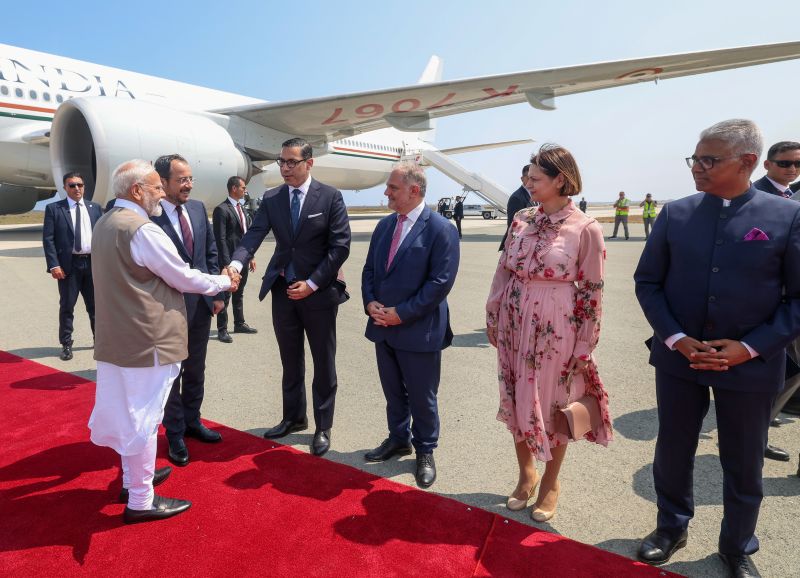
New Delhi, 16th June: The Indian National Congress, once the beating heart of the country’s freedom struggle and its early years of nation-building, has seemingly reached a point where reactionary rhetoric is being mistaken for responsible opposition. The latest example comes from Congress General Secretary Jairam Ramesh, who criticized Prime Minister Narendra Modi’s ongoing three-nation tour to Cyprus, Canada, and Croatia. According to Ramesh, the Prime Minister is more invested in receiving ceremonial welcomes abroad than addressing the prolonged humanitarian crisis in Manipur.
But this pattern of criticism no longer shocks the public—it exhausts them. What once was a party of intellectual debates and policy-heavy speeches has now turned into a predictable machine of social media barbs and emotionally charged one-liners. In the attempt to corner the ruling government, Congress appears to have cornered itself into irrelevance.
Modi’s Travels: Diplomacy or Distraction?
Prime Minister Narendra Modi’s foreign visits have often been painted with controversy by the opposition, but to discredit them entirely is to misunderstand the role of a global leader. The latest trip includes engagements in Cyprus, Canada, and Croatia—countries that play a part in Bharat’s international diplomacy, particularly concerning counter-terrorism efforts and economic partnerships. Modi, before his departure, made it clear that the visit was intended to express gratitude for their support in Bharat’s fight against cross-border terrorism.
Criticism of foreign travel by a head of state isn’t inherently flawed. What weakens Congress’s argument is the lack of context in their allegations. There’s no recognition of strategic bilateral talks, no mention of trade or security collaborations, and certainly no policy counterpoints offered. By turning every international engagement into an alleged PR stunt, the Congress has eroded the fine line between accountability and absurdity.
The Manipur Crisis: A Serious Issue Used Superficially
Jairam Ramesh’s central accusation is centered on the Prime Minister’s failure to visit Manipur since the outbreak of ethnic violence in May 2023. He argues that while Modi has found time and energy for 35 foreign trips since then, he hasn’t shown “empathy” for the northeastern state’s suffering. It’s a valid concern—Manipur’s situation warrants more visible engagement from the central leadership.
However, raising this issue only in the shadow of a foreign trip—without consistently advocating for solutions or showing Congress’s own active involvement in the state—feels more opportunistic than sincere. The party’s credibility on the Manipur issue is weakened by its own inaction. If empathy is what the Congress demands, then it must also model it through sustained engagement, not just social media outrage.
Mockery Masquerading as Critique
Ramesh’s criticism didn’t stop at humanitarian concerns. He dug into the Prime Minister’s past statements, mocking Modi for referencing algebraic equations like “(a+b)²” to describe diplomatic ties with Canada. He even took a jab at Bharat’s recent invitation to the G7 Summit, noting a discrepancy between the PM’s claims about Bharat being the world’s third-largest economy and the timeline provided by Niti Aayog’s CEO.
While witty soundbites may entertain Twitter users, they do little to contribute to serious political discourse. Mocking metaphors or nitpicking economic statistics without presenting broader fiscal perspectives isn’t opposition; it’s theatre. And the electorate is slowly losing interest in this performance.
A Decline in Political Maturity
The Congress’s approach to opposition has shifted over the years—from a platform once rich in ideas and reformist agendas to a reactive entity that seems to exist merely to contradict. Whether it’s space missions, agricultural reforms, or foreign policy, the pattern is repetitive: immediate rejection, public derision, and no long-term alternative. The result? A party that’s shouting louder but being heard less.
In a healthy democracy, opposition parties are not just critics but co-creators of national direction. By constantly resorting to sarcasm and spectacle, the Congress risks becoming a caricature of itself. Instead of building an electoral roadmap rooted in policy and vision, it’s setting fire to its own credibility with every tweet and press statement that lacks depth.
The Need for Real Opposition
Bharat needs the Congress. Not as a nostalgic memory of the past, but as a present-day force capable of holding the government accountable while also inspiring trust and offering governance alternatives. However, to become that force again, the Congress must change course—starting with a shift in tone.
It must learn to differentiate between genuine critique and manufactured outrage. It must be willing to invest in ground-level issues, not just high-decibel campaigns. And most importantly, it must return to the art of serious politics—where facts matter more than followers, and ideas triumph over insults.
A Crisis of Credibility
The Congress party’s recent critique of PM Modi’s foreign travels is a symptom of a much deeper malaise. In its desperation to remain relevant, the party has moved away from constructive opposition and embraced sensationalism. Yet, in doing so, it has lost more than just public trust—it has lost its own identity.
To reclaim its role as a national political force, the Congress must evolve. It must drop the theatrics and embrace thoughtful engagement. Until then, it will continue to criticize—but from the sidelines, where few are still listening.
