
Congress Split Over Middle East Conflict
Tharoor backs govt’s cautious stance; Sonia Gandhi flags Iran silence

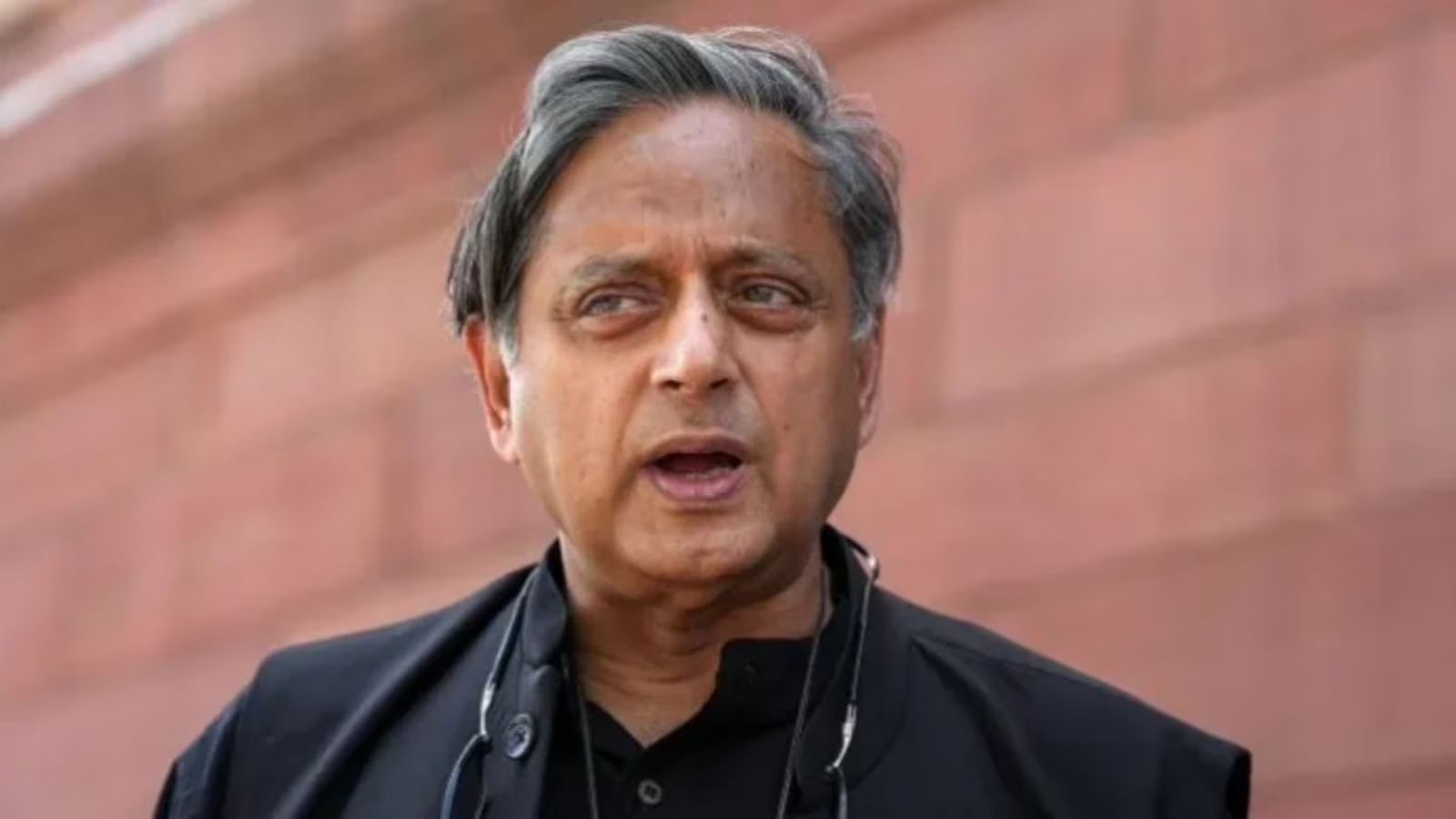
- Congress shows internal divide over Middle East crisis
- Shashi Tharoor supports restraint, backs Centre’s approach
- Sonia Gandhi criticises India’s response on Iran issue
- Rising oil prices flagged as major concern for economy
GG News Bureau
New Delhi, 21st March: The Indian National Congress appears divided over the ongoing Middle East conflict, with senior leader Shashi Tharoor backing the Centre’s cautious approach while Sonia Gandhi criticised India’s response to developments involving Iran.
Tharoor, a Lok Sabha MP from Thiruvananthapuram, emphasised the need for restraint, stating that India must act in accordance with its national interests amid escalating tensions involving the United States, Israel and Iran.
“Restraint is not surrender, it’s a strength,” Tharoor said, adding that India has limited options if the conflict continues to intensify.
He also highlighted the economic implications of the crisis, noting a sharp rise in crude oil prices—from around $64 per barrel at the start of the conflict to between $100 and $120—warning of potential inflationary pressures in India.
At the same time, Tharoor suggested that India should have formally condoled the killing of Iran’s Supreme Leader Ayatollah Ali Khamenei.
His remarks come in response to Sonia Gandhi’s recent column, in which she criticised what she described as India’s “silence” on the issue, calling it an “abdication” rather than neutrality. She pointed to India’s long-standing civilisational and strategic ties with Iran and urged a more balanced diplomatic stance.
India initially maintained a cautious position but later expressed condolences, with Foreign Secretary Vikram Misri visiting the Iranian Embassy in New Delhi.
The government has consistently called for de-escalation, with Prime Minister Narendra Modi engaging with global leaders and reiterating the need for dialogue and diplomacy.
The differing views within the Congress underline the broader debate in India over how to navigate complex geopolitical tensions while safeguarding national and economic interests.
