

Poonam Sharma
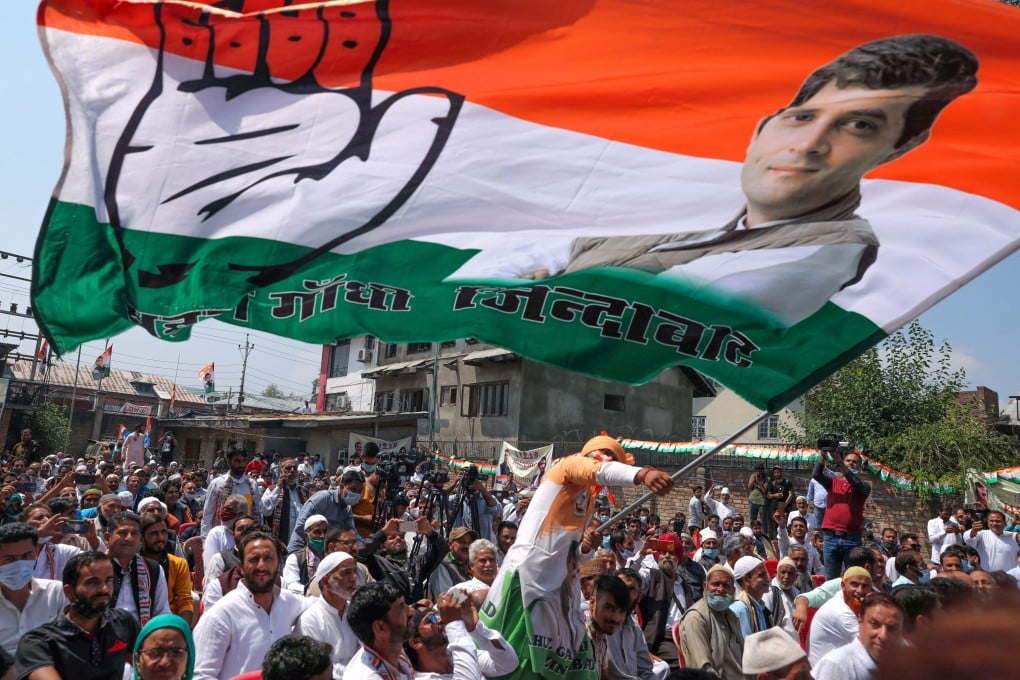
Once the political behemoth that led India to independence and governed it for decades, the Indian National Congress today finds itself gasping for relevance. From forming governments across most Indian states and dominating the Lok Sabha to being reduced to a marginal player in many regions, the Congress Party’s decline is both historic and symptomatic of deeper structural and ideological crises.
The Electoral Slide: Numbers Tell the Tale
The most glaring indication of Congress’s dwindling base lies in its electoral performance over the past two decades. In the 1984 general elections, Congress won 414 out of 543 Lok Sabha seats — a peak in its post-Independence dominance. Fast forward to 2024, the party managed a paltry 51 seats, failing to even claim the title of principal opposition in terms of numbers.
But the erosion is even more pronounced in state politics. The Congress now rules — independently — in just one major state: Himachal Pradesh. In other states like Karnataka or Telangana, its presence has either been overturned by resurgent BJP or regional players, or it remains part of fragile alliances. From controlling 15+ states in the early 2000s, today Congress struggles to be even a credible challenger in many key battlegrounds.
Collapse of the Traditional Vote Base
Congress historically drew its strength from a diverse coalition: Dalits, minorities (especially Muslims and Christians), rural poor, and upper-caste liberal elites. However, this “rainbow coalition” has unraveled over time:
Dalits and OBCs, once seen as Congress loyalists, have shifted their allegiance to parties like the BSP, SP, RJD, and more recently, BJP.
Muslims, disillusioned with Congress’s ineffective opposition to Hindutva politics, are increasingly backing regional outfits like AIMIM or parties that offer more vocal resistance.
Upper-caste liberals and urban middle classes have either turned to the BJP for its strong leadership model or to AAP and other new alternatives.
The result: Congress is no longer the automatic choice for any significant demographic group.
The Organizational Vacuum
Unlike BJP’s highly organized cadre system rooted in the RSS network, the Congress has struggled with internal democracy, decentralization, and leadership continuity. The party’s once-formidable structure has disintegrated due to:
Leadership crisis: The over-reliance on the Gandhi family — especially Rahul Gandhi, whose electoral track record is lackluster — has led to accusations of dynastic politics, demoralizing many grassroots workers.
Defections: In the past few years alone, several senior Congress leaders including Jyotiraditya Scindia, Himanta Biswa Sarma, and Amarinder Singh have defected to BJP or floated their own parties. These exits not only cost Congress key states like Madhya Pradesh and Punjab but also symbolized a crisis of confidence within its ranks.
Lack of communication: Congress has failed to build a coherent narrative or counter BJP’s aggressive, digitally savvy campaigns. Its messaging is often reactive, confused, or seen as elitist and disconnected from the grassroots.
The BJP Juggernaut and Changing Voter Psychology
Congress’s decline cannot be viewed in isolation — it coincides with the meteoric rise of the BJP. Under Prime Minister Narendra Modi, BJP has expanded beyond its traditional North Indian bastions, penetrating the South and East, even displacing Congress in strongholds like Assam, Karnataka, and Goa.
BJP has successfully rebranded itself as a party of aspiration, nationalism, and decisive leadership, while painting Congress as a symbol of entitlement, appeasement politics, and policy paralysis.
Moreover, the Indian voter has changed. The post-2014 generation prioritizes national pride, direct benefit schemes, and identity politics over historical legacies. Congress’s reliance on the freedom movement narrative, Nehruvian socialism, and secularism appeals less to this younger, digitally active electorate.
Attempts at Revival: Scattered and Inconsistent
Congress has made some efforts to revive its fortunes — launching Bharat Jodo Yatra, reshuffling state units, and forging opposition alliances — but these measures have been half-hearted and inconsistent.
The Bharat Jodo Yatra, led by Rahul Gandhi, did help in image-building and reinvigorating the party’s base temporarily. However, it failed to convert into votes in key states like Gujarat and Madhya Pradesh.
The party also appears undecided about its ideological positioning — oscillating between soft Hindutva, minority appeasement, and welfare populism, thus failing to offer a distinct alternative to BJP.
Road Ahead: Challenges and Possibilities
While the situation appears bleak, Congress is not without hope. Several factors could potentially aid its revival:
Alliance building: If Congress sincerely embraces the role of a coalition partner rather than a reluctant hegemon, it can be part of effective anti-BJP fronts, especially in Uttar Pradesh, Bihar, and Maharashtra.
Generational change: Elevating younger, grassroots leaders over dynasty loyalists could energize the cadre and attract newer voters.
Digital transformation: Investing in robust digital outreach, local WhatsApp groups, and data-driven campaign management can help Congress reconnect with younger voters.
Ideological clarity: A strong, clear ideological narrative that differentiates Congress from both the right-wing BJP and regional opportunists is critical. This could be based on constitutional values, welfare-driven economics, and inclusive nationalism.
The Congress Party’s shrinking footprint is not just a consequence of changing voter preferences but a reflection of its internal inertia, leadership disconnect, and failure to evolve. In a political environment dominated by strong narratives and performance-based legitimacy, nostalgia and legacy alone cannot secure electoral success.
Yet, in a democracy as diverse as India’s, political spaces are never permanently closed. If Congress can course-correct — not just through symbolism but by systemic, bottom-up change — it could still re-emerge as a national force. But time is running out. 2029 may well be its final test as a pan-India party or a permanent retreat into political oblivion.
