

Poonam Sharma
The legal profession has long been viewed through the lens of courtroom battles, intricate filings, and billable hours. However, during the 7th Convocation Ceremony of the Rajiv Gandhi National University of Law (RGNUL) in Patiala, Chief Justice of India (CJI) Surya Kant offered a more profound perspective. Addressing the graduating classes of 2023, 2024, and 2025, the CJI issued a clarion call for young advocates to transcend the mechanics of law and embrace a much larger identity: that of the “nation-builder.”
Beyond the Transactional: The Shift to Transformation
At the heart of Justice Kant’s address was a distinction between two types of legal practitioners. The first is the “case-builder,” an individual focused on the immediate dispute, the technicalities of procedure, and the resolution of the day. While such professionals are undeniably competent, the CJI suggested that their impact is often limited to the immediate moment.
The second, more vital archetype is the “nation-builder.” This lawyer looks at today’s legal conflicts and asks how their resolution will ripple through the fabric of tomorrow’s society. Justice Kant described the former as a transactional role, while the latter is inherently transformational. In a country as diverse and rapidly changing as India, the CJI argued that the legal community cannot afford to be mere technicians; they must be the architects of social progress.
The Living Constitution
One of the most evocative metaphors in the CJI’s speech was his description of the Indian Constitution. He cautioned graduates against viewing the document as a “monument cast in stone”—static, cold, and belonging to the past. Instead, he framed it as an “ingenious blueprint” that requires active participation to function.
”The courts give it interpretation, institutions give it structure, but you must give it life,” Justice Kant remarked.
He reminded the young audience that every generation inherits the Republic in an “unfinished form.” This perspective places a heavy but inspiring burden on new lawyers. They are not just entering a job market; they are inheriting the responsibility of deciding what India becomes next. By humanizing the law and ensuring it remains responsive to the needs of the marginalized, these graduates become the pulse of the constitutional framework.
Navigating a Modern Legal Landscape
The CJI did not ignore the practical complexities of modern practice. He noted that the lawyers of today are entering a field vastly different from that of their predecessors. With the rise of digital assets, the intricacies of AI and technology, and the urgent demands of environmental law, the modern advocate must be an innovator.
Justice Kant emphasized that while technology is a powerful tool, it must never replace human judgment. He urged students to engage with digital advancements responsibly, ensuring that technology serves the cause of justice rather than creating new barriers. In this evolving landscape, the role of the lawyer is to “humanize” the law, ensuring that even the most complex technical or cross-border disputes remain grounded in human reality.
The Three Pillars: Integrity, Compassion, and Curiosity
To guide these new professionals, the CJI identified three essential pillars for a meaningful career:
Integrity: The backbone of public trust. Without it, the entire justice system loses its legitimacy.
Compassion: The quality that prevents the law from becoming a cold, mechanical process. It ensures that the practitioner remains connected to the human suffering often at the center of legal disputes.
Curiosity: The drive to remain a lifelong learner. Curiosity ensures the law stays responsive to the relentless pace of social and technological change.
A Milestone for RGNUL
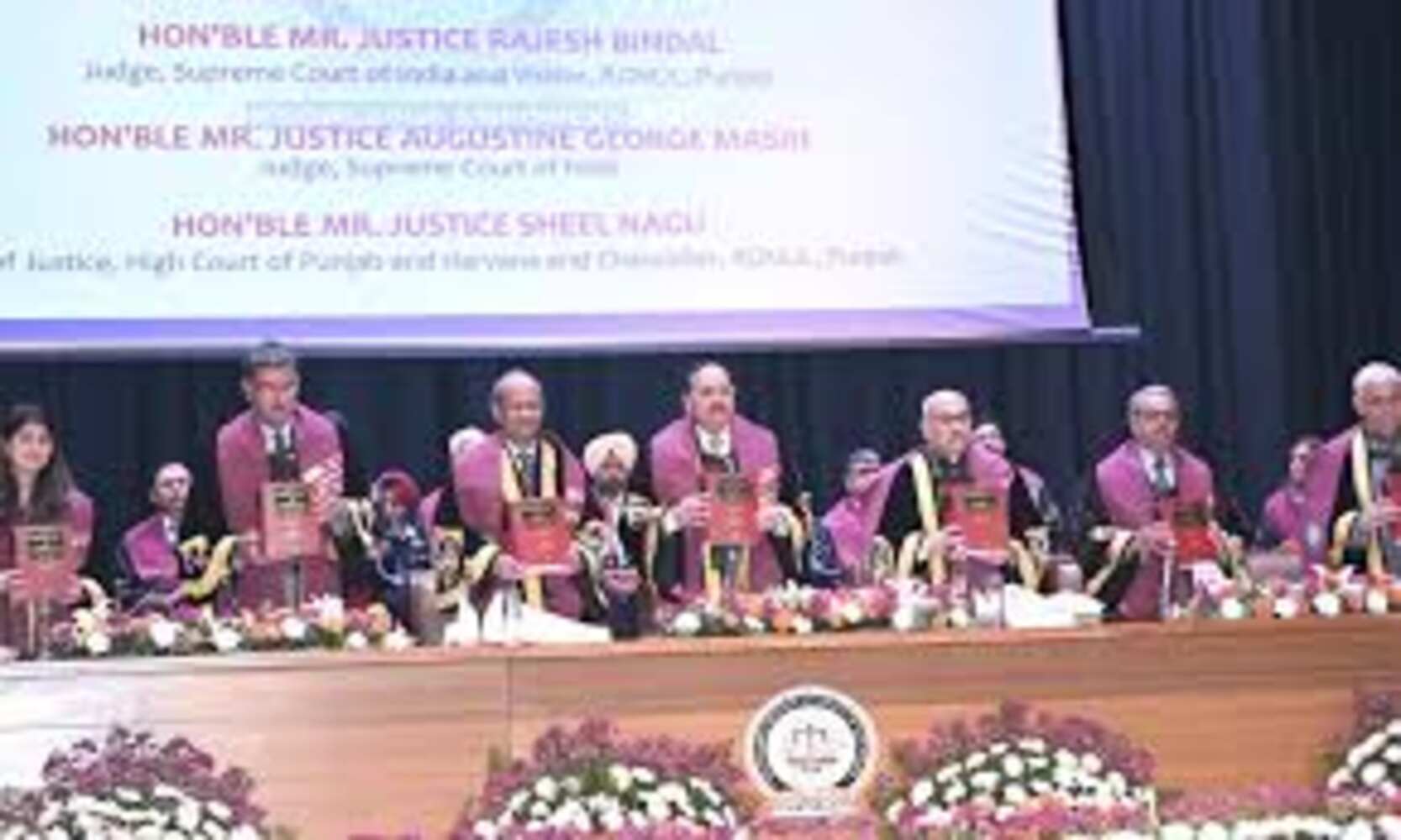
The convocation was a significant milestone for RGNUL, with 725 students receiving their degrees. The ceremony also honored the broader legal fraternity, conferring honorary Doctor of Laws degrees upon Supreme Court Judges Justice Pankaj Mithal and Justice Rajesh Bindal for their distinguished contributions to the Indian judiciary.
Justice Kant praised RGNUL’s “green campus” and its co-curricular ecosystem, noting that such environments do more than just produce lawyers—they cultivate “thoughtful, grounded, and socially engaged citizens.”
Conclusion: A Republic in Your Hands
The CJI’s message was clear: winning a case is a professional achievement, but building a nation is a life’s work. As these 725 graduates step out into various courts and corporate offices across the country, they carry with them the CJI’s reminder that they are the stewards of an unfinished Republic.
The future of Indian democracy, according to Justice Kant, does not rest solely in the hands of the judges or the legislature. It rests in the hands of the young advocates who choose to breathe life into the Constitution, one case—and one transformation—at a time
