

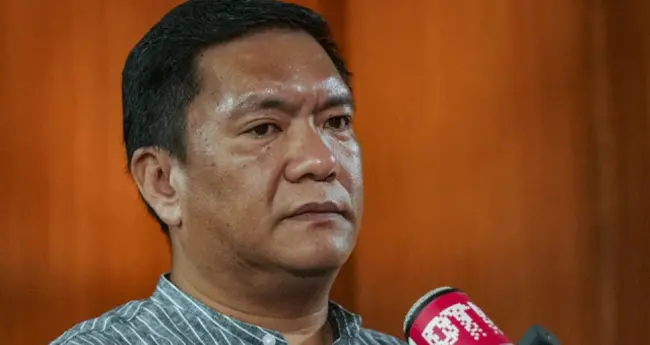
GG News Bureau
Itanagar, 9th July: Arunachal Pradesh Chief Minister Pema Khandu has raised grave concerns over China’s construction of a massive hydropower dam near the Indian border, calling it a “ticking water bomb” and an existential threat to the people of his state. The dam, being built on the Yarlung Tsangpo river (known as the Brahmaputra in India), poses a danger even greater than the military threat from China, Khandu said in an interview.
“China cannot be trusted. Setting aside the military threat, this project could become an existential danger to our tribal communities and environment,” Khandu said, stressing the risk of sudden, uncontrolled water releases devastating downstream regions.
World’s Largest Dam Without International Oversight
The USD 137 billion Yarlung Tsangpo Dam—approved by China in 2024—is expected to generate 60,000 MW of electricity, making it the world’s largest hydroelectric project. However, China is not a signatory to any international water treaty, which means it is under no legal obligation to release water for downstream ecosystems in India or Bangladesh.
“Had China signed water-sharing agreements, this dam could have helped reduce flooding in Assam and Arunachal Pradesh during monsoon,” Khandu said. “Instead, it threatens to dry up our rivers or unleash destructive floods.”
Threat to Tribal Communities
The Chief Minister warned that a sudden release of water from the dam could wipe out entire communities, especially along the Siang river, which is the main tributary of the Brahmaputra. The Adi tribe, in particular, faces the risk of losing land, homes, and lives.
“If China opens the gates without warning, the Siang belt will be submerged. This isn’t just policy—it’s about human lives,” Khandu cautioned.
India’s Countermove: Siang Upper Multipurpose Project
In response, the Arunachal Pradesh government, in coordination with the Government of India, is fast-tracking its Siang Upper Multipurpose Project to secure water resources and act as a flood buffer. The project, Khandu explained, will provide India with its own water reserves, helping mitigate the effects of Chinese dam operations.
The state government is also actively consulting with local tribal communities, including the Adi, to build awareness and gain support for India’s strategic water initiatives.
Focus on Preparation Over Protest
When asked about how India should respond diplomatically, Khandu said that China doesn’t respond to reason, and the only viable course is building robust defence mechanisms.
“We cannot just sit and protest. We must strengthen our own preparedness. That’s exactly what we are doing,” he asserted.
The Chinese dam is being built at a strategic gorge near the Himalayan U-turn, where the Yarlung Tsangpo river bends to enter India through Arunachal Pradesh. Its location and scale add to India’s security and ecological worries.
