

Poonam Sharma
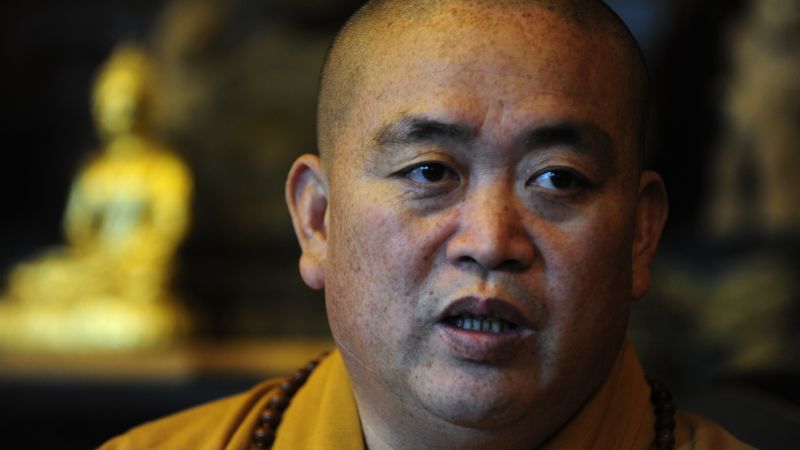
In an Orwellian reversal of spiritual existence, China has produced its own variation of a Dalai Lama.He is not a bringer of peace, but a tycoon monk-diplomat turned billionaire accused of embezzlement and sexual misconduct. Shi Yongxin, the self-styled “CEO Monk” and former abbot of the mythical Shaolin Temple. Now is at the eye of a controversy . It exposes how China’s Communist Party (CCP) has engineered a secularizing hijacking of religion to fashion a global empire of soft power.
What began as an effort to preserve culture soon evolved into a cash-generating, politically motivated venture: Chinese-character Buddhist Buddhism—branded, exported, and commodified.
From Monk to Mogul: The Rise of Shi Yongxin
Shi Yongxin, who was formerly seen as a devout servant of the Dharma, emerged as the face of a shocking blend—state capitalism meets spirituality. As its leader, the Shaolin Temple evolved from a peaceful Buddhist retreat into a profitable business entity. With CCP sanction, he had a portfolio of over 40 businesses, ranging from tourism operations to martial arts schools, entertainment chains, and even technology start-ups.
Monnikered the “Kung Fu Monk,” he was sent to ink global MoUs, lead Buddhist forums, and chop business worth billions. As his fame increased, so did his influence. A spiritual guru to de facto Chinese diplomat—one who used religious robes as instruments of political leverage.
Luxury, Lust, and the Fall
But beneath the gilded surface was a disturbing reality. Shi Yongxin’s decadent ways, such as luxury villas, foreign retreats, and suspected multiple affairs with women. All started surfacing on the internet. He was charged with sexual exploitation, misusing temple donations, and amassing wealth overseas.
In spite of growing evidence, the CCP held back for years. Why? Because CEO Monk was too valuable to their game. His spiritual allure, martial mystique, and political compliance made him an ideal representative of “Chinese Buddhism. It was not for religion, but for international deals, soft diplomacy, and branding culture.
It was only when public indignation ran riot and his political value declined that the authorities acted. Shi was finally interrogated, removed from his positions, and reportedly detained.
State-Sponsored Religion: The Larger Landscape
Shi Yongxin is no exception. He is a template.
China, officially atheist, has come to see the strategic value of religion. The same government that destroyed thousands of temples under the Cultural Revolution is now restoring them—only not for prayer, but for propaganda.
The CCP’s plan is straightforward: to dominate, remap, and sell “Chinese Buddhism” as an instrument of influence. Temples are being built in Southeast Asia, Africa, and even Europe—not only as centers of spirituality, but as soft power missions.
And why? To rival India’s moral prestige as Buddhism’s birthplace, counter the Tibetan movement, and establish China as the new spiritual superpower.
India’s Spiritual Capital Is Underutilized
Conversely, India, where the world has revered saints and the actual Dalai Lama, has not been able to leverage its spiritual riches. Indian monks are respected throughout the world. Yet lack the presence in global diplomacy, cultural summits, and international branding.
In the Congress period, there were few attempts to project spiritual leaders as cultural ambassadors, but these attempts were not of scale and vision. While China is producing monks in suits—taught to use the language of both Dharma and diplomacy.
India, blessed with its enormous spiritual diversity and soft power potential, needs to rethink. Why can’t our gurus, monks, and saints be cultural ambassadors.? Not of religion alone, but of Indian values, peace, and pluralism?
A Global Struggle for the Soul of Buddhism
There is a larger war being fought—a battle over the soul of Buddhism. While India fights for freedom of religious choice, China is constructing a managed narrative of state-sanctioned, lucrative piety.
China is attempting to substitute the Dalai Lama in exile with a puppet monk of their own. Beijing has announced a religious cold war. They wish to demonstrate that the real heir of Buddhist tradition is not in Dharamshala but in Beijing’s pocket.
India, though, sent a strong message: the living Dalai Lama of India alone will be legitimized worldwide. That step has rattled China, prompting an explosion of Chinese investment in Buddhist branding, temple construction, and international monk diplomacy.
Weaponizing the Robes
The Shi Yongxin scandal lays bare a shameful reality—Chinese monks are not selected on the basis of their spirituality, but their allegiance. They talk like diplomats, they move like businessmen, and they are spiritual surrogates of the CCP. Their saffron robes are now the guise for geopolitical posturing and economic exploitation.
This isn’t religion. It’s realpolitik rebranded as religion .In the Chinese context and terms
India Must Respond, Not Imitate
India does not have to emulate China’s strategy, but it can acknowledge the strength of spiritual diplomacy. Rather than shunning its spiritual leaders, India should responsibly promote them as voices of conscience, peace, and culture.
The world continues to respect India as the land of Buddha, not only Bollywood or business. And in an era where monks are made billionaires and temples boardrooms, India needs to hold on to the soul of spirituality—even as it enters the field of global influence.
