
Chhattisgarh Religion Bill Sparks Assembly Showdown
Opposition walks out as BJP defends tough anti-conversion law amid uproar

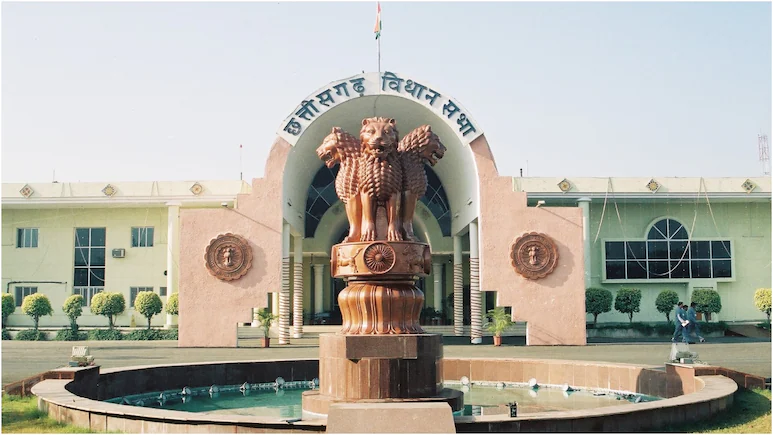
- Freedom of Religion Bill triggers massive uproar in Assembly
- Congress stages walkout, demands Select Committee review
- Govt defends strict anti-conversion provisions
- Bill proposes jail up to life term, heavy fines
GG News Bureau
Raipur, 19th March: High drama unfolded in the Chhattisgarh Legislative Assembly on Thursday as the Freedom of Religion Bill, 2026 triggered a fierce political confrontation between the ruling BJP and the Opposition Congress, culminating in a walkout by Opposition MLAs.
The Bill was introduced by Home Minister Vijay Sharma, who defended it as a necessary step to curb illegal religious conversions and maintain public order.
Leader of Opposition Charandas Mahant strongly objected to the legislation, arguing that similar laws are under judicial scrutiny and should be referred to a Select Committee. The Chair, however, rejected the demand, triggering protests and sloganeering inside the House, followed by a walkout by Congress members.
The ruling BJP hit back, with senior MLA Ajay Chandrakar asserting that the Bill is constitutionally valid. Vijay Sharma accused the Opposition of indulging in “vote-bank politics” and avoiding debate.
The debate saw sharp exchanges, with Congress MLA Ramkumar Yadav calling the Bill “against the spirit of the Constitution.” BJP leaders responded with strong counter-allegations, with MLA Bhavna Bohra accusing the Congress of historically encouraging conversions, while Nilkanth Tekam termed religious conversions in Bastar “more dangerous than cancer.”
The proposed legislation introduces stringent provisions, criminalising religious conversions carried out through force, inducement, coercion or misrepresentation, including via digital platforms and social media.
It mandates prior intimation to the District Magistrate for voluntary conversions, followed by a 30-day public notice period inviting objections.
The penalties outlined are among the toughest. Illegal conversions could attract 7 to 10 years of imprisonment and a minimum fine of ₹5 lakh. In cases involving minors, women or individuals from SC/ST/OBC communities, punishment could extend from 10 to 20 years with fines up to ₹10 lakh. Mass conversions may lead to imprisonment ranging from 10 years to life, along with fines up to ₹25 lakh.
All offences under the Bill are proposed to be cognizable, non-bailable and triable in special courts.
Justifying the urgency, Sharma cited data from Bastar and Dantewada districts, claiming that religious conversions have created social tensions. He also linked the issue to demographic concerns and revealed that Special Task Forces have been set up across districts to identify alleged illegal activities.
As political tensions escalated, the BJP positioned the Bill as a measure to protect tribal identity and social harmony, while the Opposition termed it unconstitutional and politically driven, setting the stage for a wider political and legal battle.
