
Centre Rolls Out ₹1,000-Crore Plan to Tackle Landslide Risks
Four States received ₹43.91 crore under Landslide Risk Mitigation Scheme

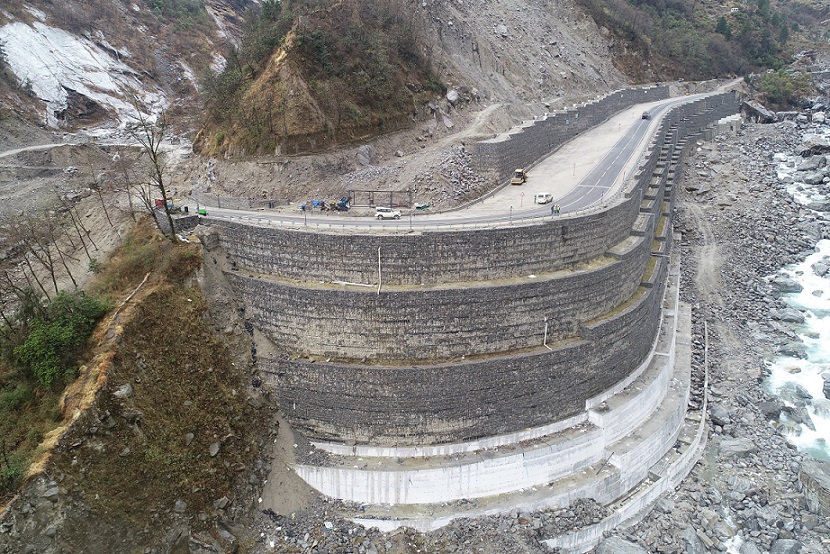
- LRMS approved for Sikkim, Mizoram, Nagaland and Uttarakhand in 2019
- ₹43.91 crore released for preparedness, monitoring and capacity building
- National Landslide Risk Mitigation Project approved with ₹1,000 crore outlay
- 15 landslide-prone States to benefit under NDMF
GG News Bureau
New Delhi, 4th Feb: The Government of India has strengthened disaster preparedness in landslide-prone regions by implementing the Landslide Risk Mitigation Scheme (LRMS) and approving a new ₹1,000-crore National Landslide Risk Mitigation Project, the Ministry of Home Affairs informed Parliament.
In a written reply to the Rajya Sabha, Minister of State for Home Affairs Nityanand Rai said the LRMS was approved in 2019 for four vulnerable States — Sikkim, Mizoram, Nagaland and Uttarakhand — to enhance disaster preparedness and build long-term mitigation capacity.
The scheme was launched in July 2019 under the initiative to improve disaster risk governance of State and District Disaster Management Authorities, with a total financial outlay of ₹43.91 crore. Under LRMS, Sikkim received ₹11.08 crore, Nagaland and Uttarakhand ₹10.92 crore each, and Mizoram ₹10.99 crore.
The Minister said the major outcomes of the scheme include landslide mitigation works, real-time monitoring systems, awareness programmes, and capacity building and training of local authorities.
In addition, the government has approved a National Landslide Risk Mitigation Project with a financial outlay of ₹1,000 crore, to be funded through the National Disaster Mitigation Fund (NDMF). The project will cover 15 landslide-prone States, including Arunachal Pradesh, Assam, Himachal Pradesh, Manipur, Meghalaya, Mizoram, Nagaland, Sikkim, Tripura, Uttarakhand, Karnataka, Kerala, Maharashtra, Tamil Nadu and West Bengal.
The Minister said these initiatives reflect the Centre’s commitment to reducing disaster risks, improving early warning and preparedness, and protecting lives and infrastructure in landslide-vulnerable regions across the country.
