
Budget Is a Policy Roadmap, Not a Trading Document: PM Modi
Calls for Tech-Driven Reforms, Stronger Bond Markets at Post-Budget Webinar

- PM stresses Budget must be seen as part of 2047 Viksit Bharat vision
- Push for AI, blockchain, data analytics to boost transparency and delivery
- Public capex rises from ₹2 lakh crore to over ₹12 lakh crore in 11 years
- Urges industry, financial institutions to deepen infra and bond market reforms
GG News Bureau
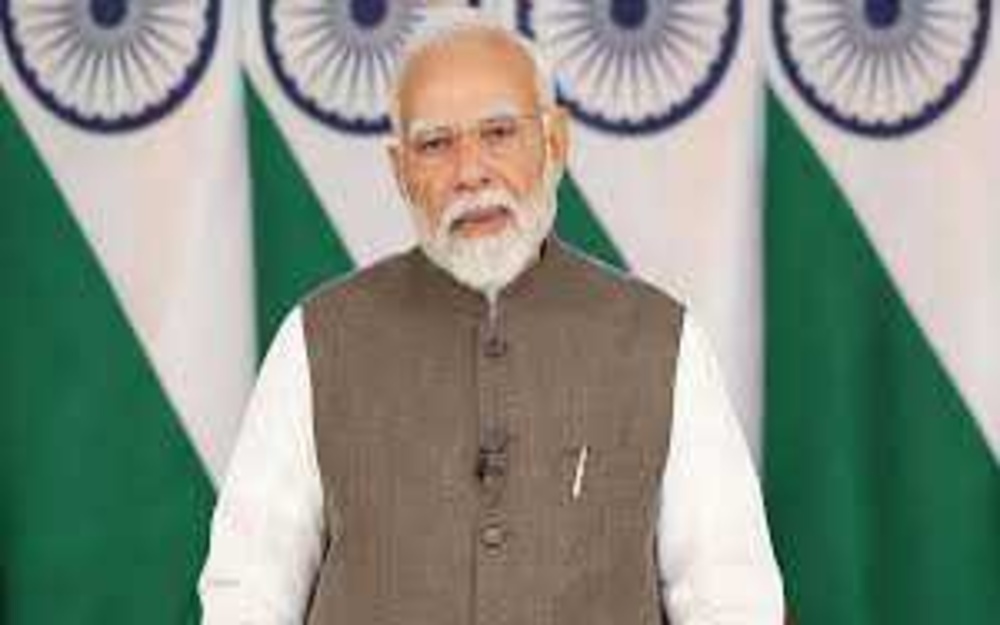
New Delhi, 27th Feb: Prime Minister Narendra Modi on Friday said the Union Budget should be viewed as a long-term policy roadmap and not a short-term trading document, as he addressed a post-Budget webinar on “Technology, Reforms and Finance for Viksit Bharat.”
In his remarks, the Prime Minister underlined that every Budget must be assessed on parameters such as infrastructure expansion, ease of doing business, credit flow, governance transparency and citizen empowerment. He said each fiscal exercise forms part of the broader goal of building a developed India by 2047.
Highlighting India’s economic resilience over the past decade, the Prime Minister attributed it to conviction-driven reforms, simplification of processes and technology-led governance. He asserted that reforms must be evaluated not by announcements but by their impact on the ground, calling for the expanded use of artificial intelligence, blockchain and data analytics to enhance speed, transparency and accountability.
The Prime Minister noted that public capital expenditure has increased significantly over the past decade — from around ₹2 lakh crore 11 years ago to over ₹12 lakh crore in the current Budget. He said sustained public investment in highways, railways, ports, digital networks and power systems has created productive assets that will generate long-term growth and send a strong signal to the private sector.
Calling for greater participation from industry and financial institutions, the Prime Minister urged innovation in financing models and stronger collaboration in emerging sectors. He emphasised improving project sanction methodology, appraisal quality, cost-benefit analysis and lifecycle costing to prevent waste and delays.
On financial reforms, the Prime Minister said efforts are underway to simplify the foreign investment framework and deepen bond markets to make them more predictable, liquid and investor-friendly. He encouraged stakeholders to draw from global best practices to strengthen India’s long-term growth ecosystem.
Proposing a “Reform Partnership Charter,” the Prime Minister called for a shared commitment among government, industry, financial institutions and academia to ensure that reforms translate into measurable outcomes on the ground.
He urged stakeholders to focus not on debating the Budget, but on ensuring swift and effective implementation, stating that collective effort would accelerate India’s journey towards becoming a developed nation.
