
Blame Bharat, Ignore the Taliban: Pakistan’s Strategy of Denial
“After Taliban fighters seized Pakistani military posts and weapons, Islamabad’s leadership is once again invoking Bharat as a convenient scapegoat — exposing the fragility of its foreign policy and the emptiness of its strategic narratives.”

Paromita Das
New Delhi, 18th October: It’s often said that whenever Pakistan stumbles at home, it looks east for a scapegoat. This time is no different. After a humiliating clash with the Afghan Taliban — where insurgents stormed Pakistani border posts, seized weapons, and allegedly forced soldiers to flee — Islamabad’s Defence Minister, Khwaja Asif, pointed fingers at Bharat.
He accused the Taliban of “fighting Bharat’s proxy war.” The claim might sound dramatic, but in reality, it reeks of desperation, not discovery.
The conflict, which erupted along the Afghanistan–Pakistan border, lasted nearly a week and left over 200 people dead, including civilians. A fragile 48-hour ceasefire followed, but tensions remain dangerously high.
As Pakistan struggles with yet another strategic and diplomatic setback, Asif’s conspiracy theory seems less about Bharat — and more about deflecting domestic humiliation.
Asif’s Bharat Conspiracy: Fiction Over Facts

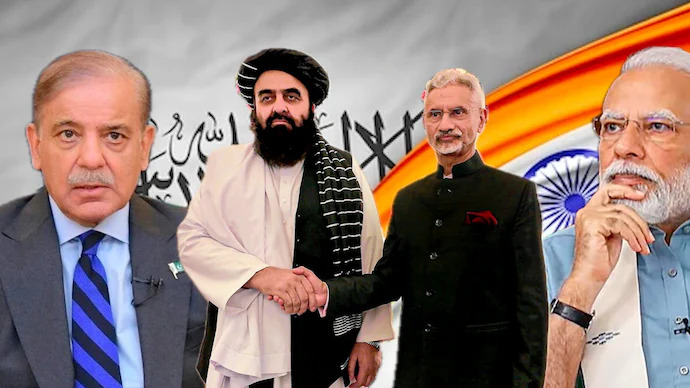
Khwaja Asif’s statement came shortly after Afghan Foreign Minister Amir Khan Muttaqi’s six-day visit to Bharat. Asif implied that this diplomatic engagement somehow triggered a coordinated Taliban assault on Pakistan’s border posts.
However, this theory collapses under the simplest scrutiny. Muttaqi’s visit revolved around trade, regional connectivity, and humanitarian aid — not military collaboration.
Even Pakistan’s own intelligence community would find it hard to believe that a week-long diplomatic visit could morph into a complex, cross-border military operation.
The uncomfortable truth is that Pakistan’s own policies are to blame. For decades, Islamabad nurtured extremist proxies as “strategic assets.” The Afghan Taliban — once celebrated as Pakistan’s “strategic depth” — is now asserting its independence, often at Pakistan’s expense.
By blaming Bharat, Pakistan’s leadership avoids confronting the harsh reality: it has lost control over the very forces it helped empower.
A Ground-Level Humiliation

On the ground, the scenes were disastrous for Pakistan’s military image. Taliban fighters captured several Pakistani outposts, paraded seized weapons and uniforms, and shared the footage online for the world to see.
Photos of abandoned Pakistani military trousers went viral, sparking ridicule and bitter memories of 1971 — when Pakistani forces surrendered to Bharatiya troops in Dhaka.
In one viral clip, Taliban fighters were seen driving captured Pakistani military vehicles, including a T-55 tank, mocking the army that once claimed to be the region’s most disciplined force.
For Pakistan’s military establishment — long accustomed to projecting power and prestige — this was a public relations catastrophe.
Escalation and Civilian Tragedy

In retaliation, Pakistan launched airstrikes inside Afghan territory, claiming to target TTP (Tehrik-e-Taliban Pakistan) militants. But according to reports, the strikes killed at least 15 civilians and injured over 100 people in Kabul and Kandahar.
The Taliban hit back, seizing even more border posts in the Spin-Boldak region.
The accusations flew fast: Islamabad accused the Taliban of harbouring the TTP, while Kabul accused Pakistan of aiding ISIS-K (Islamic State Khorasan).
The alliance that once symbolized “Islamic brotherhood” and “regional stability” is now unraveling in real time.
A Fragile Ceasefire — and Even More Fragile Credibility

The 48-hour ceasefire that followed was less about peace and more about saving face. Both sides claimed the other requested it — a classic diplomatic face-off.
Pakistan’s Foreign Ministry called it a “constructive step toward dialogue.” Meanwhile, the Taliban issued a thinly veiled warning: they would “honour the ceasefire only if Pakistan refrains from aggression.”
Analysts across South Asia see this as nothing more than a temporary pause, not progress. The Taliban’s battlefield gains and Pakistan’s diplomatic failures have shattered Islamabad’s illusion that it could dictate terms to Kabul indefinitely.
Living in Denial

Pakistan’s attempt to drag Bharat into this mess reveals a deeper problem — an institutional refusal to accept responsibility.
From economic crises to border disasters, Islamabad has perfected the art of externalizing blame. By constantly framing Bharat as the eternal enemy, it keeps domestic accountability at bay.
This tactic might still play well for domestic audiences, but globally, it’s losing credibility fast. Social media ridicule, international scepticism, and repeated military failures are eroding Pakistan’s standing more than any foreign conspiracy ever could.
Blaming Bharat Won’t Fix a Broken Strategy

The Afghan border crisis isn’t the result of Bharatiya interference. It’s the direct outcome of Pakistan’s flawed strategic doctrine.
The same state that once called itself the “guardian of Islam” in South Asia is now being humiliated by those it once armed and supported.
The Taliban’s defiance is a painful reminder that proxies built on manipulation eventually turn against their masters.
As Islamabad scrambles to deflect blame, it faces a harsh truth: the crisis it fears isn’t across the border — it’s within its own borders.
Until Pakistan stops scapegoating Bharat and starts confronting its internal failures, it will keep losing — not just battles, but credibility, stability, and respect.
A Reckoning Long Overdue
Pakistan’s strategy of denial and diversion has reached its breaking point. By clinging to outdated doctrines and old enemies, it risks repeating the same mistakes — only with higher stakes.
Blaming Bharat might offer a momentary political cushion, but it can’t mask the deeper rot: a state at odds with its own creation.
For Pakistan, the path forward isn’t in blaming the east — it’s in rebuilding within.
