

By Harshita Rai
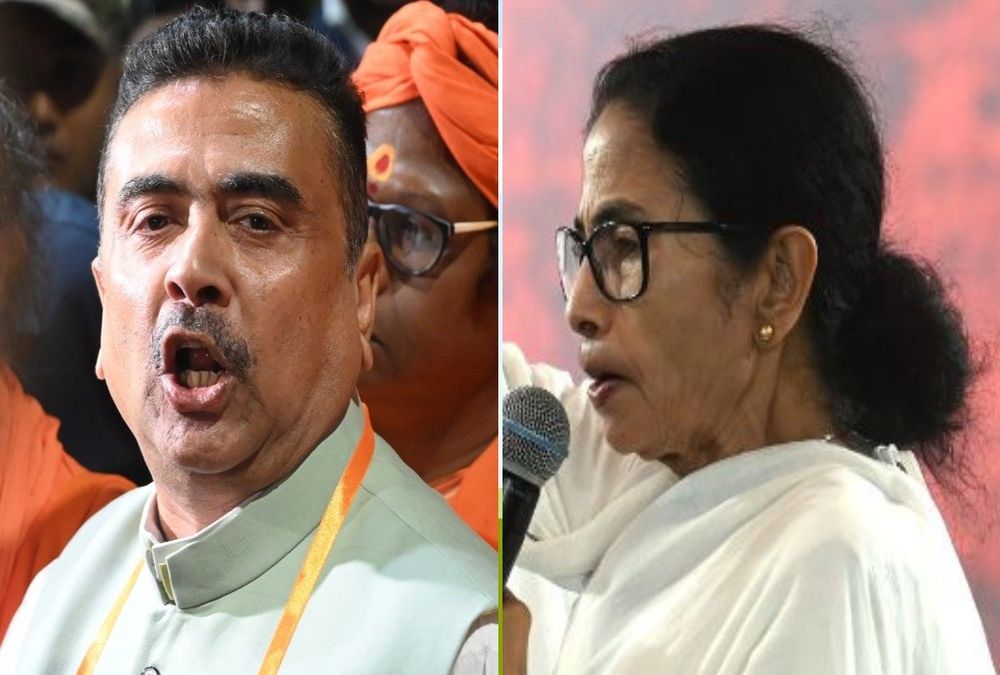
As West Bengal moves closer to assembly elections, the political contest is taking a sharper and more dramatic turn. In an unprecedented move, the Bharatiya Janata Party has fielded Leader of the Opposition Suvendu Adhikari from two constituencies — Nandigram and Bhabanipur — setting the stage for a direct face-off with Chief Minister Mamata Banerjee.
The announcement, made in the BJP’s first list of candidates, signals a shift in the party’s electoral strategy. Adhikari, who had earlier defeated Banerjee in Nandigram by a margin of 1,956 votes, had already hinted at such a move, stating that he would contest wherever Banerjee chose to run. His entry into Bhabanipur now transforms the constituency into a high-stakes political battleground.
While Banerjee refrained from immediate comment, Trinamool Congress leader Kunal Ghosh dismissed the move, calling it a desperate political gamble.
Sources within the BJP indicate that the decision was driven by the party’s central leadership, with Amit Shah backing the strategy. Initially, Adhikari was expected to contest only from Bhabanipur, but concerns over political risk led to a compromise — contesting both seats. The move is seen as a calculated attempt to maintain pressure on Banerjee while safeguarding Adhikari’s political standing.
Bhabanipur, with its sizeable non-Bengali voter base including Hindi-speaking, Marwari, Gujarati, and Bihari communities, is viewed as a constituency where the BJP could potentially consolidate support. Though Banerjee secured a comfortable victory there in the previous election, Adhikari’s candidature raises the contest’s profile, turning it into a symbolic Mamata-versus-Suvendu showdown.
The BJP’s strategy also reflects its broader challenge — the absence of a single, undisputed chief ministerial face in the state. By positioning Adhikari directly against Banerjee, the party is attempting to project him as its principal challenger and consolidate leadership perception within its ranks.
The development comes amid other political and administrative shifts in the state, including changes in gubernatorial leadership and electoral processes. The Trinamool Congress has alleged tacit coordination between central authorities and institutions, a claim the BJP dismisses as political rhetoric, describing the situation instead as a “war of nerves.”
With this dual candidature, the BJP has escalated the electoral contest beyond conventional campaigning. By forcing a direct confrontation with Mamata Banerjee, the party aims to energise its cadre, sharpen the narrative, and reshape the political discourse ahead of the polls.
Whether this high-risk strategy translates into electoral success remains to be seen, but it has already intensified the political temperature in West Bengal, turning the upcoming election into a closely watched contest of strategy, symbolism, and leadership.
