
Billions in Bitcoin: Coons Slams Trump’s Crypto Empire
"A political storm brews as Trump’s crypto empire fuels accusations of profiteering at the expense of working Americans."

Paromita Das
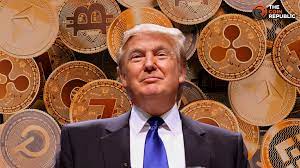
New Delhi, 20th September: In the heated political landscape of Washington, cryptocurrency has become the latest battleground. On Tuesday, Senator Chris Coons (D-Del.) accused former President Donald Trump and his family of engaging in questionable profiteering tied to their cryptocurrency ventures. The allegation, amplified by a Vox report Coons shared on X (formerly Twitter), claims the Trumps leveraged the power of the presidency to attract investors and build immense wealth in the crypto market. As Coons bluntly put it: “President Trump and his family are pocketing billions while working families’ wages continue to shrink. This is corrupt, it’s wrong, and it’s a deep disservice to American taxpayers.”
President Trump and his family are pocketing billions while working families’ wage continue to shrink. This is corrupt, it’s wrong, and it’s a deep disservice to American taxpayers. https://t.co/aRr7Rk9sYN
— Senator Chris Coons (@ChrisCoons) September 16, 2025
The accusations are not isolated. They echo earlier criticisms by prominent Democrats such as Hillary Clinton, Senator Elizabeth Warren, and Representative Greg Casar—each defining Trump’s cryptocurrency windfalls as a glaring example of corruption at the highest level of leadership. While the White House has yet to comment, the controversy is fast becoming one of the most significant political clashes surrounding crypto in 2025.
The Rise of Trump’s Crypto Empire

The Trump family’s involvement in cryptocurrency has expanded rapidly over the past two years, with ventures that now span meme coins, stablecoins, and a major blockchain project. At the center of this financial web lies World Liberty Financial (WLFI), a newly debuted cryptocurrency venture that has elevated the family’s “paper wealth” by more than $4.9 billion.
According to Trump’s latest financial disclosure, WLFI has become one of his primary income streams, bringing in more than $57 million through trading and related activities. Alongside WLFI are other high-profile, Trump-branded tokens: the Official Trump (TRUMP) meme coin and World Liberty Financial USD (USD1), a stablecoin marketed as a dollar-pegged crypto asset. These ventures portray the former president not merely as a crypto supporter, but as an ambitious mogul carving out dominance in the digital currency landscape.
Eric Trump, an outspoken defendant of the family’s crypto initiatives, recently announced the launch of American Bitcoin, framing Bitcoin as “modern-day gold” and positioning it as both a patriotic and profitable investment choice. To supporters, such rhetoric elevates cryptocurrency as a cornerstone of economic independence in the digital age. To critics, however, the Trump brand is exploiting its political notoriety to inflate valuations and attract attention-seeking retail investors.
The Corruption Argument

For lawmakers like Chris Coons, the danger lies not only in crypto speculation itself, but in the blurred lines between political influence and financial gain. By launching and promoting projects tied so closely to Trump’s personal image, critics argue that supporters of the former president—many of whom see him as an anti-establishment figure—are being lured into financial schemes propped up by political loyalty rather than economic fundamentals.
Elizabeth Warren has long raised alarms about the lack of oversight in cryptocurrency markets, branding them as fertile grounds for fraud, money laundering, and manipulation. In this context, Trump’s ventures represent more than private enterprise—they are seen as conflicts of interest that could erode public trust in government. With billions reportedly flowing into the family coffers from Bitcoin and blockchain-linked ventures, Democrats see a clear ethical breach. As Hillary Clinton warned years ago, financial entanglements of this magnitude could make U.S. politics vulnerable to both domestic and international exploitation.
Still, Trump’s defenders argue that this framing is unfair. They claim the former president is, like many entrepreneurs, seizing opportunities in a rapidly expanding sector. Crypto is no longer a niche market; it is a trillion-dollar financial ecosystem reshaping global commerce. From this viewpoint, Trump’s ventures are not evidence of corruption, but proof of his foresight and entrepreneurial daring.
A Political Divide Over Crypto

Underlying this clash is a growing political divide over how the United States should regulate digital assets. Republicans, in general, tend to favor a more hands-off approach, arguing that heavy regulation would stifle innovation and push blockchain advancements offshore. Trump’s embrace of crypto underscores this stance, recasting him not only as a businessman but as a political figure championing “financial freedom” in the face of what he portrays as government overreach.
On the other side, Democrats frame cryptocurrency as a potential risk to ordinary Americans, particularly in the absence of strict oversight. Scandals like the collapse of FTX and widespread “pump-and-dump” scams linger fresh in voters’ minds. By pressing corruption narratives against Trump, Democrats aim to position themselves as protectors of working families against speculative excess and political profiteering. This positioning could resonate in an election cycle where financial struggles remain top of mind for many households.
A Test of Trust and Transparency

The question that looms largest is not whether cryptocurrency will shape the future—it undoubtedly will—but whether political figures can ethically participate in such ventures without betraying public trust. In Trump’s case, the tight interweaving of politics, personal brand, and cryptocurrency creates an unavoidable perception problem. Even if his ventures are legally sound, they inevitably provoke doubts about fairness, integrity, and conflicts of interest.
Senator Coons’ assertion that “working families’ wages continue to shrink” touches on the sharp contrast between elite wealth-building and economic stagnation for the middle class. Against this backdrop, Trump’s billions in paper gains appear not as entrepreneurship alone, but as another example of political privilege fueling inequality.
The Future of Crypto, the Future of Politics
The Trump family’s crypto empire sits at the intersection of finance, technology, and politics. To critics, it embodies corruption—the weaponization of political power for outsized financial reward. To defenders, it reflects savvy opportunity-taking in a world where digital assets are becoming mainstream commodities.
Ultimately, the integrity of democratic governance depends not simply on legality, but on perception. If the public comes to view political leaders as business tycoons gaming the system for personal profit, trust in democratic institutions will erode further. Whether Trump’s cryptocurrency ventures are remembered as bold innovation or blatant corruption may depend less on market performance and more on the political narratives that shape voter opinion in the run-up to 2026 and beyond.
