
Bilateral relations are strengthening as India and Canada collaborate on the Nijjar investigation

GG News Bureau
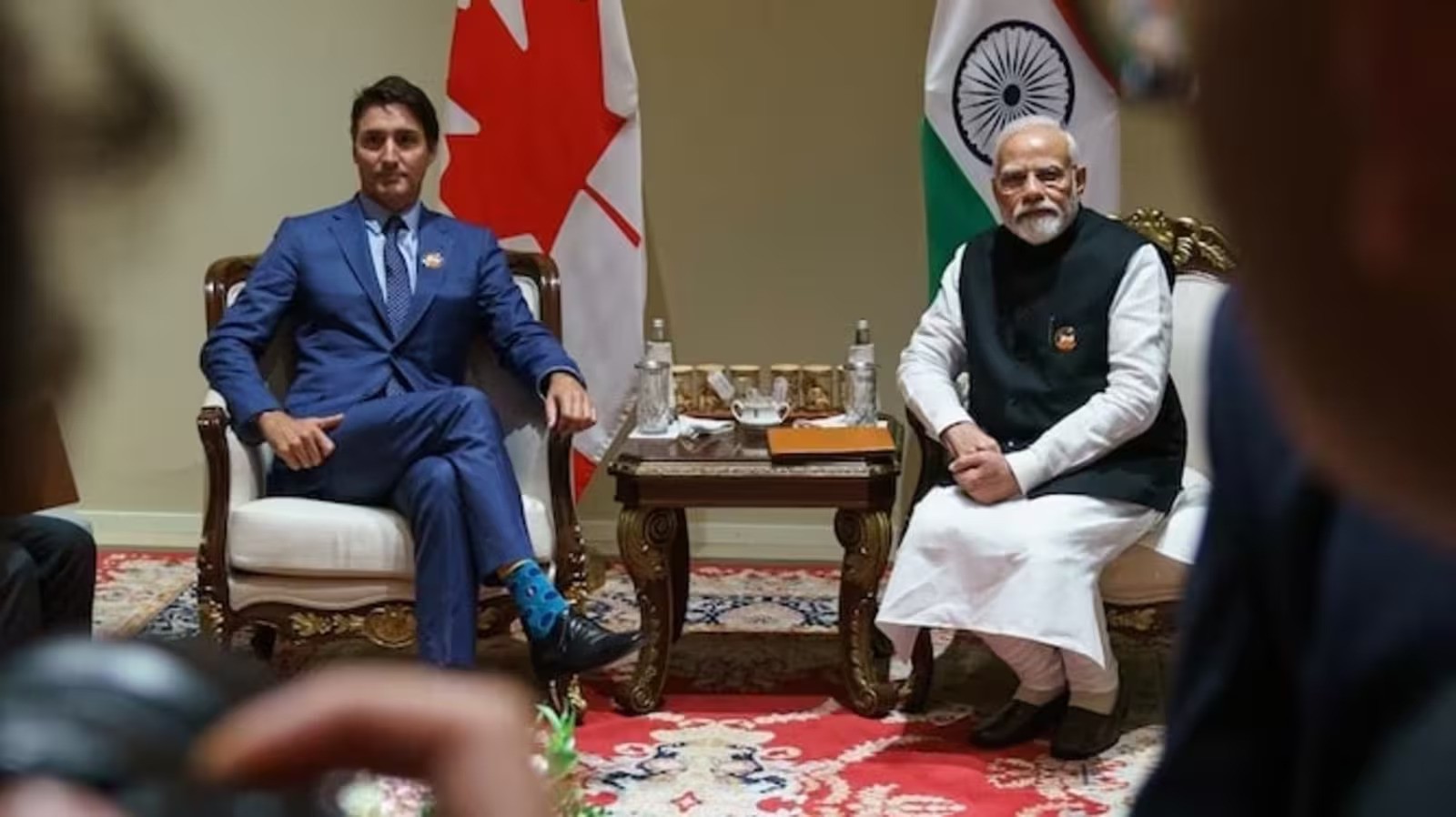
New Delhi, 27th Jan. On Friday, a senior Canadian official informed regional media that bilateral ties between Canada and India are strengthening and that both nations are working together to investigate the killing of terrorist Hardeep Singh Nijjar, a member of the Khalistani movement. This follows a diplomatic spat between the two nations sparked by Canadian Prime Minister Justin Trudeau’s accusations that India was responsible for Nijjar’s June death.
Notably, after Trudeau claimed that India may have had a hand in Nijjar’s murder, who was shot dead in front of his Surrey, British Columbia, home, ties between the two nations deteriorated last year. India refuted the accusation, calling it baseless and politically driven, and demanded proof from Ottawa to support its assertions.
“I wouldn’t characterize the Indians as being uncooperative. The government’s claims were further reinforced by information provided by the United States about the involvement of an Indian official in a foiled murder plot of another Sikh separatist in New York, according to Jody Thomas, Trudeau’s national security adviser.
“The information that they (the Americans) revealed supported our position and our assertions with India, and India is working with us far more closely to resolve this,” Thomas stated to CTV News. Prior to this, Trudeau stated that there might have been “a tonal shift” in the relationship between India and Canada in the wake of the suspected plot to kill India-designated Khalistani terrorist Gurpatwant Singh Pannun.
Canada-India tensions
In the Indo-Pacific area, where New Delhi’s support is essential to efforts to contain an increasingly aggressive China, Ottawa’s intentions to expand its influence have been endangered by the acrimony between India and Canada, which has also delayed discussions on a free-trade agreement. Following Trudeau’s remarks in September of last year, New Delhi requested that Canada withdraw 41 diplomats from India. As a result, Ottawa withdrew its diplomatic staff from India.
“Having a positive relationship with India is essential to our capacity to operate in the Indo-Pacific region. And I believe we are making progress in that direction,” Thomas remarked. Approximately two million Canadians, or 5% of the total population, are of Indian descent.
In view of the reports coming out of India, Trudeau stated that he felt compelled to publicly accuse India of killing Hardeep Nijjar in order to “chill India.” “Too many Canadians were worried that they were vulnerable,” he stated, noting that since immediately after Nijjar’s death, the Sikh community in British Columbia had been voicing worries.
India has urged Canada to act more forcefully in combating abuses of the right to free speech, stopping the operations of organizations that support radicalism, and dealing with hate crimes and hate speech. India also brought attention to the surge in extremist attacks on Indian holy sites since Nijjar’s passing in June.
Prospects for two-way relations
Cameron Mackay, Canada’s High Commissioner to India, recently emphasized that Ottawa and New Delhi had “absolutely aligned” strategic interests, and he expressed encouragement about the ongoing bilateral trade and investment cooperation. According to Ajay Bisaria, a former Indian high commissioner to Pakistan and Canada, the hostilities between the two nations appear to be a passing phase. “Though there is a glitch between the two countries in a political relationship, the business is going on and the message from the top leadership of both the countries is clear that the business has to go on and none of the stuff in the political space will impact the business relationship,” he stated during the seminar.
Indian students who wish to leave Canada
According to Ajay Bisaria, a former Indian high commissioner to Pakistan and Canada, the hostilities between the two nations appear to be a passing phase. “Though there is a glitch between the two countries in a political relationship, the business is going on and the message from the top leadership of both the countries is clear that the business has to go on and none of the stuff in the political space will impact the business relationship,” he stated during the seminar.
Indian students who wish to leave Canada
Furthermore, at the end of the previous year, Canada saw a sharp decrease in the number of study licenses it issued to Indian students. This was mostly due to the Indian students’ unwillingness to travel and the expulsion of Canadian diplomats who handled the permission processing.
Counselor C Gurus Ubramanian of the Indian High Commission in Ottawa pointed out that some Indian international students are thinking of studying abroad instead of in Canada because of recent worries about the “lack of residential and adequate teaching facilities” at several Canadian universities. Indians are expected to make up the largest group of foreign students in Canada in 2022, accounting for almost 41% of all permits, or 225,835 students, according to reports.
