
Bihar’s Bold Leap into Digital Democracy: Bharat’s First Mobile Voting Pilot

Paromita Das
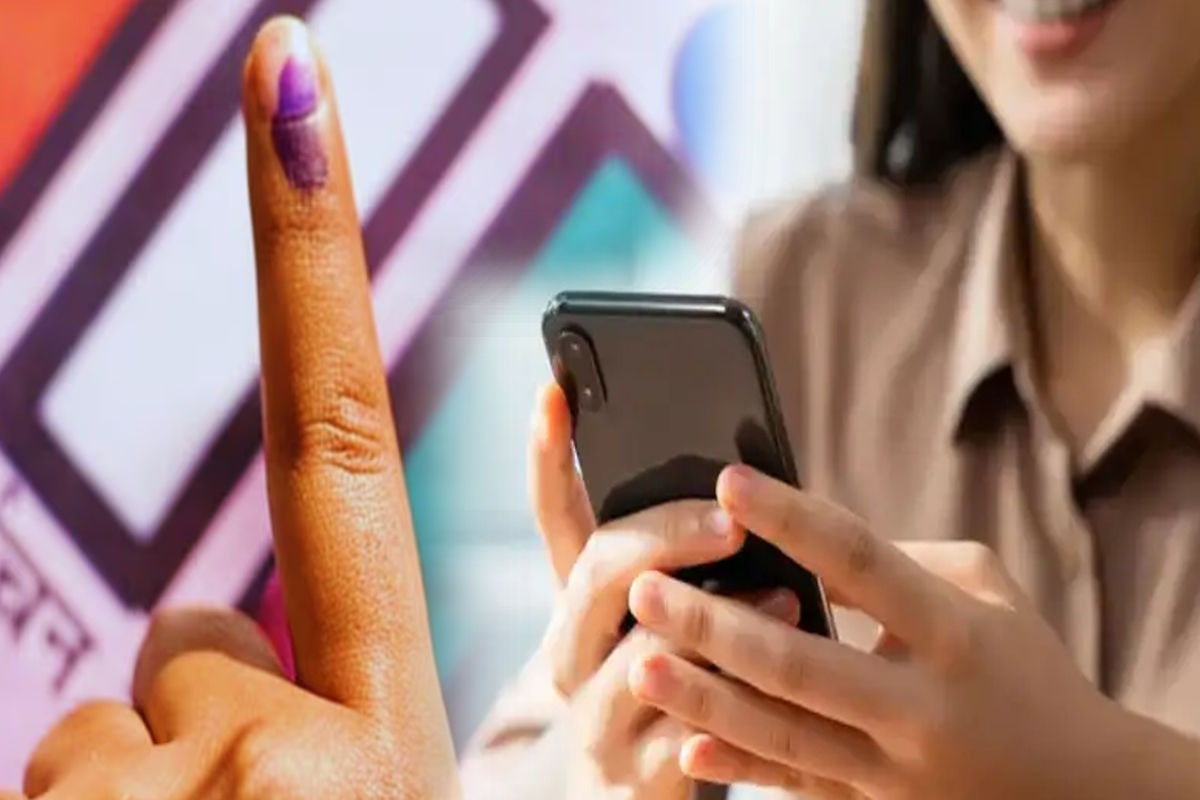
New Delhi, 30th June: In a move that could reshape Bharat’s democratic landscape, Bihar has taken a pioneering step by allowing voting through a mobile app—becoming the first state in the country to do so. The announcement by State Election Commissioner Deepak Prasad has generated waves of discussion, not just within political circles but among ordinary citizens wondering whether this is the future of voting in Bharat.
At a time when the world is increasingly reliant on digital solutions, Bihar’s decision feels both timely and ambitious. With municipal council elections in Patna, Rohtas, and East Champaran set for June 29, all eyes are on this experiment that promises to bridge the gap for those who have long found themselves on the fringes of the electoral process.
A Solution Born of Necessity
The seeds of this innovation were sown from a long-standing challenge: how to include those who, despite having the right to vote, often find themselves unable to exercise it. Migrant workers, the elderly, differently abled citizens, and pregnant women frequently face obstacles that prevent them from reaching polling booths.
To tackle this, Bihar’s election commission joined hands with the Centre for Development of Advanced Computing (C-DAC) and developed the e-SECBHR app. Simple yet sophisticated, it allows voters to cast their ballots using their smartphones, verifying identity through facial recognition and safeguarding integrity with blockchain technology.
The pilot is limited in scale but profound in implication. Nearly 10,000 people have already registered, and thousands more are expected to participate—citizens who, perhaps for the first time in years, will have a say in who governs them
The Promise and the Perils
Make no mistake—this is uncharted territory for Bharatiya elections. The State Election Commission has been careful to reassure voters of the system’s safety. The app’s multi-layered verification, electronic audit trails, and tamper-proof design are meant to dispel fears of hacking or fraud.
Yet, while technology offers solutions, it also brings new vulnerabilities. Bharat has long grappled with questions about EVM security; adding mobile voting to the mix naturally raises the stakes. What happens if a phone is hacked? Could facial recognition be spoofed? These are valid concerns, and Bihar’s pilot will likely serve as the testing ground for answers
A Step Towards a More Inclusive Democracy
If we take a step back, however, the broader picture remains compelling. Democracy’s strength lies in participation. Every vote that goes uncast is a voice unheard—a silent gap in the chorus that gives legitimacy to governance. By enabling home-based voting, Bihar’s experiment tries to close that gap.
It’s especially relevant for migrant workers, who often have to choose between earning a day’s wage and travelling hundreds of kilometers to cast a ballot. If digital voting becomes mainstream, their disenfranchisement could finally end.
Moreover, the COVID-19 pandemic highlighted the need for contactless solutions. An app-based system provides an alternative that’s not just convenient but safer during health crises—a future-proofing of democracy, one might say.
A Personal Reflection
As someone who has often wondered about the glaring gaps in our voter turnout figures, I find Bihar’s move hopeful. It’s easy to dismiss technology as a double-edged sword—risky, hackable, untested. But isn’t progress about experimenting, learning, and adapting? Bihar’s pilot won’t be flawless, but its willingness to lead where others hesitate deserves applause.
If it succeeds, it could inspire the Election Commission of Bharat to bring NRIs, migrant workers, and other hard-to-reach voters into the mainstream fold. Imagine an Bharat where no one misses their right to vote because of distance, disability, or duty
A Road Ahead, Paved with Caution
Of course, the road ahead must be tread carefully. The system will need constant audits, technological upgrades, and above all, trust-building with the public. Voters must be convinced that their votes are safe, secret, and counted correctly.
It will also be crucial to ensure that digital divides—like lack of smartphones or internet access—don’t end up excluding those the system seeks to include. For this reason, the option to vote via the official website is a smart backup, but education and support must reach the grassroots. Bihar’s foray into mobile voting isn’t just an election experiment; it’s a statement of intent. It says that Bharat’s democracy is ready to evolve with the times—willing to use technology not merely for convenience, but for deeper inclusion. The coming days will show whether this bold step lives up to its promise. But one thing is clear: in a country of over a billion voices, even a few more heard is a victory in itself.
