
Biggest Spy Racket of Pakistan Bust at Ghaziabad lesson to learn

Poonam Sharma
Inside the Ghaziabad Spy Web: How a Silent Network Was Exposed
It didn’t begin with a high-tech surveillance system or a dramatic raid. Instead, the unravelling of what is now being called one of the most shocking espionage networks in recent times started quietly—with a conversation overheard in a small local shop in Ghaziabad.
A police personnel, going about routine work, picked up fragments of a discussion—easy money, small technical jobs, quick fixes. Nothing unusual on the surface. But something felt off. That instinct, that pause, turned out to be the first crack in a much larger and far more dangerous operation.
What followed was not just an investigation—it was the peeling back of layers of a deeply embedded spy network allegedly linked to Pakistani handlers.
A Network Hidden in Plain Sight
As interrogations began, what emerged was startling. This wasn’t a random group of individuals dabbling in illegal activity. It was a structured, coordinated network, spread across multiple states—from Ghaziabad and Meerut to Kashmir, and even extending towards Assam and Arunachal Pradesh.
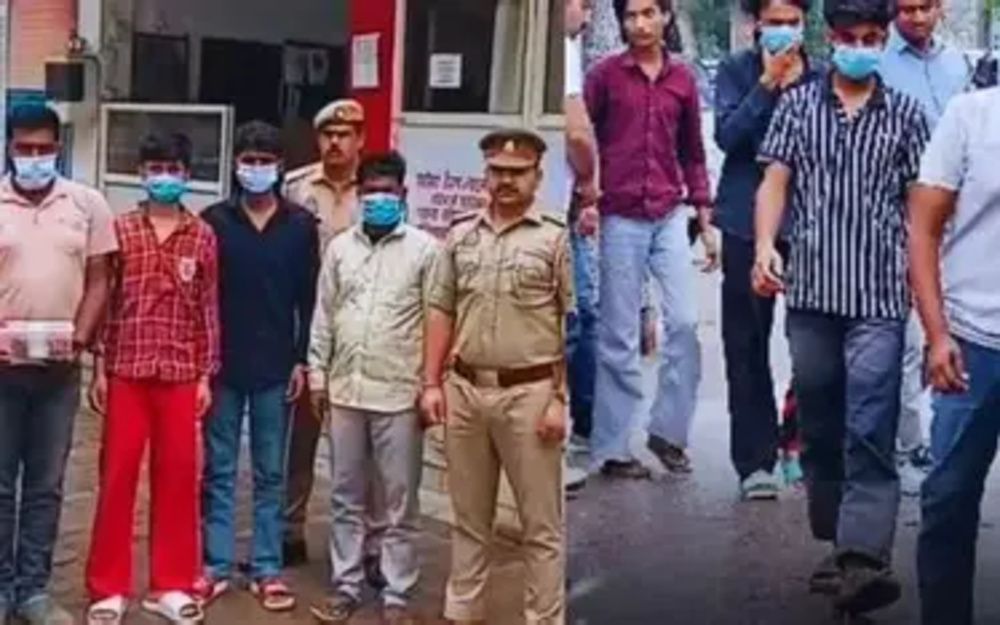
By the time the first phase of arrests was complete, 22 individuals had been taken into custody. Among them were minors and even a woman—an autorickshaw driver—who had reportedly been linked to earlier arms-related cases as well.
The choice of people was not accidental. It was strategic.
Minors, because they attract less suspicion and face lighter legal consequences.
A woman, because she blends into everyday life without raising alarms. Workers and small technicians, because they can access locations and perform tasks without being questioned.This was espionage designed to look ordinary.
Training from Across the Border
One of the most chilling aspects of the case is how the network was trained and controlled. According to the information, the operatives were in direct contact with handlers in Pakistan.But instead of traditional spycraft, this was modern, digital espionage.
They were guided on:
Which mobile apps to download.How to use them securely.How to share photos, videos, and GPS coordinates.How to avoid detection
In simple terms, they were being remotely coached—step by step—on how to turn everyday tools into instruments of surveillance.
The Solar CCTV Trap
Perhaps the most dangerous innovation in this entire operation was the use of solar-powered CCTV cameras.These were not regular cameras. They were:
Standalone
Not dependent on electricity.Capable of real-time data transmission.
Installed across sensitive locations—railway stations, cantonment zones, and crowded public areas—these devices could continuously monitor movement.Passenger density.Logistics flow.Possible troop movement patterns.All of it, allegedly, was being captured and transmitted in real time.
And the most shocking part? The entire setup was low-cost. The estimated budget of the operation—around ₹30–35 lakh.
For that amount, a cross-state surveillance network was built.
Divided Roles, One Mission
This wasn’t chaos. It was carefully organized.
The network was split into multiple groups:
One group identified and surveyed locationsAnother installed cameras and solar panels .A third recorded and transmitted videos
A fourth coordinated communication with handlers.Each person knew only their part. This compartmentalization ensured that even if one link broke, the chain would largely remain intact.
Money, Manipulation, and Honeytraps
At the heart of recruitment was a simple but powerful lure—money.
Small amounts like ₹50,000 or ₹1 lakh were enough to draw individuals into the network. For many, it was an opportunity too tempting to ignore.
Alongside financial incentives, manipulation tactics—including honeytraps—were allegedly used to control and extract sensitive information.
It wasn’t just spying. It was psychological warfare at a personal level.
Fake Identities, Real Threat
To stay under the radar, operatives used SIM cards registered under different names and identities from various states—Bihar, Uttar Pradesh, even Nepal.
This created a scattered identity trail, making it extremely difficult for agencies to trace connections quickly.
On the surface, these individuals appeared unrelated.
In reality, they were part of a single, coordinated system.
Targets That Raise Serious Questions
The locations identified by the network were not random.
They reportedly included: Railway stations like cantonment hubs .Sensitive defence-linked areas
Embassies
Even properties linked to high-profile industrial figures
The pattern suggests a clear objective—to gather real-time, high-value intelligence with strategic implications.
The Bigger Picture
This case is not just about Ghaziabad. It connects to a broader pattern of espionage incidents across the country—from earlier defence-related leaks to arrests involving personnel and civilians in different states.
What makes this case stand out is its scale, its simplicity, and its silent execution.No dramatic movements. No visible signs.Just ordinary people, doing seemingly ordinary work—while feeding a hidden network.
A Reminder We Can’t Ignore
If there’s one lesson from this entire episode, it’s this: threats today don’t always look like threats.They can sit in a repair shop.
Drive an auto.Install a camera.And yet, be part of something far bigger.In the end, it wasn’t technology that exposed the network. It was human instinct.And that might still be the strongest defence we have.
