
Bhupender Yadav Introduces Comprehensive Measures to Address Human-Wildlife Conflicts in Kerala

GG News Bureau
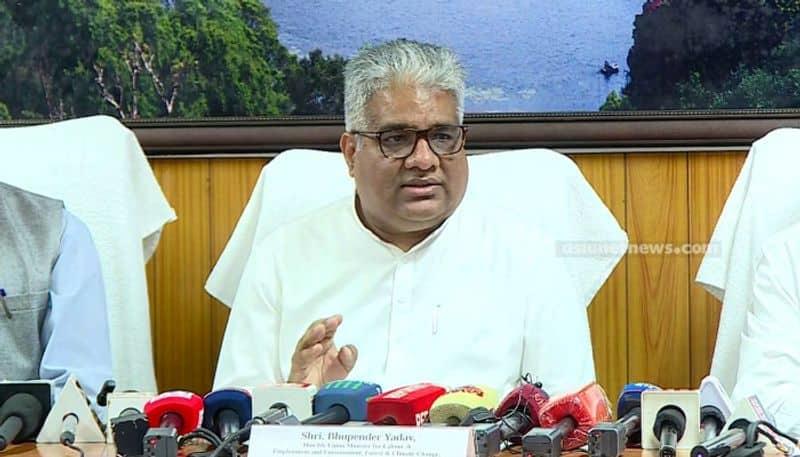
Wayanad, 23rd Feb. Union Minister for Environment, Forest and Climate Change, Bhupender Yadav, recently conducted a field visit to Bandipur National Park in Karnataka and Wayanad in Kerala to address the escalating human-wildlife conflicts, particularly in Wayanad District, Kerala.
On February 22, 2024, Yadav convened a crucial meeting at the Wayanad District Collectorate in Kalpetta, discussing the issue in-depth with key stakeholders including local representatives, wildlife officials, and community leaders.
Notable attendees included Members of Legislative Assembly (MLAs), the Chief Wildlife Warden of Kerala, the District Collector of Wayanad, and representatives from various government departments.
Additionally, Mar Jose Porunnedom, Bishop of the Diocese of Mananthavadi, also engaged with the Union Minister to discuss matters pertaining to human-wildlife conflicts in the region.
Following extensive deliberations, Bhupender Yadav announced several key measures aimed at mitigating human-wildlife conflicts and enhancing conservation efforts in the region:
1. Development of SACON as a Center for Handholding: The Salim Ali Centre for Ornithology and Natural History (SACON), now under the Wildlife Institute of India (WII), will be transformed into a center for providing support and guidance to states like Karnataka, Kerala, and Tamil Nadu on mitigating human-wildlife conflicts.
2. Inter-State Coordination: Recognizing the critical need for improved cooperation among Southern States, inter-state coordination meetings will be facilitated by the Ministry of Environment, Forest and Climate Change to address wildlife issues effectively.
3. Capacity Building: The Ministry will support capacity building initiatives for frontline staff and other relevant departments, focusing on the utilization of early warning systems, modern technology, equipment, and tracking systems.
4. Funding Support: A significant funding allocation of Rs 15.82 Crore has been sanctioned for Kerala during the Financial Year 2023-24 under various schemes. Further funding support will be considered by the Central Government based on the demand and proposed Annual Plan of Operations by the State Government, particularly for elephant-proof walls and other mitigation measures.
5. Corridor Management Planning: The Wildlife Institute of India will collaborate with the Central Government to prepare corridor management plans in Kerala, Karnataka, and Tamil Nadu, enhancing habitat connectivity and conservation efforts.
6. Elephant-Proof Fences: Site-specific elephant-proof fences will be constructed, with the State Government eligible to request funding support from the Central Government under various schemes.
7. Enhanced Compensation: Ex-gratia payments for human casualties resulting from wildlife conflicts have been increased from Rs 5.0 Lakh to Rs 10.0 Lakh. The State Government is urged to ensure prompt and transparent disbursement of compensation, developing suitable mechanisms and protocols for implementation.
8. Wildlife Management Measures: Bhupender Yadav clarified that Section 11 of the Wild Life (Protection) Act, 1972 empowers the State Chief Wildlife Warden to take necessary actions, including capturing, translocating, or hunting wild animals, to manage human-wildlife conflicts effectively.
