
Bharat’s Highest Civilian Awards: An Overview of the Padma Bhushan

GG News Bureau
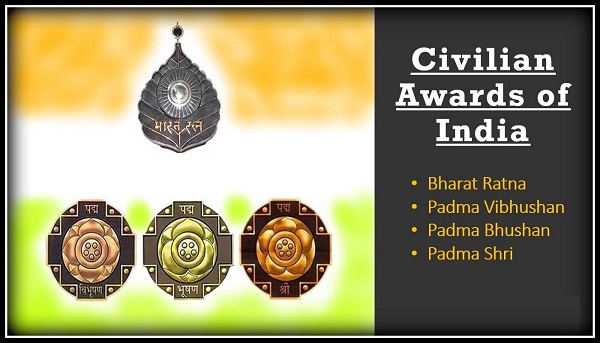
New Delhi, 7th Feb. A decade ago, one may recall receiving a Padma award for exceptional and noteworthy work in the civil service, education, sports, medicine, research, engineering, business, industry, social work, and other disciplines. It was somewhat narrow in scope. Until 2014, these distinctions were reserved for ‘special’ individuals, with very few exclusions. The decision of who should get these honors was formerly made by the Prime Minister and a few powerful ministries. However, over the past 10 years, the Modi administration has put an end to this “VIP culture” and elevated the status of common residents by granting the Padma Award to those who have made exceptional contributions to the nation’s advancement. However, the year 2024 will see the announcement of 132 Padma awards, including 110 Padma Shri, 17 Padma Bhushan, and 5 Padma Vibhushan. Out of them, thirty are women. The Padma Award list also contains nine posthumous recipients in addition to eight individuals from the categories of Foreign, Non-Resident Indian, People of Bharatiya Origin, and Overseas Bharatiya Citizenship. There are a lot of regular people in it who, hidden from the media, are accomplishing amazing things for the country. We are about to witness not just a “reel,” but a “real story” of some of these unsung heroes and heroines who are fighting for the just cause of maintaining Bharat’s religion, culture, custom, and heritage in addition to performing volunteer work and protecting the environment.
However, the year 2024 will see the announcement of 132 Padma awards, including 110 Padma Shri, 17 Padma Bhushan, and 5 Padma Vibhushan. Out of them, thirty are women. Along with nine posthumous award winners, the list of Padma Award winners also contains eight recipients from the foreign, non-resident Bharatiya, PIO, and OCI categories. There are a lot of regular people in it who, hidden from the media, are accomplishing amazing things for the country. We are about to witness not just a “reel,” but a “real story” of some of these unsung heroes and heroines who are fighting for the just cause of maintaining Bharat’s religion, culture, custom, and heritage in addition to performing volunteer work and protecting the environment.
Smt. Vyjayantimala Bali (Padmavibhushan)
The first South Bharat actress to be successful in Hindi cinema was Vyjayanti Mala. Because of her exceptional classical dancing, dance has a prominent role in Hindi movies. She had a very successful relationship with seasoned actor Dilip Kumar. At the young age of five, Vyjayanti Mala performed in her first theater play. Guru Vazhuvur Ramiah Pillai taught Bharatanatyam to Vyjayanthimala. She began doing stage performances of Bharatanatyam when she was thirteen years old. Vyjayanti Mala earned success in politics after working in the film industry. She continues to be involved in politics. In 1984, she was elected to the Lok Sabha, and subsequently, she was also elected to the Rajya Sabha.
Dr. Bindeshwar Pathak (awarded the Padma Vibhushan)
Ending manual scavenging and promoting cleanliness were major accomplishments of Dr. Bindeshwar Pathak, a well-known social crusader and founder of Sulabh International. He transformed the lives of many people with his unwavering determination. On August 15, 2023, he passed away. For thousands of Indian men, women, and children as Dr. Bindeshwar Pathak’s humanitarian effort has changed their lives. He was well-known for his efforts in other social endeavors in addition to Sulabh International. John Paul II presented Pathak with the International St. Francis Prize for the Environment, entitled the “Canticle of All Creatures,” in 1992.
Dr. Padma Subramaniam (Padmavibhushan)
Padma Subramaniam is a well-known Bharatnatyam dancer. Beyond Bharat, she has immense fame. Padma Subramaniam is a writer, teacher, musician, choreographer, and vocalist. Additionally, she serves as a trustee for the Indira Gandhi National Center for the Arts. Her mother Meenakshi was a singer and skilled lyricist in Tamil and Sanskrit, while her father was a well-known film producer. Padma Subramaniam got married to Vajuvoor B. and learned dancing from Pillai. At the age of 14, she began instructing dancers in her father’s dancing studio. In her honor, numerous documentaries and motion pictures have been produced in Russia, Australia, Japan, and other nations.
The Prime Minister received a letter from Dr. Padma Subramaniam in which she provided facts and cited an essay about “Sengol,” a symbol of the exchange of power within the Chola Empire. Subsequently, Sengol was installed in the Parliament House when the government contemplated doing so. attained the top spot thru perseverance and hard work
Fatima Beevi (Padma Bhushan) (posthumous)
The first female justice of the Supreme Court was M. Fatima Beevi. It has been declared by the Bharatiya government that she will get the Padma Bhushan posthumously. Not only was she the first female Supreme Court judge, but she was also the first female Bar Council gold medallist. In Kerala, she began practicing advocacy in 1950. In 1974, she was appointed to the District and Sessions Court as a judge. In 1983, she was promoted to the High Court as a Judge. She made history when she was appointed as the Supreme Court’s first female Judge in 1989. Up until April 29, 1992, she continued to serve as a Supreme Court Judge. In addition, she held the position of Governor of Tamil Nadu.
Pyarelal Sharma (Padma Bhushan)
At the age of 84, Pyarelal Ramprasad Sharma is still involved in music. He worked in a duet with Laxmikant. He composed beautiful soundtracks for numerous movies along with Laxmikant Shantaram Kudalkar. In the past, he was the busiest and most well-liked composer for Hindi movies. The Filmfare Award for Best Musician was won seven times by the Laxmikant-Pyarelal team. Among the top violinists in the nation was Pyarelal. People still cry when they hear his violin melody in the classic song “Ek Pyaar Ka Nagma Hai” from the movie “Shor.” Songs composed by Laxmikant-Pyarelal have been used in almost all of the nation’s major motion picture productions.
Hormusji N Cama (Padma Bhushan)
Bharat’s third-highest civilian honor, the Padma Bhushan, is set to be given to Hormusji N Cama in the literary and educational fields this year. In addition to being a Director of Bombay Associated Newspapers Pvt. Ltd., Hormusji Nusserwanji Cama is the Managing Director of Mumbai Samachar. In 2018–2019, Hormusji Cama, a seasoned journalist, headed the Audit Bureau of Circulation (ABC). Additionally, he had two terms as President of the Indian Newspaper Society (INS). He was the Chairman of the Media Research Users Council as well as the news organization Press Trust of India (PTI). The Cama family has a lengthy history in
Dr. Sitaram Jindal (Padma Bhushan)
Bharat’s largest aluminum extrusion company, Jindal Aluminum Limited (JAL), is led by its Founder, Chairman, and Managing Director, Dr. Sitaram Jindal. It has been a leader in the sector for the past few decades and supplies more than 25% of the home market on its own. IIn 1932, Dr. Sitaram Jindal was born in Nalwa, Haryana. He has a Doctorate in naturopathy. He also has a strong commitment to social work. Additionally, he founded nonprofit organizations that provide social work, health care, and education. Additionally, he founded philanthropic organizations in the social work, health, and education sectors.
Ashwin Balchand Mehta (Padma Bhushan)
Bharat’s most well-known cardiologist is Ashwin Balachand Mehta. He has worked in this industry for more than fifty years. He is among Bharat’s pioneers in the field of interventional cardiology. He is the head of the cardiology department of Mumbai’s Jaslok Hospital. In 1973, he carried out the first heart catheterization and angiography on a baby in Bharat. Additionally, he brought bundle electrography to the nation that same year. He has performed and supervised more than 75,000 angiographies and more than 35,000 angioplasties.
Togdan Rinpoche (posthumous) (Padma Bhushan)
Renowned scholar and yogi Rinpoche was a Ladakh-born practitioner of the Tibetan Buddhist school. Through his unending compassion and enlightened deeds, he assisted a great number of beings. In the realm of spirituality, he received the Padma Bhushan posthumously. Togdan Rinpoche is highly well-known among Buddhists. He is not just popular in Ladakh but also in other states and nations. In May 2023, he passed away in Leh.
Kundan Vyas (Padma Bhushan)
In the categories of literature and education-journalism, Kundan Vyas ji is expected to receive the Padma Bhushan award. He has made a significant literary contribution in Gujarati. His courageous journalism has influenced the next generation. Kundan Vyas is the editor-in-chief of Janmabhoomi newspaper, established on June 9, 1934. He has also served as the President of the Indian Newspaper Society (INS).
Mithun Chakraborty (Padma Bhushan)
For his breakthrough role in the movie “Mrigaya,” Gaurang Chakraborty, also known as well-known actor Mithun Chakraborty, was awarded the 1977 National Film Award for Best Actor. He struggled for a long time since his appearance was different from that of traditional heroes, even after winning the National Film Award for “Mrigaya.” As a result, he encountered numerous rejections in the film industry. At the time, he was the only black actor sought out for roles due to his skin tone. Zeenat Aman supported Mithun by consenting to work with him on a movie. Together, they produced numerous successful movies. Mithun Chakraborty never turned around after this. The 1982 film “Disco Dancer,” directed by Subhash, catapulted Mithun Chakraborty to stardom. He was dubbed the “Amitabh Bachchan of the poor” at one point. Three National Film Awards have been won by him. Two times for “Mrigaya” (1977) and “Tahader Katha” (1993) as Best Actor; one for Best Supporting Actor (1996) for “Swami Vivekananda.”
Parbati Barua (Padmashree)
She’s Bharat’s first female mahout. In this usually male-dominated sector, Assamese woman Parbati, 67, has carved out a space for herself. Her wholehearted effort is focused on using scientific methods to lessen conflict between people and elephants. She has helped three state governments manage wild elephants by helping them get caught. This ability was passed down to her from his father.
Jageshwar Yadav (Padmashree)
Jageshwar Yadav is a tribal welfare activist from Jashpur, Chhattisgarh, who dedicated his life to the betterment and welfare of the marginalized Birhor and Pahari Korwa people. He established an ashram in Jashpur and worked to eradicate illiteracy and improve health care standards by organizing camps. He organized vaccination camps during the global pandemic Covid-19. Despite financial constraints, his passion for bringing about social change remains intact.
Surendra Kishore (Padmashree)
Surendra Kishore is an experienced journalist. He has been doing impartial journalism in Patna for more than five decades. He is known for his clarity, integrity and honesty. He has worked for reputed newspapers like Dainik Aaj, Jansatta and Hindustan till 2005. Through his journalism, he has raised his voice against injustice and put forward the side of the common people.
Gurvinder Singh (Padmashree)
Social worker Gurvinder Singh from Sirsa (Haryana) is a ray of hope for orphans and disabled people. He has dedicated his life to the betterment of the homeless, destitute, orphans, disabled people and women. With his unwavering dedication, he has nurtured the dreams of 300 children by establishing a child care institution named ‘Bal Gopal Dham’. He has provided free ambulance service to more than 6,000 accident victims and pregnant women. After being hit by a truck, Gurvinder Singh was paralyzed from down his waist, was confined to a wheelchair for the rest of his life, but instead of getting discouraged, he turned his personal tragedy into an opportunity to serve others.
Satyanarayana Belleri (Padmashree)
Satyanarayana Belleri, a rice farmer from Kasaragod, Kerala, has been conserving more than 650 traditional varieties, mainly from Kerala and Karnataka, since 2008. He is also known as Seeding Truth. Beleri has developed a new technique of preservation by growing paddy in polybags. Apart from this, he is also conserving important traditional varieties of betel nut, nutmeg and black pepper. Belleri has provided 50 varieties of rice to research centers and distributed free rice seeds to farmers, thereby promoting research and conservation.
Sangathankima (Padmashree)
Sangthankima of Aizawl, Mizoram runs the largest orphanage in Mizoram. He has been working for the welfare of children and de-addiction for three decades. Besides, they are working to spread awareness about HIV-AIDS. He is also working tirelessly on education and other social issues. Sangthankima is doing rehabilitation work for orphans, disabled people and drug addicts and providing them shelter. He has been working for the north-eastern communities and the people of Burma through his rehabilitation centers in four districts of Assam.
Hemchand Manjhi (Padmashree)
Vaidya Shri Hemchand Manjhi, resident of Narayanpur district of Chhattisgarh, has dedicated his entire life to the search for herbs. He has successfully treated thousands of people over almost five decades. He has been doing this work since the age of 15. He is also known as ‘Vaidyaraj Manjhi’. He is known for his special knowledge of the herbs found in the remote forest of Abujhmad. He charges nominal fees from the patients. Despite receiving repeated threats from Naxalites, he has continued to serve the people with honesty and enthusiasm.
Yanung Jamoh Lego (Padmashree)
Yanung Jamoh Lego is known as the ‘Adi Queen of Herbs’. She has worked to revive the traditional medical practices of the Adi community of Arunachal Pradesh. Yanung Jamoh Lego, an herbal medicine specialist based in East Siang, Arunachal, has provided medical care to more than 10,000 people. He has educated one lakh people about medicinal herbs, and also trained self-help groups on the use of medicinal herbs. He plants more than 5,000 medicinal plants annually and has encouraged people to create herbal kitchen gardens in every household in the district.
Sarbeshwar Basumatary (Padmashree)
Sarbeshwar Basumatary, a tribal farmer from Assam, was a daily wage laborer, later he started farming. He is a resident of Panbari village in Chirang district of Assam. He has faced many difficulties and challenges in life. Basumatary successfully adopted a mixed integrated farming approach and cultivated a variety of crops like coconut, oranges, paddy, litchi and maize. Adopting a community-centric approach, he passed on his knowledge to other farmers, which increased their efficiency and helped in better livelihoods.
Prema Dhanraj (Padmashree)
Dr. Prema suffered more than 50% burns when she was caught in a fire at the age of just eight. Overcoming personal tragedy, she dedicated her life to burn victims. After suffering severe burns, Prema Dhanraj recovered and became a doctor. She is a plastic reconstructive surgeon who deals with the care and rehabilitation of burn victims. Dr. Prema Dhanraj has founded an NGO named ‘Agni Raksha’ and has provided free surgery services to 25,000 burn victims. He has also written three books on plastic surgery.
Shanti Devi Paswan and Shivan Paswan (Padmashree)
This husband-wife tattoo artist duo, hailing from the state of Bihar, despite facing social stigma, became the prominent face of Madhubani painting at the global level. His art work has gained fame in many countries including America, Japan, Hong Kong. The couple has also trained 20 thousand women to preserve this heritage. Shanti Devi showcased her talent on global platforms like ‘G20 Summit’ held in Bharat.
Jankilal (Padmashree)
He is an impersonator artist from Bhilwara, Rajasthan. He has mastered this dying art form. He has been mesmerizing audiences all over the world with his impersonations for over six decades. He is a member of the third generation of his family, carrying forward the family legacy. He is carrying forward the legacy of three generations by taking on the form of characters from mythology, folklore and traditional stories. He has dedicated his life to promoting this local art in the Mewar region of Rajasthan.
Gopinath Swain (Padmashree)
Krishna Leela singer Gopinath Swain of Ganjam, Odisha has dedicated his life to the preservation and promotion of this tradition. 105 year old Gopinath has been singing Krishna Leela for nine decades. Using traditional techniques and improvisation, he breathes life into Krishna Leela and thus creates a bridge between the past and the present. He comes from a family of Krishna Leela artists. He started his musical journey at the young age of five. He established Akharas (traditional rural schools) and imparted his knowledge to hundreds of disciples. Despite his old age, he is discovering talents from all over Southern Odisha and imparting knowledge of this unique art to them and propagating this art.
Sanatan Rudra Pal (Padmashree)
Renowned sculptor Sanatan Rudra Pal, who has over five decades of experience in preserving and propagating traditional art, has expertise in creating ‘Sabeki Durga Idols’. The idols of Maa Durga created by him have become an integral part of the annual Durga Puja celebrations in West Bengal. His clay sculpturs grace more than 30 pandals every year. He is providing employment to more than 1,500 persons. He has also been recognized by UNESCO for his amazing sculptures. He comes from a family of idol makers. He has created his own unique style.
Jordan Lepcha (Padmashree)
The 50-year-old bamboo craftsman from Sikkim has been preserving the cultural heritage of the Lepcha tribe for the last 25 years. He makes bamboo hats depicting stories of historical events and family values. He has been preserving the ancient art of traditional Lepcha cap weaving and bamboo crafts for the last 25 years. Jordan Lepcha, a skilled craftsman and dedicated trainer, has trained over 150 youth from different parts of Sikkim, many of whom are now earning their livelihood through bamboo crafts.
Nepal Chandra Sutradhar (posthumously) (Padmashree)
Nepal Chandra Sutradhar, the third generation Chhau dance mask maker in his family, started learning the art of Chhau mask making from his father and grandfather at the age of 8. He was continuously engaged in the construction and conservation of the Chhau mask for five decades. He trained 70 Chhau dance groups and participated in mask making workshops at national and international levels.
