
Bharat’s Hidden Security Crisis: Maharashtra’s Crackdown Exposes a Dangerous Illegal Network
“A sweeping investigation reveals how illegal Bangladeshi intruders obtained fake Hindu identities, infiltrated Bharatiya homes as domestic help, and evaded verification for years.”

Paromita Das
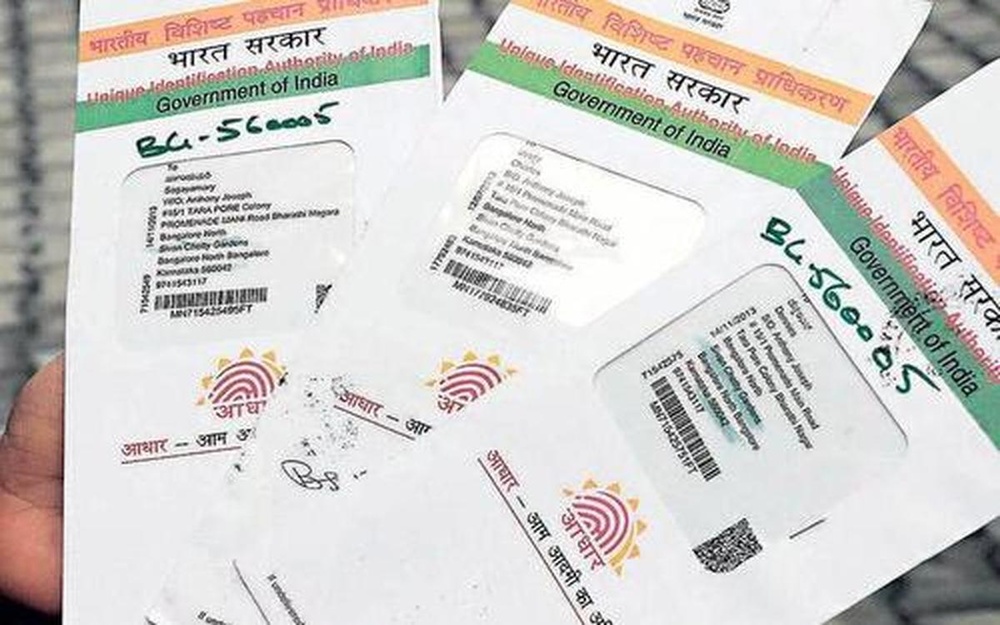
New Delhi, 1st December: For years, urban Bharat has lived with an illusion of safety—an assumption that the people entering our homes as helpers, plumbers, carpenters or daily-wage workers are who they claim to be. But Maharashtra’s startling crackdown has ripped the veil off a far more complex and deeply unsettling reality. A quiet network, operating in the shadows, has been enabling Bangladeshi intruders to slip into Bharatiya cities, forge Hindu identities, acquire fake Aadhaar cards and blend seamlessly into everyday domestic spaces. What first appeared as scattered incidents has now taken the form of a full-blown security challenge.
The Maharashtra government, under the leadership of Deputy Chief Minister Devendra Fadnavis, finally acted on long-standing suspicions. The findings were disturbing: over 150 Bangladeshi infiltrators were discovered working inside Bharatiya households using forged Hindu identities—some even adopting bindis, mangalsutras and Hindu names to avoid detection. Their documents were fabricated so convincingly that most families never bothered to verify them. What has emerged is not merely a case of identity theft, but a sophisticated infiltration model that has quietly spread across states.
A Network Hiding in Plain Sight
Bharat’s most vulnerable point is often its most trusted spaces—private homes. In high-rise societies of Noida, Mumbai, Pune and other major cities, domestic helpers often enter households based solely on neighbourly references. If one home employs a particular “saika,” another follows without verification. This chain of referrals helped infiltrators establish themselves quickly, allowing them to move from one home to another without raising suspicion.
Police investigations revealed a deeper problem. Many of these individuals had no permanent address, no verifiable background, and their Aadhaar cards were created using fake Hindu names. Their actual origins lay not in any Bharatiya village but across the border. Once embedded inside households, they gained full visibility of a family’s routine, vulnerabilities and valuables—information that could be exploited at any moment.
The risks are not theoretical. They have already turned real.
When the Illusion of Safety Breaks
The recent attack at actor Saif Ali Khan’s Bandra residence shocked Mumbai. A Bangladeshi intruder, posing under a fake identity, managed to enter the highly secure locality and assault members of the staff. It raised the question: if celebrities living in guarded zones can face such breaches, what chance does the average family have?
Events like this are not isolated instances. Uttar Pradesh ATS had earlier busted several groups trafficking people from Bangladesh into Bharat, creating fake passports and enabling foreign travel. With the political crisis in Bangladesh, the influx has intensified, and networks facilitating forged Hindu IDs have grown more active. Once a fake identity is issued, tracking such individuals becomes nearly impossible. They can relocate across cities without leaving a trace.
Maharashtra’s Tough New Measures
Maharashtra has now drawn a hard line. The government has made it clear that anyone employing a domestic worker, driver, construction labourer or technician without police verification will face jail time. Landlords renting out homes without verification will also be held criminally liable.
To make the system foolproof, an online verification portal has been launched where Aadhaar details, identity documents and background information can be authenticated instantly. The move has already begun yielding results—hundreds of infiltrators have been caught, interrogated and identified as foreign nationals.
The message is unambiguous: leniency has created a national security threat, and negligence will no longer be tolerated.
A Wake-Up Call for the Entire Country
While Maharashtra has acted decisively, the issue is far from confined to one state. From Assam to Uttar Pradesh, there are reports of infiltrators entering forest areas, slum clusters and Muslim-dominated pockets where they quickly blend in. After the Special Intensive Revision (SIR) exercise began in Bengal, a massive exodus of illegal entrants was observed, revealing how deeply these networks are embedded.
What makes the threat severe is the difficulty distinguishing a genuine citizen from a disguised infiltrator. A forged Aadhaar card featuring a Hindu name is enough to bypass casual scrutiny. Most people do not check authenticity through the official app, nor do they visit police stations fearing inconvenience. In such a scenario, a criminal can perform reconnaissance inside homes for weeks before executing a crime and disappearing without a trace.
This pattern has already been seen in several burglary, assault and theft cases across states.
Security Cannot Rely on Assumptions
We often assume that danger comes from the outside—from unknown places, unknown people. But Maharashtra’s revelations show that the threat can quietly walk through our doors, disguised as help, shielded by our assumptions, and protected by our negligence. Bharat’s demographic, cultural and security vulnerabilities cannot be taken lightly. Verification must become a non-negotiable norm, not an optional courtesy.
The government’s responsibility is to enforce laws, but households also bear a civic duty. Without cooperation, even the strictest policies collapse. The question is no longer whether infiltration is happening; the question is how long we can afford to ignore it.
Vigilance Is Now a National Necessity
The Maharashtra crackdown should be treated as a national warning. Illegal entry, forged identities and unverified domestic employment represent not just administrative lapses but profound risks to personal and national security. As infiltrators expand across states, Bharat must respond with unified, strict and verifiable procedures—just as Maharashtra has begun.
The country cannot depend on luck, nor can it rely on outdated trust. Verification, awareness and responsibility must become everyday household practices. The safety of homes, families and communities now depends on it.
