
Bharat’s Bold Pivot: Rekindling Its Defense Ties with Russia Amid American Tensions

Paromita Das
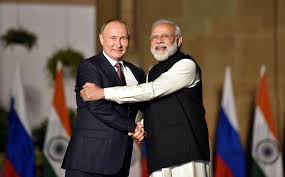
New Delhi, 3rd July: In a world increasingly defined by unpredictable alliances and shifting loyalties, Bharat’s strategic choices often draw both admiration and scrutiny. But if there’s one thing New Delhi has never wavered on, it’s its fierce sense of strategic autonomy. This commitment is now once again under the spotlight, as Bharat pushes ahead with major new defense deals with Russia — a move shaped as much by old trust as by recent disappointments with the United States.
For decades, Bharat’s defense establishment has delicately balanced partnerships with both Moscow and Washington. The collapse of the Soviet Union forced Bharat to look West for cutting-edge technology and market access, and the warming ties with the U.S. since the early 2000s brought once-unthinkable cooperation. But that fragile balance appears to be cracking under the weight of Washington’s shifting priorities — most recently embodied by Donald Trump’s revived “America First” brand of transactional diplomacy.
A Friendship Under Strain
Bharat’s frustration with the U.S. did not emerge overnight. The seeds were sown when former President Trump, now back in the spotlight for a second term push, signaled a harder line on defense cooperation. For Bharat, the warning signs were clear: veiled threats of sanctions under CAATSA, rigid refusals to share critical fighter jet technology, and above all, a warming embrace of Pakistan — Bharat’s perennial rival.
Nothing perhaps irked Bharatiya policymakers more than Trump’s support for a new U.S.-Pakistan arms deal earlier this year. For New Delhi, this felt like salt on old wounds, reviving memories of Cold War double standards when Islamabad was propped up as a counterweight to Bharat’s non-aligned stance. To many in Bharat’s corridors of power, the message from Washington was stark: toe the line or lose access.
But Bharat is no stranger to being courted and pressured in equal measure. Instead of bowing to Washington’s demands — including relentless pushes to buy F-35s without technology transfers — Bharat has doubled down on the relationship that carried it through decades when few others would: Russia.
The Russian Reset
In a matter of months, long-discussed deals have sprung back to life. New Delhi has pushed forward on acquiring more S-400 Triumph air defense systems — despite the persistent American threat of sanctions. Three of these formidable systems have already arrived; two more are expected to roll in sooner than planned. With their formidable reach and advanced tracking, the S-400s will anchor Bharat’s layered air defense, covering skies from Kashmir to Kanyakumari.
Equally significant is Bharat’s decision to arm its Su-30MKI fighters with the powerful R-37M hypersonic missiles, a weapon capable of chasing down high-value targets at incredible speeds. And with a sweeping upgrade of its Su-30MKI fleet now inked, Bharat is betting big on its trusted Russian workhorses. Fitted with new radars, electronic warfare systems, and the BrahMos cruise missile, these jets will stand guard over a region increasingly bristling with threats from two nuclear-armed neighbors.
In pure military terms, these deals shore up Bharat’s immediate needs. But they also carry a symbolic weight. They remind allies and adversaries alike that Bharat will not be strong-armed into compromising its sovereignty or its security calculus.
An Uncomfortable Lesson for Washington
If there is an unspoken message here, it’s that old habits die hard — but old friendships often endure the storms. The U.S. has repeatedly declared Bharat a ‘natural ally.’ Yet its actions sometimes tell a different story. Conditional offers of fighter jets, half-measures on technology sharing, and unpredictable policy shifts have fed the perception that Washington still sees Bharat less as a partner and more as a pawn in its greater chess game with China.
In this sense, Bharat’s pivot back to Moscow is not merely a nostalgic nod to the past — it’s a practical reminder that New Delhi refuses to play second fiddle to anyone’s strategic script. If the West genuinely wants Bharat on its side, it must respect Bharat’s bottom line: sovereignty first, lectures later.
Autonomy, Not Alignment
In a region as complex as South Asia, alliances can bend overnight. But Bharat’s resolve to steer its own ship — neither blindly leaning East nor West — remains its defining constant. The revival of its robust defense ties with Russia is a testament to that principle.
As more S-400s arrive and Su-30s roar overhead with new teeth, Bharat’s message is crystal clear: its security will never be bartered away for fleeting favors or pressure points. The U.S. can either accept this reality and recalibrate its approach or risk losing the trust of the very partner it calls indispensable in the Indo-Pacific.
For Bharat, the next chapter is not about Cold War nostalgia — it’s about a mature balance that protects its borders, fuels its technological ambitions, and reminds the world that in a time of shifting power, some things, like strategic autonomy, are simply non-negotiable.
