
Bharat’s Bold 6G Vision: Paving the Way for a Digital Revolution by 2030
“From Vision to Reality: Bharat’s Roadmap Toward a Smarter, Faster, and More Connected Future”

Paromita Das
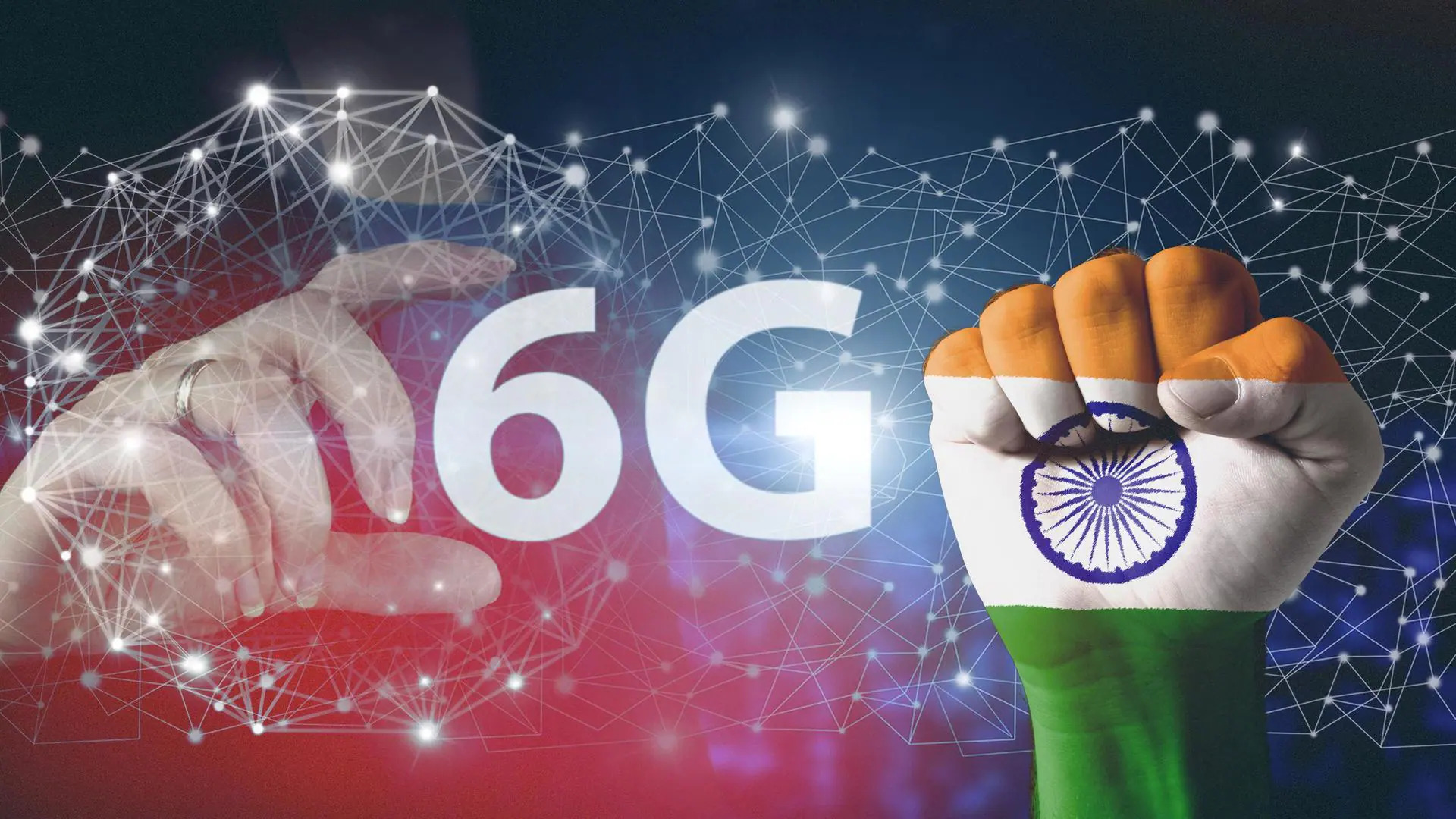
New Delhi, 3rd November: Bharat is standing at the edge of a new digital dawn — a moment where ambition meets innovation. The nation’s upcoming leap into 6G technology isn’t just about faster internet or futuristic gadgets; it’s about redefining the country’s position in the global tech landscape. Bharat’s 6G vision is simple yet profound — affordable, sustainable, and accessible connectivity for everyone. This vision goes beyond technology; it’s a mission to empower citizens, bridge digital divides, and set the foundation for Viksit Bharat — a developed Bharat by 2047.
Building a #ViksitBharat with #6G
💠The Government of India is steering the nation’s transition towards next-generation connectivity through a series of strategic initiatives aimed at advancing 6G technologies
💠Anchored in the principles of affordability, sustainability, and… pic.twitter.com/ud2zW3Siww
— PIB India (@PIB_India) October 26, 2025
The Promise of 6G: Beyond Speed, Toward Intelligence
So, what exactly is 6G? At its core, it’s the next generation of wireless communication, designed to succeed 5G. But unlike previous upgrades, 6G is expected to revolutionize how people and machines interact. The technology will operate at lightning speed — 1,000 times faster than 5G, capable of transferring data in just one microsecond. Imagine downloading high-definition movies instantly or experiencing virtual reality without the slightest lag.
💠#6G aims to send and receive information in just one microsecond, that’s 1,000 times faster than the response time of 5G. This means instant connections with almost zero lag, which will be useful for things like remote medical surgeries, smart robotics, and real-time gaming…
— PIB India (@PIB_India) October 26, 2025
But 6G’s true power lies in its intelligence. Integrating artificial intelligence (AI) into network management will allow data to be processed smartly and efficiently. The network will, quite literally, think for itself — adapting, optimizing, and predicting needs before they even arise. From driverless cars and remote surgeries to immersive virtual worlds, 6G will be the nervous system of a hyperconnected planet.
Bharat’s Vision: From Technology User to Global Innovator

Bharat’s journey toward 6G officially began in March 2023, with the release of the Bharat 6G Vision document. The plan is ambitious — to make Bharat a global leader in 6G research, design, and deployment by 2030. The goal is clear: ensure every citizen, from urban centers to remote villages, benefits from the technology.
To make this a reality, the government has mobilized resources across more than 100 institutions, funding advanced research, and creating dedicated 6G testbeds. These are not just academic exercises but tangible steps toward building indigenous telecom solutions. Bharat is no longer content being a consumer of imported technologies; it aims to become the creator and exporter of cutting-edge communication systems.
The Two-Phase Mission to 2030

The 6G mission unfolds in two well-defined phases.
Phase 1 (2023–2025):
This stage is all about research and groundwork — setting standards, building proof-of-concept models, and developing intellectual property. Bharat’s researchers are busy designing test platforms and prototypes that will form the skeleton of the upcoming 6G network.
Phase 2 (2026–2030):
The focus will shift toward commercialisation and global readiness. This includes developing real-world 6G use cases, establishing testbeds for large-scale trials, and finalizing frameworks on ethics, regulation, and data privacy. Essentially, by 2030, Bharat wants a system ready for the world — not just technologically but also morally and socially.
Bharat 6G Alliance: Collaboration for Innovation
To turn its 6G dream into reality, Bharat launched the Bharat 6G Alliance — a consortium bringing together industry leaders, telecom operators, universities, and global partners. The idea is to pool expertise and innovation under one umbrella.
Leading global 6G alliances came together at the International Bharat6G Symposium 2025, held alongside India Mobile Congress, for shaping 6G as a global public good.
Participating organisations include Bharat 6G, 6G-IA, ATIS’ Next G Alliance, XGMF, 6G Forum, UK TIN, UK Federated… pic.twitter.com/qcFhhaEzB6
— DD News (@DDNewslive) October 11, 2025
The Alliance is collaborating internationally with initiatives like the NextG Alliance (US), 6G IA (Europe), and 6G Flagship (Finland). These global tie-ups enable Bharat to exchange ideas, co-develop technologies, and set international standards for a secure, interoperable, and future-ready communication network.
The message is clear — Bharat’s 6G is not just “Made in India”; it’s “Made for the World.”
Innovation and Self-Reliance: The Heart of the 6G Journey
The Bharat Mobile Congress 2025 marked a turning point, with the International 6G Symposium showcasing Bharat’s growing strength in telecom innovation. At the center of attention was the homegrown 4G stack, a testament to Bharat’s self-reliance and technological maturity.
From vision to reality, India is not just participating in the 6G revolution, we are co-leading it. 🇮🇳
At the International 6G Symposium during #IMC2025, underscored Bharat’s bold journey, from indigenous stacks & AI-native networks to cutting-edge research and global… pic.twitter.com/0tmXZWMINs
— Jyotiraditya M. Scindia (@JM_Scindia) October 8, 2025
The government’s roadmap envisions the telecom sector contributing USD 1.2 trillion to GDP by 2035, while targeting 10% of global 6G patents. Satellite communication, too, is poised for massive growth — expected to triple by 2033 — placing Bharat among the leading players in space-linked connectivity.
This is not merely about economic potential; it’s about shaping the digital sovereignty of the nation.
Government Efforts: Building the 6G Ecosystem

Bharat’s government has been proactive in preparing the ground for 6G. Over 5G labs in universities are equipping students and start-ups with hands-on experience in telecom innovation. These spaces foster creativity, encouraging young engineers to test, fail, learn, and ultimately build future-ready solutions.
The Telecom Technology Development Fund (TTDF), launched in 2022, is another major initiative supporting indigenous research and rural connectivity. More than 100 projects worth ₹310 crore have already been sanctioned, focusing on bridging the rural-urban divide and nurturing Bharat’s own tech ecosystem.
At IIIT Bangalore, the Technology Innovation Hub is leading cutting-edge research into reconfigurable intelligent surfaces and O-RAN Massive MIMO, key enablers for 5G-Advanced and 6G. Each of these efforts reflects a singular commitment — to make Bharat’s digital future inclusive, secure, and globally competitive.
Bharat’s Moment to Lead, Not Follow

Bharat’s 6G journey isn’t just about upgrading technology; it’s a statement of national confidence. The country’s approach blends ambition with inclusivity — ensuring that progress doesn’t remain confined to a privileged few. The emphasis on collaboration, research, and homegrown innovation reveals a shift in mindset: from dependency to leadership.
However, this transformation will require more than just funding or policies. It demands consistent execution, global cooperation, and a robust ethical framework. If Bharat can maintain its momentum, it may well set a model for other developing nations aiming to leapfrog into the digital future.
The Future Will Be Made in Bharat
Bharat’s 6G vision is more than a technological blueprint; it’s a national declaration of intent. From strengthening research ecosystems and forming global alliances to nurturing innovation among youth, every step signals readiness for a connected, intelligent, and equitable digital era.
As Bharat marches toward Viksit Bharat 2047, its 6G mission stands as both a milestone and a promise — a promise that the future of global communication will be imagined, built, and led by Bharat.
