
Bharat-Canada Diplomatic Reset: A Promising Turn After Years of Strain

Paromita Das
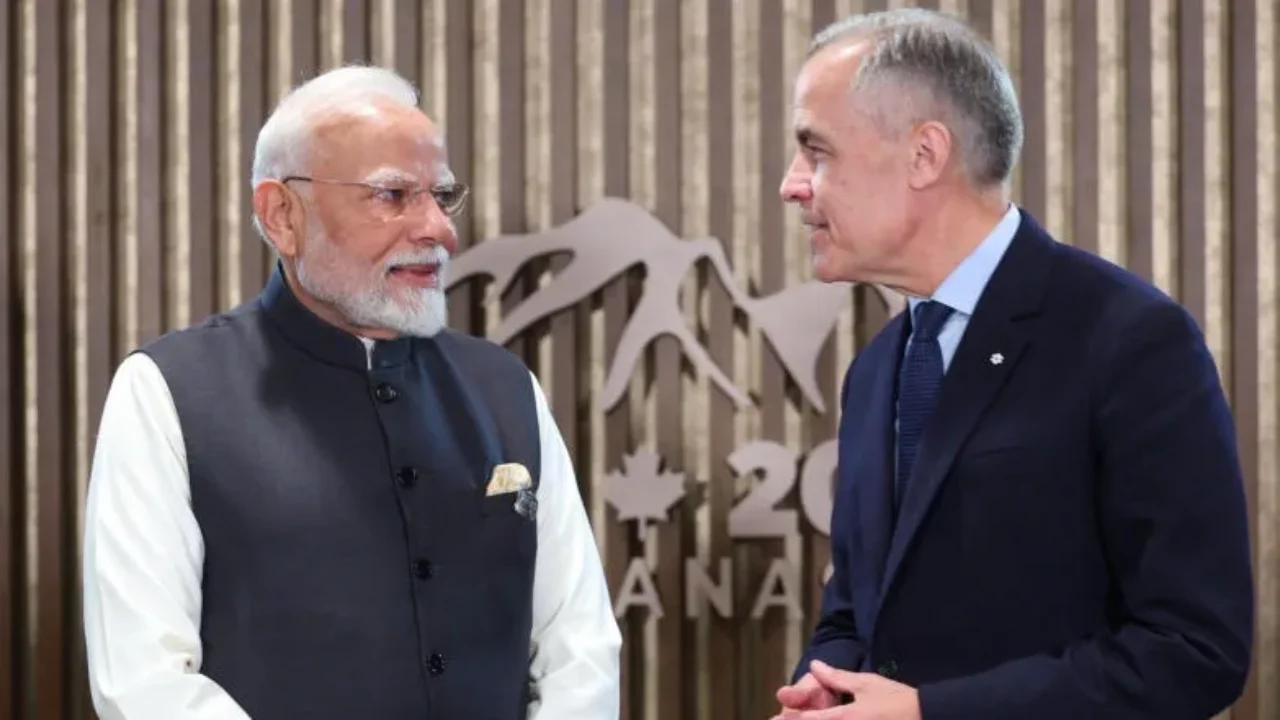
New Delhi, 19th June: In a promising development for South Asian diplomacy, the Ministry of External Affairs announced on June 12 that Bharat is actively exploring avenues to reset its ties with Canada. This revelation comes amid rising anticipation surrounding the upcoming G7 Summit in Kananaskis, Alberta. Canadian Prime Minister Mark Carney personally extended an invitation to Bharatiya Prime Minister Narendra Modi, signaling a fresh chapter in Indo-Canadian relations following years of frosty diplomacy and political estrangement.
This reset is significant not just for the two nations but for the broader international community. It reflects a shared desire to move past the turbulence that marked the Trudeau era and begin anew with a spirit of mutual cooperation and respect. At the heart of this shift is a long and complex history of migration, trade, cultural exchange, and diaspora dynamics that continues to define Indo-Canadian ties.
Historic Foundations of a Deep Relationship
The connection between Bharat and Canada dates back to the 19th century, beginning with the migration of Punjabis, including Sikh army veterans, to British Columbia. Over time, these early links evolved into formal diplomatic relations, solidified through high-level exchanges such as Jawaharlal Nehru’s 1949 visit and Canadian PM Jean Chrétien’s 2003 trip to Bharat.
Today, Bharatiya represent nearly 5% of Canada’s population, making them one of the country’s most prominent and active diasporas. Concentrated in cities like Toronto, Vancouver, and Calgary, this community has played a vital role in shaping Canada’s multicultural identity. But even this strong people-to-people bond has been tested by recent geopolitical tensions.
The Trudeau Era and Its Diplomatic Fallout
Relations took a drastic downturn in late 2023, when then-Prime Minister Justin Trudeau accused Bharatiya intelligence agencies of involvement in the assassination of Sikh separatist leader Hardeep Singh Nijjar. The claim—unsubstantiated by clear public evidence—ignited a storm of diplomatic fury. Bharat strongly denied the allegations and, in retaliation, both nations expelled top diplomats.
The case escalated further in May 2024 when the Royal Canadian Mounted Police arrested three Bharatiya nationals on charges of first-degree murder and conspiracy, allegedly linked to Nijjar’s death. Investigations continue into whether they were connected to Bharatiya state agencies, a claim that remains hotly contested.
This period of hostility saw the shuttering of visa services, protests, and a deepening mistrust that affected sectors far beyond diplomacy.
Education: A Vital Sector Under Strain
Among the most visibly affected sectors was higher education. Canada saw a dramatic 40% decline in permits for Bharatiya students, particularly from Punjab, after the diplomatic fallout. The termination of the Student Direct Stream Policy compounded this issue, leaving many students stranded or forced to seek education elsewhere. Several testimonies painted a grim picture—students burdened by financial ruin, depression, and a lack of employment prospects.
Bharat’s former High Commissioner to Canada warned that students should think twice before investing in substandard colleges with no real future, highlighting the human cost of diplomatic friction.
Trade Resilience Despite Diplomatic Chill
Surprisingly, trade between Bharat and Canada continued to grow despite the political standoff. In 2023-24, bilateral trade increased from C$12.6 billion to C$13.3 billion. Bharat’s exports surged from $2 billion to $3.8 billion, while Canadian imports grew to $4.6 billion.
This economic continuity underscores a crucial point: despite their political differences, the economic interdependence between the two countries has only deepened. From jewelry and garments to energy and fertilizers, the flow of goods remained consistent—even during the lowest points in diplomatic relations.
Tourism and People-to-People Relations
The strain on tourism was more immediate. Bharat’s decision to halt visas to Canadians in late 2023 led to a noticeable dip in tourist numbers. While the suspension lasted only a month, it dealt a blow to the travel industry and to cultural exchanges that had long enriched both societies.
Nevertheless, people-to-people relations remain a bedrock of Bharat-Canada ties. Over 1.3 million Bharatiya-origin Canadians are living in Canada, forming a vital and influential demographic. Nearly 400,000 Bharatiya students also contribute to Canada’s academic and social landscape.
Still, diaspora politics, particularly involving pro-Khalistani factions, pose ongoing challenges. These groups have often exerted disproportionate influence over domestic Canadian policy, creating a wedge in international diplomacy. Any lasting peace between Bharat and Canada must find a way to address this thorny issue.
A Real Chance to Turn the Page
Prime Minister Mark Carney’s initiative to personally invite Narendra Modi to the G7 Summit marks a welcome departure from the past. It shows political maturity and a willingness to view Bharat not merely through a domestic lens, but as a global partner.
Bharat, now the fifth-largest economy in the world, has much to offer Canada in terms of technology, trade, and strategic alignment. In return, Canada offers a gateway to North America, a progressive society, and shared democratic values. If this new leadership in Ottawa takes a balanced approach—respecting Bharat’s sensitivities while promoting transparency—both countries stand to gain immensely.
From Mistrust to Momentum
Bharat and Canada have arrived at a critical juncture. After nearly two years of strained relations, the opportunity to mend fences is not just possible—it is essential. The upcoming G7 summit provides a high-profile platform for both nations to reestablish trust, initiate dialogue, and set a forward-looking agenda.
Whether it’s trade, education, tourism, or people-to-people engagement, the potential for cooperation far outweighs the weight of past grievances. Both Modi and Carney must now lead with vision, empathy, and pragmatism, turning a page in history to write a new chapter—one defined not by division, but by partnership.
