
Beyond Firecrackers: The True Meaning and Science of Diwali
“Diwali illuminates more than homes—it lights the path of ancient Bharatiya wisdom, intertwining spiritual depth with remarkable scientific traditions that have thrived for millennia.”

Paromita Das
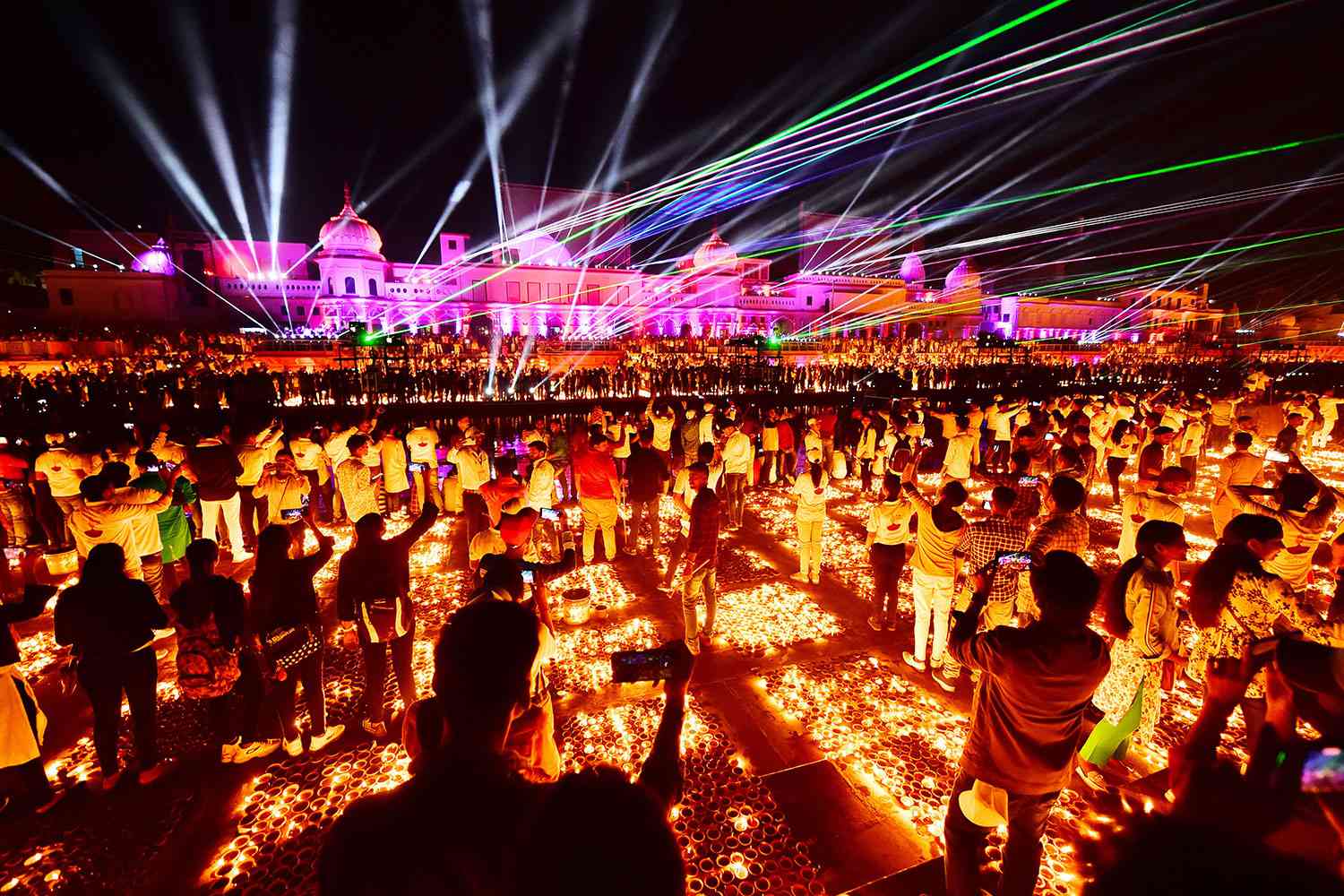
New Delhi, 20th October: Diwali, widely known as the festival of lights, is one of the most significant festivals in Hinduism. At its heart lies an ancient spiritual symbolism of light triumphing over darkness, good over evil, and knowledge over ignorance. Yet beyond its spiritual and cultural richness, Diwali also carries intriguing scientific foundations, especially in the tradition of bursting firecrackers. This article explores Diwali’s deep significance in Hinduism and unravels the fascinating science behind the celebrations, challenging misconceptions and highlighting Bharat’s indigenous heritage.
The Ancient Roots of Diwali Celebrations

Contrary to the widespread myth that bursting firecrackers during Diwali is a recent or foreign practice introduced by invaders, historical and scriptural evidence paints a different and vibrant picture. Archaeological records, Sanskrit shastras, and ancient texts like the Atharva Rahasya and Mahabharata mention mixtures of charcoal, sulphur, and saltpetre—ingredients identical to those used in gunpowder. The Skanda Purana explicitly details celebrating Diwali by holding ulkas (firebrands), which symbolized meteoric fire, serving both a spiritual and ritualistic purpose.
These traditions underscore a profound understanding of chemical substances and their use in religious rites in ancient Bharat way before gunpowder was ‘discovered’ in China. Even Chinese historical accounts credit an Bharatiya Buddhist monk circa 664 CE for bringing knowledge of saltpetre, an essential gunpowder component, to China, thus establishing Bharatiya contributions to pyrotechnics.
Illuminating the Ancestors and Driving Darkness Away

In Hindu belief, Diwali mark the return journey of departed souls—the Pitrs—after their annual visit during Pitru Paksha. The lighting of lamps, firebrands, and fireworks helps guide these ancestors safely home, symbolizing the illumination of the path through spiritual darkness. This tradition exemplifies continuity and reverence—a bridge between the living and the departed, maintaining cosmic balance.
Moreover, Diwali’s light chasing away darkness serves as a metaphor for the victory of dharma (righteousness) over adharma (evil), and for the enlightenment of human consciousness. The ritualistic use of sound and light during festivities is deeply layered and forms an essential aspect of Sanatana Dharma’s cultural fabric.
The Science of Fireworks: Chemistry and Physics in Festival Delight

Bursting fireworks during Diwali is more than mere celebration—it encapsulates fascinating chemical and physical processes. Fireworks contain a carefully formulated combination of fuels (like charcoal), oxidizers (such as potassium nitrate), stabilizers, and metal salts that produce the vivid colors iconic to Diwali nights. When ignited, the oxidizer provides oxygen to combust the fuel, releasing energy as heat, light, and gas.
The colors are produced by metal salts: strontium yields red, barium green, copper blue, sodium yellow, and calcium orange. The spectacular bursts result from the combustion of these salts, exciting electrons to higher energy levels; when they return to their ground state, specific wavelengths (colors) are emitted. The shell of each firework contains ‘stars’—pellets packed with these chemicals—that ignite upon bursting.
The propulsion firmament is explained by Newton’s third law—ignition creates hot gases pushing the shell upwards, and the burst charge explodes the shell mid-air, scattering the stars. This combination of science and art makes Diwali fireworks both a visual and an intellectual marvel.
Bridging Tradition and Modernity

The enduring practice of lighting fire and bursting firecrackers during Diwali represents a confluence of ancient wisdom and modern science. Traditional firecracker manufacturing centers in Bharat, like Sivakasi, still use age-old recipes with sulphur (gandhaka), saltpetre (suryakara), and sand, retaining linguistic and cultural ties to ancient knowledge. Such continuity flies in the face of the colonial-era misconception that pyrotechnics were imported.
The ritualistic intent—invoking divine energy and honoring the cycle of life and death—is integral to the celebrations. Ancient saints, poets, and scriptures emphasize that spiritual acts performed with intent, regardless of their age, are valid and authoritative within Hindu tradition.
Reclaiming Indigenous Pride in Diwali Traditions

Understanding Diwali’s scientific and spiritual essence is a crucial step in reclaiming and respecting indigenous cultural heritage. The festival, far from being a superficial spectacle, is an ancient symbiosis of ritual, science, and spirituality. The time has come to shed the colonial-induced myths that erode this proud legacy and recognize Diwali as a testament to Hinduism’s profound engagement with nature and the cosmos.
Light Over Darkness, Knowledge Over Ignorance
Diwali embodies more than a night of festivity—it represents the eternal pursuit of light, knowledge, and ethical living in Hindu philosophy. Firecrackers and lamps are not mere entertainments but symbolic tools carrying millennia-old messages that guide both ancestors and the living. Their science reflects human ingenuity; their ritual reflects spiritual depth.
As Diwali lights illuminate our homes and hearts, they remind us of the timeless dharmic values that resonate through every spark. Celebrating Diwali is affirming this luminous heritage, honoring the past, enlightening the present, and inspiring the future.
