

Poonam Sharma
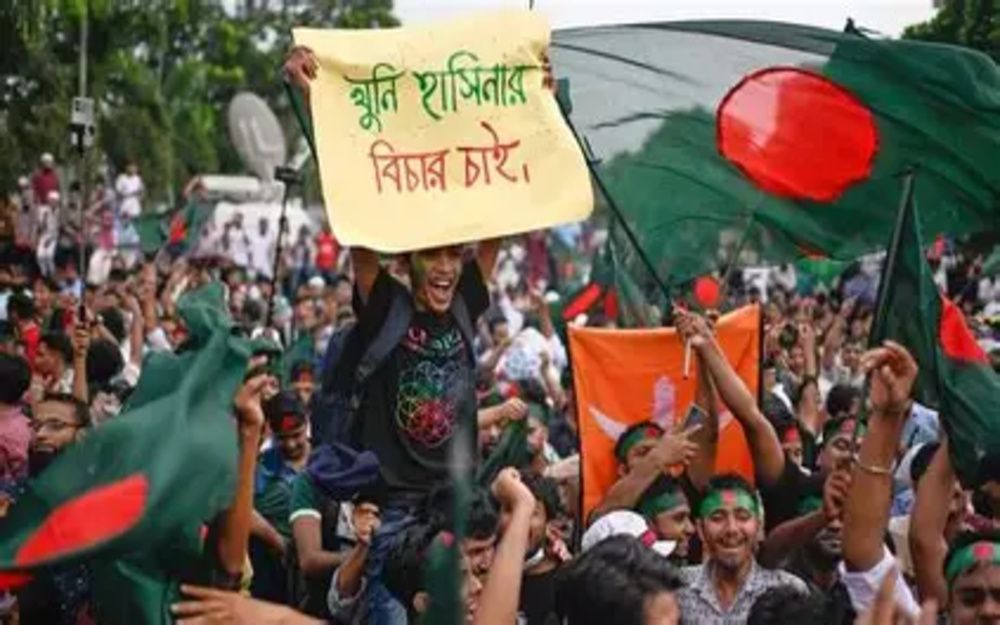
The dust has settled on Bangladesh’s tumultuous general elections of November 2025, marking a seismic shift in the nation’s political landscape. The Bangladesh Nationalist Party (BNP), under the leadership of Tarique Rahman, has swept to power with an overwhelming majority, ushering in an era of uncertainty and high-stakes diplomacy, particularly with its powerful neighbor, India. The victory follows a period of intense civil unrest, culminating in the August 2024 uprising that saw the ousting of Prime Minister Sheikh Hasina and the subsequent suspension of her Awami League party. While the BNP celebrates its return to governance, the immediate challenge on its foreign policy agenda is the extradition of Sheikh Hasina from India, a demand that presents a significant diplomatic tightrope walk for New Delhi.
The Extradition Conundrum: India’s Strategic Calculus
The BNP’s senior leader, Salahuddin Ahmed, has unequivocally stated the party’s full support for the extradition of Sheikh Hasina to face trial in Bangladesh, where a special tribunal has already sentenced her to death in absentia for crimes against humanity. This demand places India in a delicate and unenviable position. While India maintains official diplomatic ties based on “mutual respect and equality,” as emphasized by Ahmed, the prospect of handing over a former leader who has been a long-standing ally and a bulwark against extremist elements in the region is laden with complexities.
From India’s perspective, simply acceding to the extradition request without careful consideration could set a dangerous precedent. New Delhi has historically offered refuge to political figures from neighboring countries, and a quick handover of Hasina might be perceived as a betrayal of trust by future allies. Furthermore, such a move could destabilize the intricate regional power dynamics. India has invested significantly in its relationship with Bangladesh, particularly during Hasina’s tenure, through connectivity projects, security cooperation, and economic partnerships. Disrupting this established understanding without extensive diplomatic maneuvering would be a risky venture for Indian foreign policy.
It is highly probable that India will engage in a protracted negotiation process, seeking to de-escalate the immediate demand for extradition. New Delhi might leverage its diplomatic channels to explore alternatives, such as an extended political asylum, or perhaps even a third-country solution to avoid a direct confrontation. The Indian government would likely weigh the potential for a humanitarian crisis, the legal ramifications of extradition, and the broader implications for regional stability. The immediate priority for India would be to buy time, allowing the new Bangladeshi government to solidify its position and enter into more measured discussions. India understands that ceding to every demand of a newly empowered government, especially one whose ascendancy was marked by significant internal upheaval, may not be in its long-term strategic interest.
Tarique Rahman’s Ascendancy and the ‘Deep State’ Narrative
The landslide victory of the BNP, and the prominent role of Tarique Rahman, has also sparked a debate about the true nature of Bangladesh’s evolving political landscape. Critics, particularly those aligned with the ousted Awami League, have begun to propagate a narrative suggesting that the elections, despite their outward appearance of inclusivity, represent a deeper manipulation by clandestine forces. Salahuddin Ahmed’s assertion that “people have rejected [the Awami League] through the mass uprising in Aug 2024” is presented as evidence of popular will, yet the swiftness of the Awami League’s suspension and subsequent trials have led some to question the organic nature of the political transition.
The concept of a “deep state” – an unelected, powerful network that influences or controls state policy – has gained currency in recent analyses of Bangladeshi politics. The implication is that the August 2024 uprising and the subsequent political changes may have been orchestrated or significantly influenced by elements beyond the purview of the formal political process. In this interpretation, Tarique Rahman’s return to power would be less a reflection of democratic triumph and more a strategic placement by these deeper national interests. India, acutely aware of the geopolitical complexities in its neighborhood, would likely be observing these developments with a discerning eye. If this “deep state” narrative holds any truth, it suggests that India would need to engage not just with the overt political leadership in Dhaka, but also with the underlying power structures that truly wield influence.
Navigating the Future: India’s Cautious Engagement
The new political reality in Bangladesh necessitates a cautious and pragmatic approach from India. While Prime Minister Modi’s swift congratulations to Tarique Rahman indicate a willingness to engage, the future of bilateral relations will be shaped by the handling of the Sheikh Hasina extradition request and the evolving power dynamics within Bangladesh. India’s commitment to “bilateral ties” will likely be tested by the BNP’s demands and its own strategic imperatives.
It is unlikely that India will allow Tarique Rahman to act unilaterally on all fronts, especially concerning issues that directly impact Indian security or regional stability. New Delhi will prioritize its own national interests, which include maintaining a stable and cooperative neighbor, preventing the resurgence of anti-India sentiments or extremist activities, and safeguarding its investments in the region. This may involve a combination of diplomatic overtures, strategic leveraging of its economic and security influence, and a careful monitoring of the new government’s policies. The forthcoming period will be a critical test of India’s diplomatic acumen as it seeks to maintain its strategic interests while navigating the complexities of a dramatically altered political landscape in Bangladesh. The “friendly relationship based on mutual respect and equality” that Ahmed articulated will be severely tested as both nations navigate this new, intricate chapter.
