

Poonam Sharma
Recent intelligence assessments point to a disturbing reality unfolding in Bangladesh—one that goes far beyond routine political instability. According to an Intelligence Assessment Report reviewed by CNN-News18 and corroborated by regional security inputs, Bangladesh is entering a phase best described as a “controlled breakdown.” This is not chaos by accident. It is disorder by design.
The report suggests that the erosion of state institutions—particularly law enforcement—is being deliberately allowed, even encouraged, to create a volatile vacuum. This vacuum is now being exploited by anti-India forces and Islamist groups, who are shaping street protests, manipulating media narratives, and mobilising vulnerable populations along maritime and border regions. The outcome is a gradual but clear shift of Bangladesh’s national focus toward confrontation with India.
What makes this assessment alarming is that the weakening of law and order is not seen as a side-effect of political transition, but as a primary tool being leveraged by hostile actors.
Street Chaos, Strategic Silence
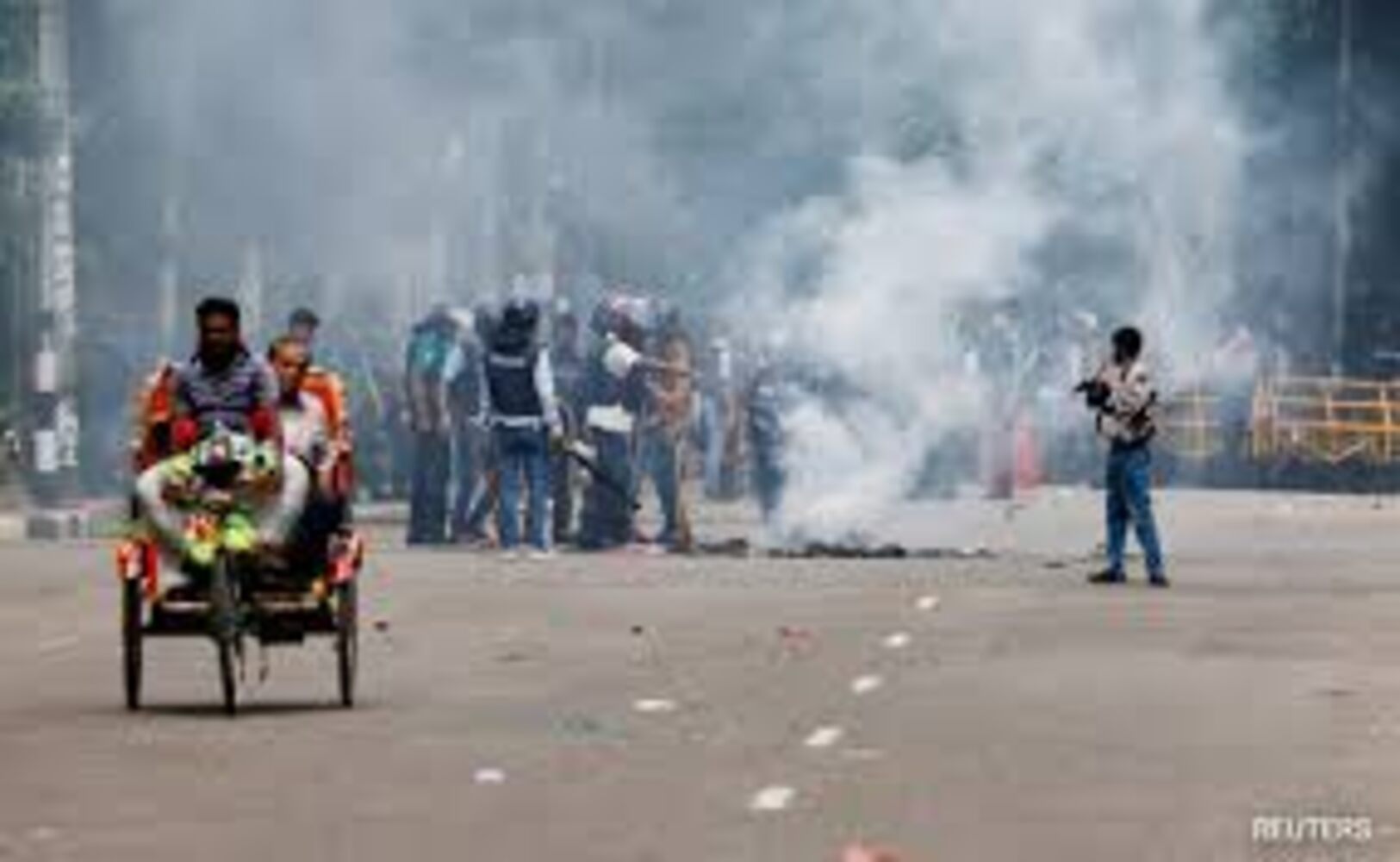
Across Bangladesh, incidents of mob violence, arson, targeted attacks on minorities, and intimidation of journalists have increased. Hindu killings, attacks on media houses, and large-scale vandalism—including looting of malls and destruction of offices—have taken place with little effective intervention. Protestors engaged in criminal acts are often portrayed as “revolutionaries,” while security forces remain conspicuously restrained.
The question intelligence agencies are asking is simple: Why is the police force paralysed? And why is the army repeatedly pushed into a reluctant role as first responders?
The report highlights significant frustration among mid-level officers in the Bangladesh Army. These officers are reportedly disillusioned by the lack of political backing and legal protection for actions taken on the ground. They are expected to manage riots, mobs, and extremist violence—but without clear rules of engagement or assurance that their decisions will be defended later.
This ambiguity has created a dangerous morale crisis within the military. Fractures Within the Army
More troubling is the assessment that internal fissures are emerging within the Bangladesh Army itself. Professional officers—those trained to operate within institutional discipline—are increasingly sidelined or constrained. Meanwhile, ideological penetration by Islamist elements has reportedly begun affecting certain sections.
The report goes further, pointing to perceived interference by Pakistan’s ISI, allegedly working to deepen these fissures. By encouraging mistrust, hesitation, and ideological polarisation within the military, these external actors are weakening one of Bangladesh’s last functional institutions.
Top army leadership, according to the report, appears to be exercising “static restraint” to avoid a direct takeover or confrontation with the civilian government. However, this hesitation is coming at a cost. Each day of inaction further erodes institutional credibility and emboldens extremist groups.
Yunus Government Under the Lens
The role of the Yunus-led interim government is central to this crisis. Intelligence inputs suggest a pattern of deliberate inaction—failure to control unrest, reluctance to authorise decisive deployments, and silence when state authority is openly challenged.
This has created a narrative trap: if the army acts against violent mobs or Islamist groups, it risks being labelled “pro-India.” This stigma has been carefully cultivated. As a result, security forces hesitate, riots escalate, and lawlessness spreads.
Journalists and media houses that attempt to question this chaos have been targeted. Police units either arrive late or not at all. Meanwhile, criminal acts—looting, arson, and vandalism—are romanticised as political resistance.
This is not accidental governance failure. Intelligence agencies believe it is strategic negligence.
India’s Growing Security Concerns
For India, the implications are serious and immediate. A destabilised Bangladesh directly affects India’s eastern security architecture. That is why India’s Eastern Command has reportedly examined contingency options, including the possibility of brigade-level readiness near Mizoram, close to sensitive border zones.
This posture is defensive, not provocative. Indian security planners are concerned about spillover effects—illegal migration, radicalisation, maritime infiltration, and the use of Bangladesh’s territory as a staging ground for anti-India activities.
The report notes that street mobs are being “hypnotised” through coordinated media narratives and ideological messaging. Fishermen communities along maritime borders are being influenced, creating vulnerabilities in coastal security. These are classic indicators of hybrid warfare.
A State Losing Control
Perhaps the most chilling conclusion of the assessment is this: Bangladesh is not collapsing suddenly—it is being slowly hollowed out. Institutions exist on paper, but authority is absent on the ground. The police are paralysed. The army is constrained. The government hesitates. Extremist groups advance.
When professionals fear legal retaliation more than violent mobs, governance has already failed.
If this trajectory continues, Bangladesh risks sliding into a space where non-state actors define reality, and where every corrective action is branded as foreign interference. For India, this is not merely a neighbour’s internal problem—it is a direct strategic threat.
Conclusion
The intelligence warning is clear. What is unfolding in Bangladesh is not spontaneous unrest but a carefully engineered breakdown, with regional consequences. The longer decisive action is delayed, the deeper the damage—to Bangladesh’s institutions and to regional stability.
India, watching from across the border, understands one truth well: when a state loses control over its narrative, its streets, and its soldiers, the fallout never stays contained.
